
Blog
MB&F: When Watchmaking Becomes a Creative Universe

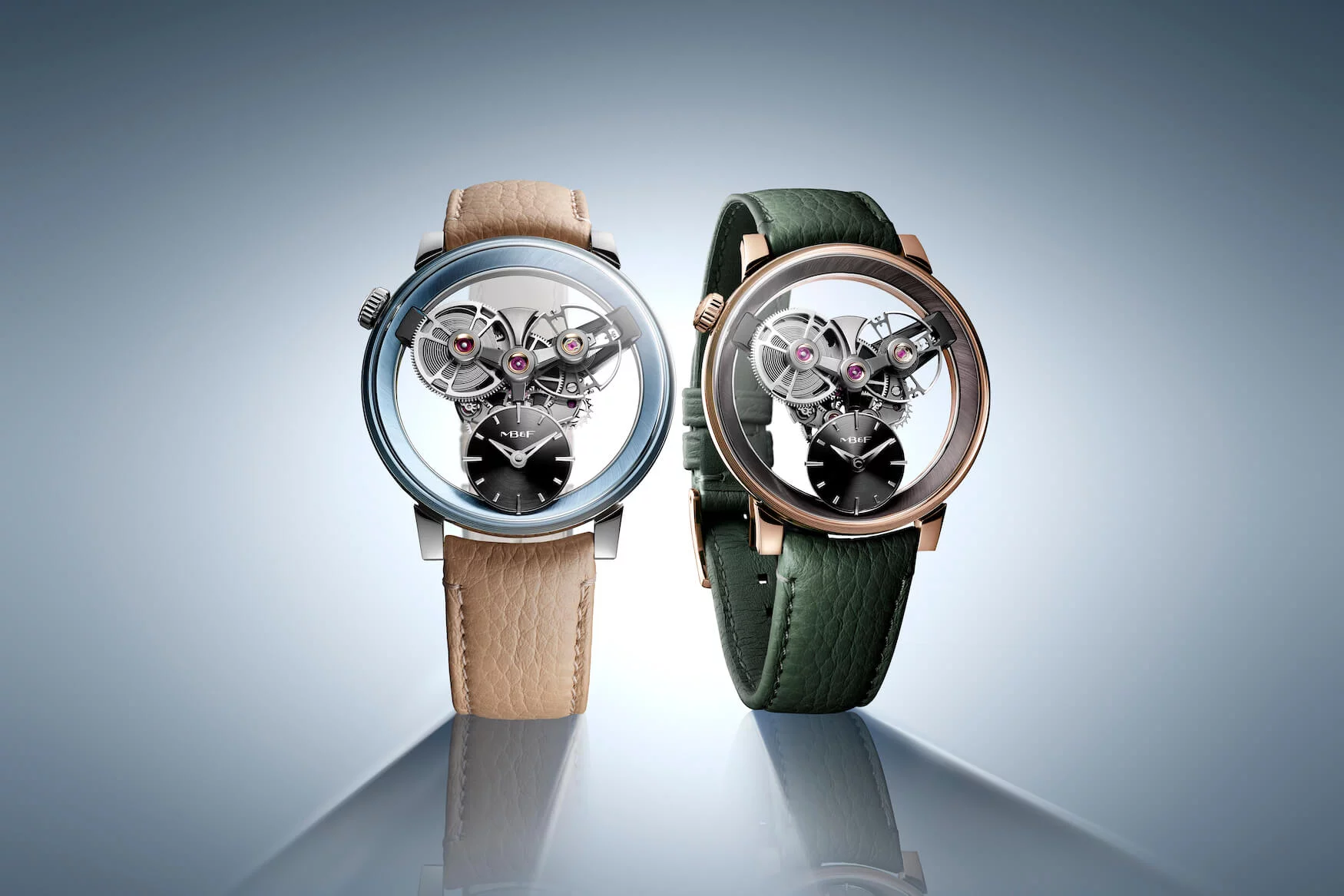
MB&F: When Watchmaking Becomes a Creative Universe
A watch can be designed to measure time, to express status, to preserve a tradition or to demonstrate technical mastery. MB&F approaches the subject from a different starting point. Its creations often begin with an image, an idea or a mechanical question that has little to do with the conventional appearance of a wristwatch.
A movement may be suspended beneath a domed crystal. A time display may resemble the cockpit of a spacecraft. A perpetual calendar may be redesigned around a mechanical processor. A watch may take the form of an aquatic creature, an automobile or an architectural structure. The result can be difficult to categorise, even by the standards of contemporary independent watchmaking.
The initials MB&F stand for Maximilian Büsser & Friends. The name is more than a founder’s signature. It describes the way the company operates: a creative project built through the collaboration of watchmakers, designers, engineers, artists and specialist manufacturers, each bringing a particular expertise to a shared idea.
Founded in 2005, MB&F has developed into one of the most distinctive names in independent horology. Its work extends beyond wristwatches into table clocks, mechanical sculptures, music boxes, artistic collaborations and an entire ecosystem of creative spaces.
The story is not simply about making unconventional watches. It is about challenging the boundaries of what a mechanical object can be.
Maximilian Büsser: Leaving the rules behind
Maximilian Büsser was born in Switzerland in 1967. His professional background was initially shaped by the established watch industry, where he developed an understanding of product development, marketing, distribution and the commercial structures surrounding luxury watchmaking.
In 1991, he joined Jaeger-LeCoultre. The experience introduced him to the internal workings of a major Swiss manufacture and to the complexities of developing and positioning high-end mechanical watches.
In 1998, Büsser became Managing Director of Harry Winston’s watch division. He was relatively young for such a position, and the role gave him considerable freedom to develop the brand’s high-end watchmaking activities.
During his time at Harry Winston, he helped establish the Opus project in 2001. The concept was unusual for a luxury watch company. Rather than relying exclusively on its own design and engineering teams, Harry Winston invited independent watchmakers to develop original timepieces under the Opus name.
Opus 1, created with François-Paul Journe, was followed by projects involving different watchmakers, each bringing a distinct technical and aesthetic approach. The initiative helped demonstrate that collaboration with independent talent could become a meaningful part of a luxury watch brand’s identity.
The experience was formative for Büsser. He saw what could happen when creative freedom was given to people with different ideas and specialist skills.
By 2005, he had decided to leave Harry Winston and establish his own company. The decision involved considerable risk. He was abandoning a senior corporate position to build a business around an unconventional idea, without the security of an established brand or a large production infrastructure.
The first drawing for what would become Horological Machine No.1 already contained the direction of the new venture. Büsser wanted to move away from the traditional watch as a flat object with a dial, hands and a case. He imagined a three-dimensional mechanical sculpture that happened to display time.
MB&F was founded around that ambition.
The meaning of “Friends”
The word “Friends” is central to the identity of MB&F.
The company is not built around the idea that one person can master every discipline required to create an extraordinary mechanical object. Instead, Büsser brings together people whose individual expertise can contribute to a shared project.
The collaborators are not simply external suppliers executing a predetermined design. Many of them are involved in the development of the movement, the architecture, the technical solutions or the artistic direction.
The relationship can involve independent watchmakers, movement specialists, designers, engineers, case manufacturers, artists and other creative partners.
This structure gives MB&F access to a range of skills that would be difficult to maintain within a single conventional manufacture. It also allows each project to be shaped by the particular strengths of the people involved.
The name acknowledges their contribution. It places the creative process at the centre of the company’s identity.
That does not mean the work is free from commercial considerations. MB&F produces luxury objects in limited quantities, and the business requires production planning, distribution, financial management and a sustainable operating structure. The creative freedom exists within those realities.
What distinguishes the company is the way collaboration is built into the concept from the beginning.
Horological Machines: Watchmaking without the conventional dial
The Horological Machines, or HM collection, represents MB&F’s most radical departure from traditional wristwatch design.
The collection explores subjects such as space, aviation, automobiles, animals, architecture and science fiction. Each model is developed around a particular visual or mechanical concept.
The first Horological Machine, HM1, was unveiled in 2007. Its three-dimensional movement architecture and unusual time display established the visual language of the company. The watch featured two prominent time displays, with the movement visible through a sculptural case.
HM1 was not intended to be a conventional dress watch with an unusual dial. Its entire structure was designed around the movement and its presentation.
The subsequent machines developed this approach in different directions.
HM2, introduced in 2008, explored a modular construction with separate indications. HM3, launched in 2009, introduced a more sculptural case and a distinctive rotor arrangement. HM4 Thunderbolt, presented in 2010, took inspiration from aviation, with a case that resembled the body of an aircraft.
HM5 drew on the design language of 1970s supercars, including the visual references associated with Lamborghini and other automotive forms. HM6 Space Pirate brought the collection into a more futuristic territory, with a complex case architecture and multiple spherical elements.
The machines are not simply themed watches. Their mechanical architecture, case shape and display are developed together. The visual concept influences the construction, and the movement becomes part of the sculpture.
This is a fundamental difference from conventional watch design. In many traditional watches, the case and dial are designed to frame the movement. In MB&F’s Horological Machines, the movement often determines the shape of the entire object.
HM4 Thunderbolt: A machine inspired by flight
HM4 Thunderbolt is one of the clearest examples of MB&F’s approach.
Its design draws inspiration from aircraft, particularly the visual language of aviation instruments and streamlined fuselages. The case is constructed from two prominent cylindrical forms, each containing a different indication.
The hours and minutes are displayed in separate sections, while the movement is visible through the architecture of the watch.
The design required the development of a movement specifically suited to the unusual arrangement. The case, display and mechanical construction are not independent elements. They are parts of the same concept.
HM4 received the Mechanical Exception Prize at the Grand Prix d’Horlogerie de Genève in 2011, recognising its technical and creative achievement.
The watch is important not simply because it looks like an aircraft. It demonstrates how a visual idea can lead to a different way of constructing a mechanical watch.
HM3 Frog, HM7 Aquapod and the animal kingdom
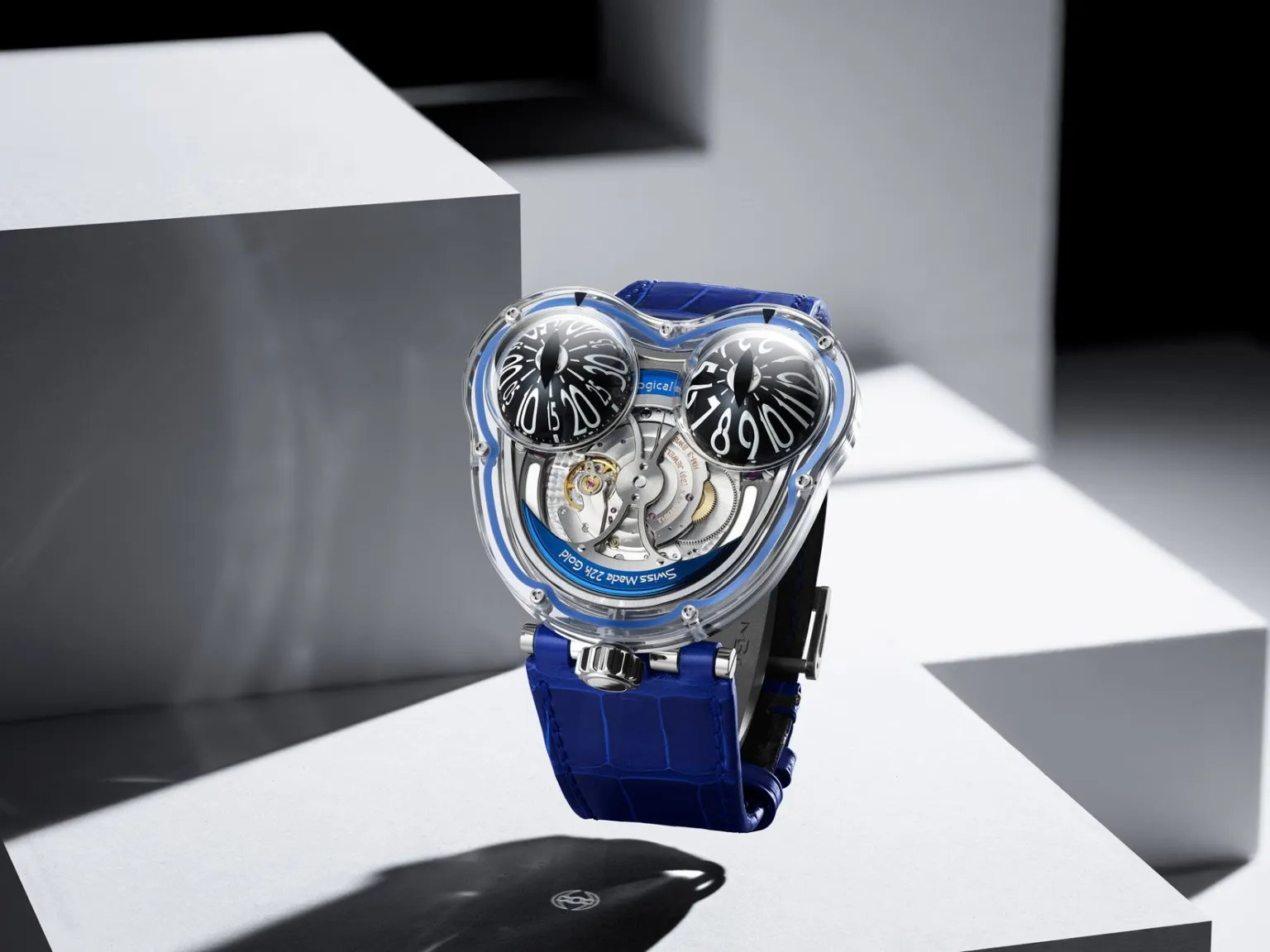
MB&F’s interest in organic forms is particularly evident in HM3 Frog and HM7 Aquapod.
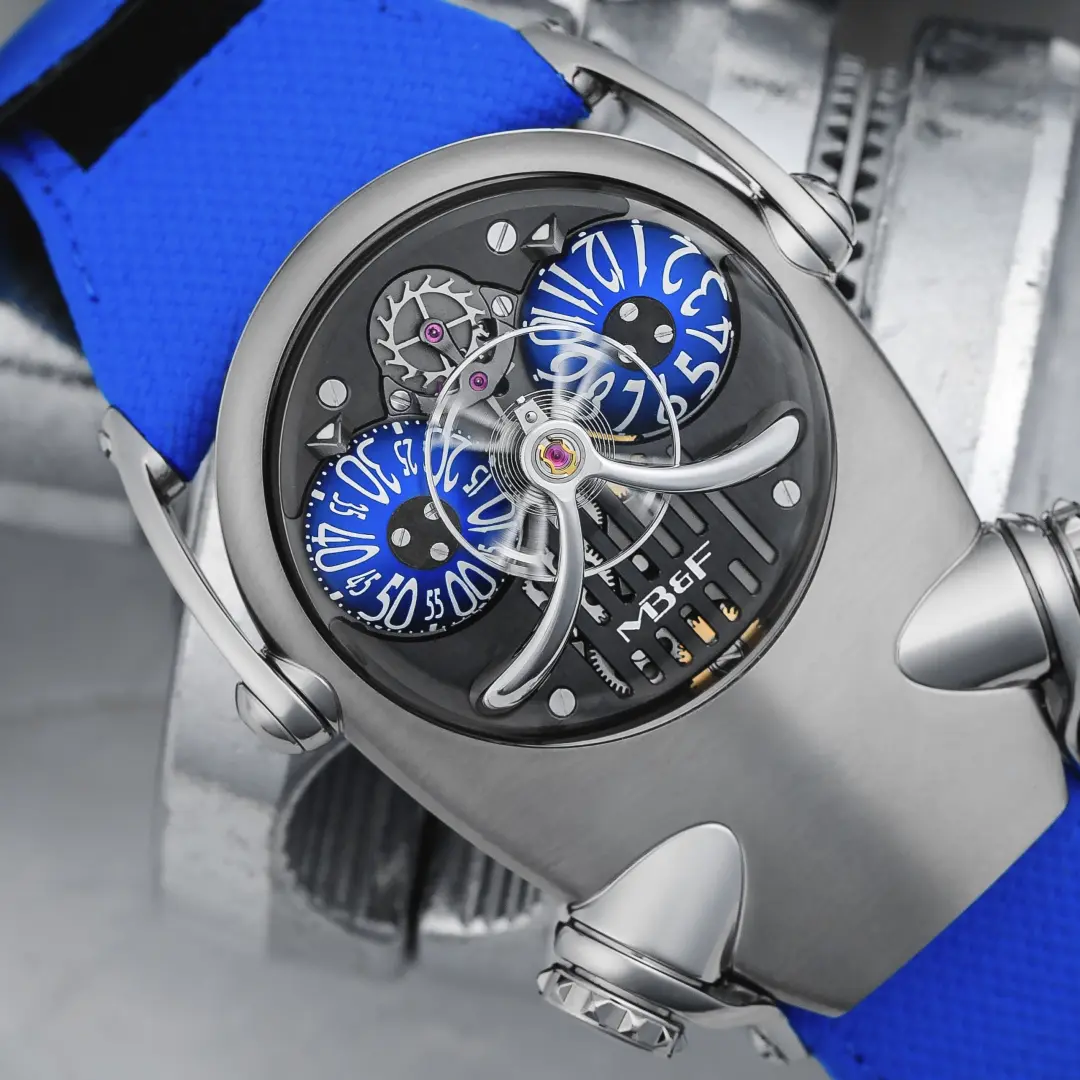
HM3 Frog uses the shape and visual characteristics of a frog as the basis for its design. The rotating indications and sculptural case create an object that is recognisable as a watch, yet its appearance is deliberately unconventional.
HM7 Aquapod, introduced in 2017, takes inspiration from the jellyfish. Its domed case, central flying tourbillon and vertical movement architecture create the impression of an aquatic organism.
The watch includes a rotating hour and minute display around the central mechanism. Its movement is arranged vertically, making the tourbillon a prominent part of the visual composition.
The aquatic theme is not merely decorative. The shape of the case and the arrangement of the movement are designed to support the concept.
This approach reflects a recurring characteristic of MB&F. The company is willing to use forms that would be difficult to justify within the conventional vocabulary of luxury watchmaking, provided the mechanical and aesthetic ideas remain coherent.
HM11 Architect: The watch as a miniature building
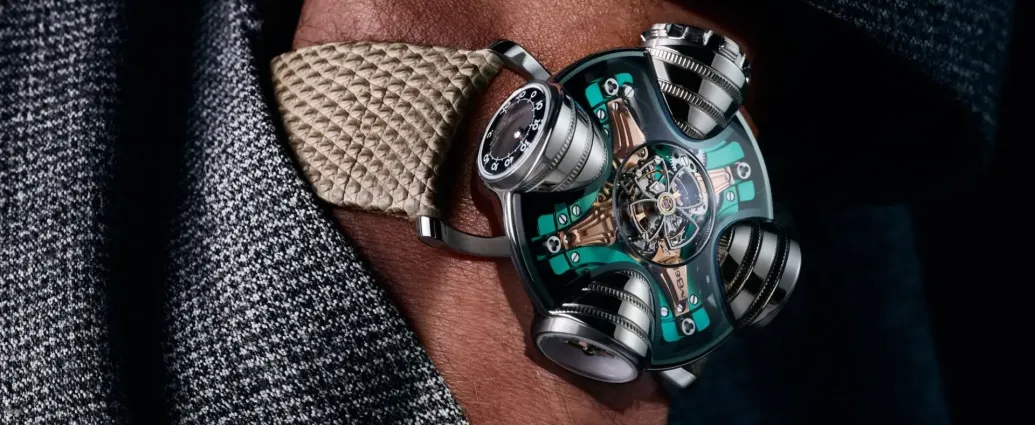
HM11 Architect, introduced in 2023, moves the concept into architecture.
The watch is built around a central mechanical structure surrounded by four distinct chambers. These sections display the time, temperature, power reserve and other functions.
The case itself can rotate, allowing the wearer to access the different displays. The crown is also integrated into the architecture, with the rotating case playing a role in winding the movement.
The design draws on architectural forms, particularly the use of spaces arranged around a central structure. Its parabolic chambers give the watch a distinctive appearance.
HM11 is a useful example of the relationship between concept and mechanics at MB&F. The architectural idea is not applied to an ordinary watch after the movement has been developed. The movement, case and display are designed as a single system.
The watch becomes a miniature mechanical environment.
Legacy Machines: Looking back without becoming nostalgic
The Legacy Machines, or LM collection, introduced a different direction in 2011.
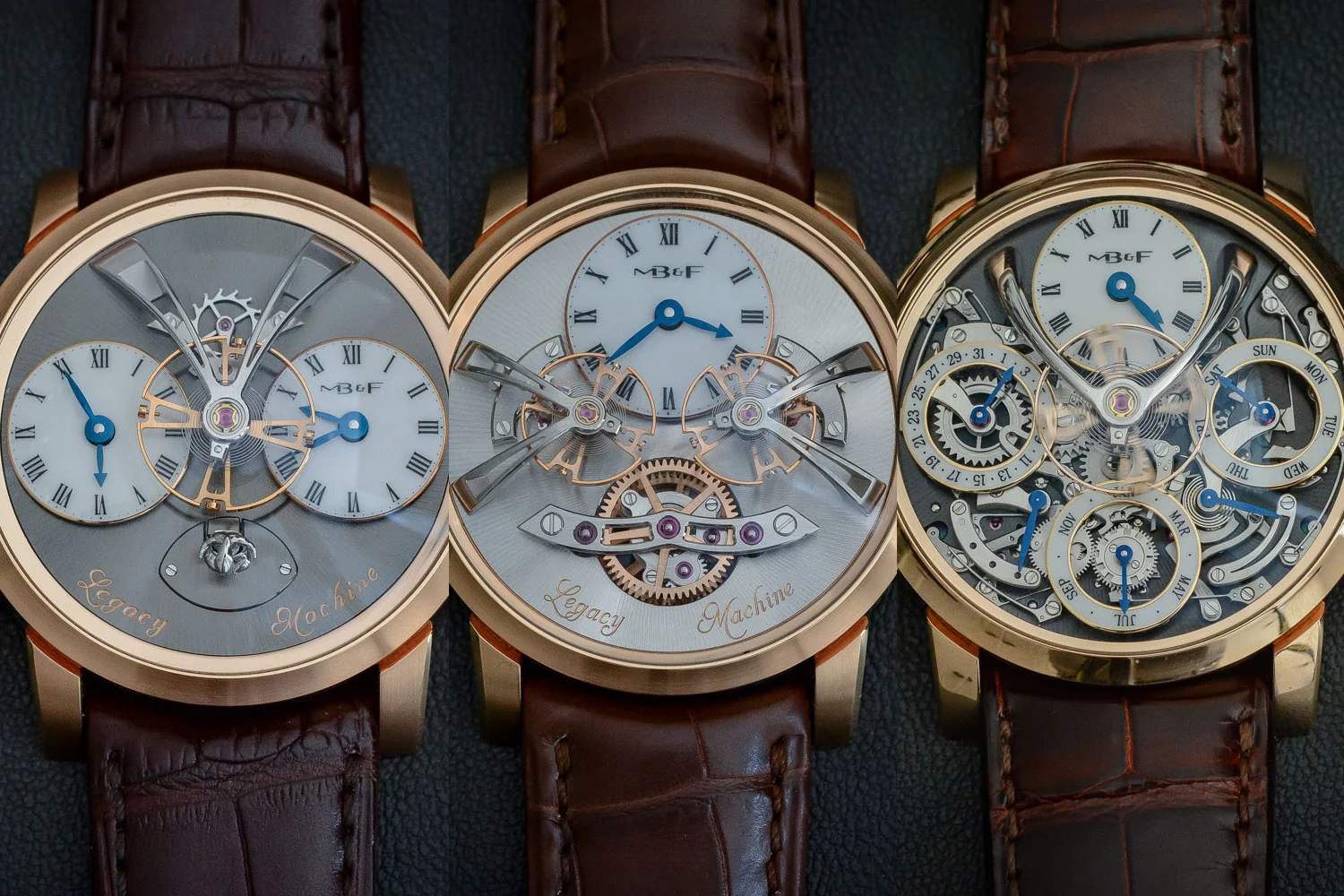
Where Horological Machines are inspired by futuristic or unconventional forms, Legacy Machines draw on the aesthetics of nineteenth-century watchmaking. The collection references traditional complications, classical movement architecture and the visual language of historical pocket watches.
The distinction is important. Legacy Machines are not intended to be straightforward reproductions of antique watches. They reinterpret traditional watchmaking through MB&F’s three-dimensional approach.
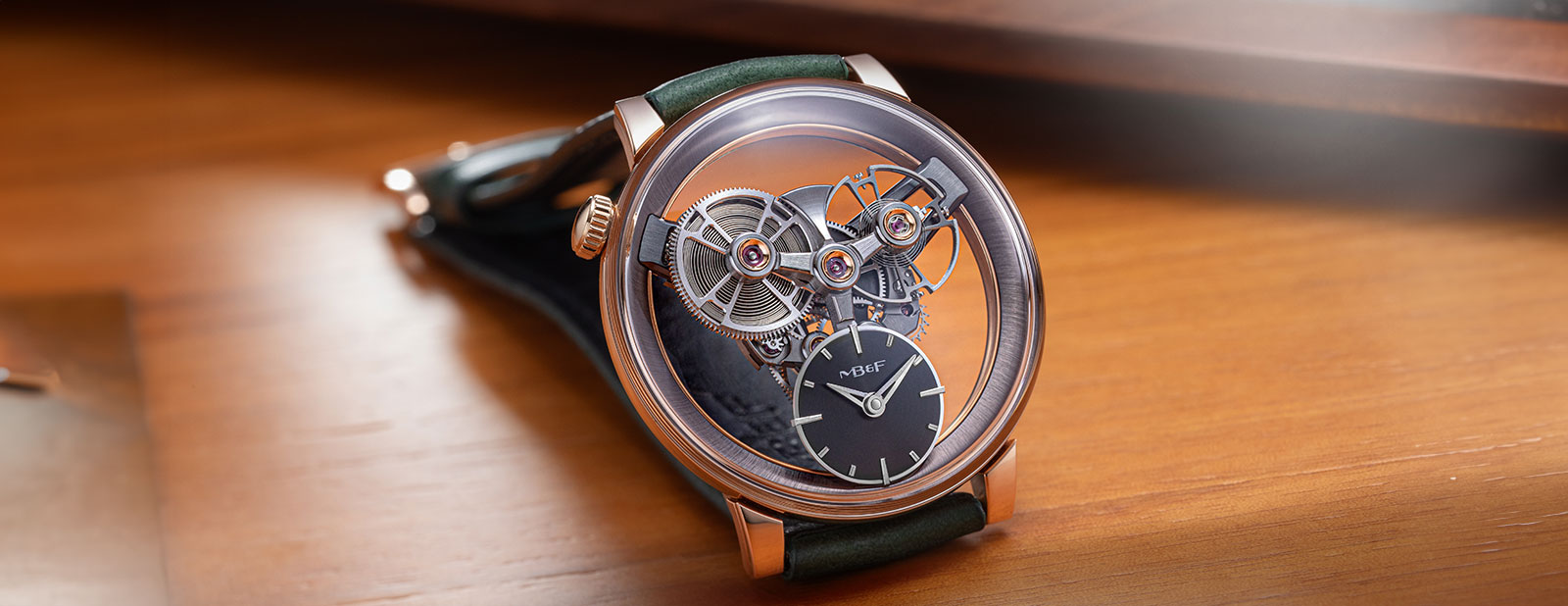
The most recognisable feature is often the large suspended balance wheel, positioned above the movement and prominently displayed beneath the crystal. The balance becomes a visual focal point, while the movement is arranged around it.
LM1, the first model in the collection, was developed with independent watchmaker Jean-François Mojon and movement specialist Kari Voutilainen. It introduced a dual-time display, a power-reserve indication and a large central balance.
The movement architecture was designed to create a sense of depth. The balance appears to float above the movement, while the bridges and components are arranged in a sculptural composition.
The watch references classical watchmaking, but its presentation is unmistakably MB&F.
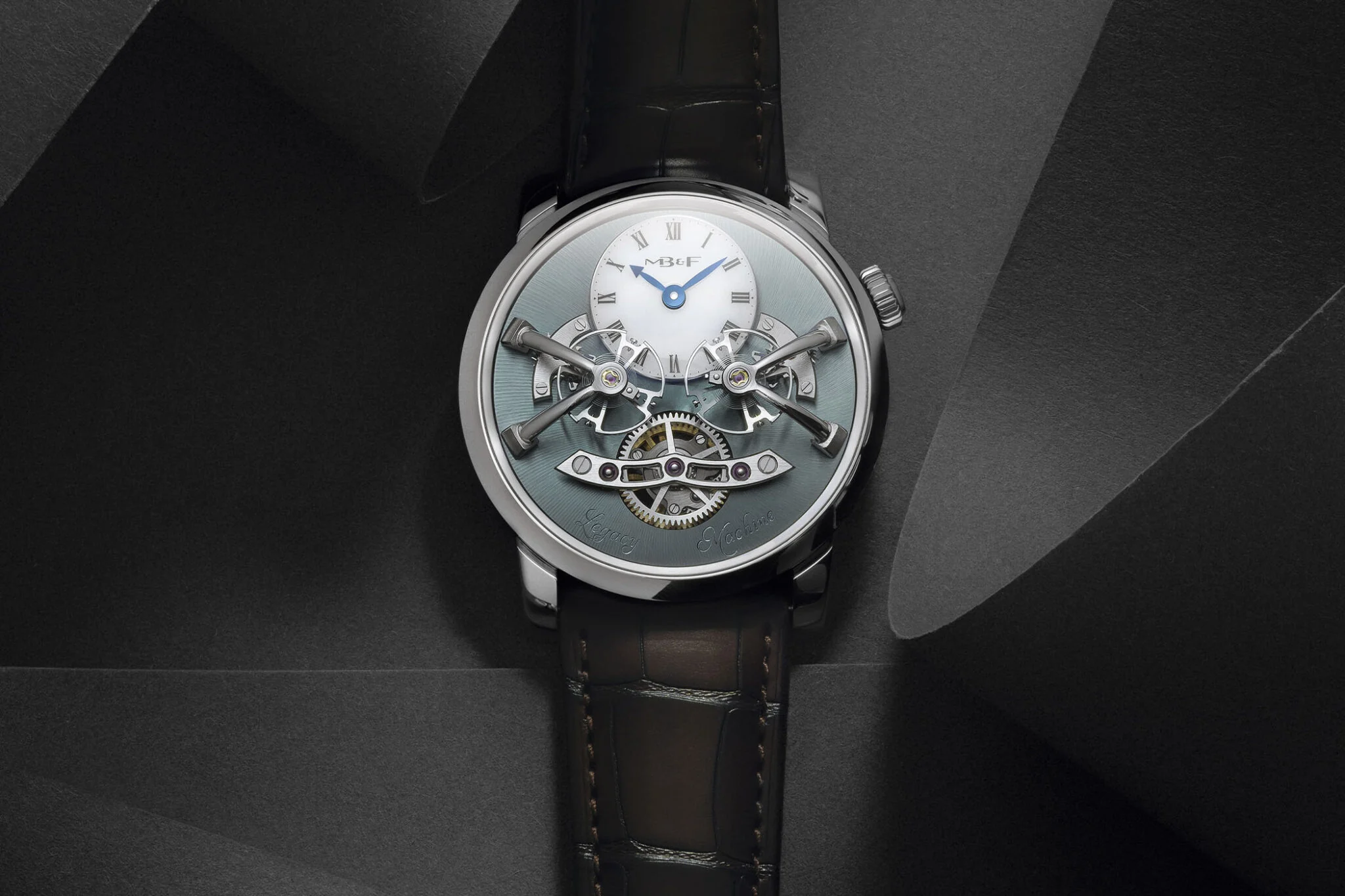
Legacy Machine No.2: Two balance wheels, one movement
LM2, introduced in 2013, takes the concept further.
The watch features two visible balance wheels connected to a differential mechanism. The differential averages the rate of the two balances, creating a technical arrangement inspired by historical attempts to improve chronometric performance.
The two balance wheels are positioned prominently on the dial side, creating a symmetrical visual composition.
The movement was developed with the collaboration of independent watchmakers Jean-François Mojon and Kari Voutilainen.
The design is technically sophisticated, but its significance also lies in its appearance. The two balance wheels become part of the visual identity of the watch, giving the movement an unusual sense of movement and rhythm.
LM2 demonstrates how MB&F can reinterpret a historical horological idea while creating a contemporary mechanical sculpture.
LM Perpetual: Rebuilding a complicated calendar
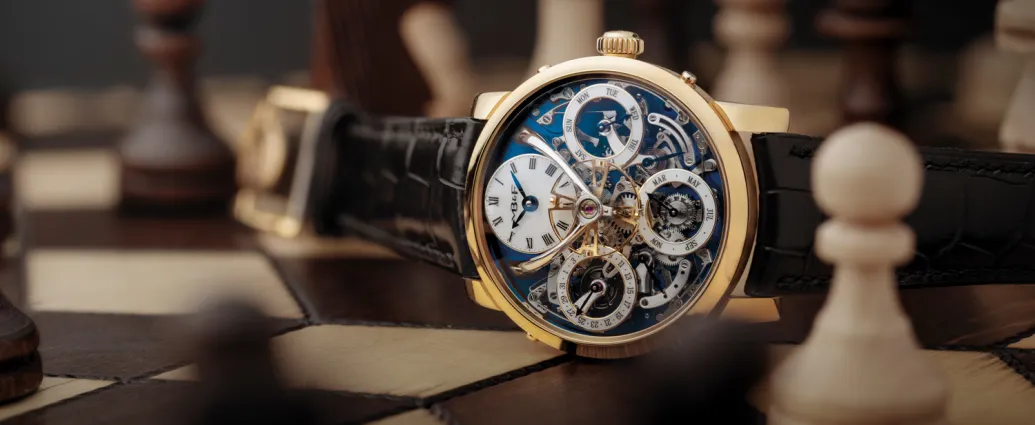
The Legacy Machine Perpetual, introduced in 2015, represents one of MB&F’s most significant technical developments.
The perpetual calendar is a traditional complication designed to account for the varying lengths of months and leap years. Conventional perpetual calendars often use a series of gears and levers that can become vulnerable to incorrect adjustments or mechanical interference.
MB&F worked with independent watchmaker Stephen McDonnell to develop a different approach.
The movement uses a mechanical processor that determines the calendar’s operation. Rather than relying on a conventional arrangement of date wheels, the system uses a series of programmed mechanical elements to control the calendar indications.
The design allows the calendar to be set independently, and it avoids some of the problems associated with traditional perpetual calendars, including the risk of damaging the mechanism during certain adjustments.
The movement contains 581 components and was developed specifically for the watch.
The complication is presented through the Legacy Machine’s sculptural architecture. The large balance remains visible, while the calendar indications are arranged around the dial.
LM Perpetual received the Calendar Watch Prize at the Grand Prix d’Horlogerie de Genève in 2016.
The technical achievement is particularly significant because it demonstrates that MB&F’s unconventional design philosophy can extend into the development of complex mechanical systems. The company is not simply creating unusual cases around existing complications. It is willing to reconsider the mechanics themselves.
LM Sequential: A new approach to chronograph timing
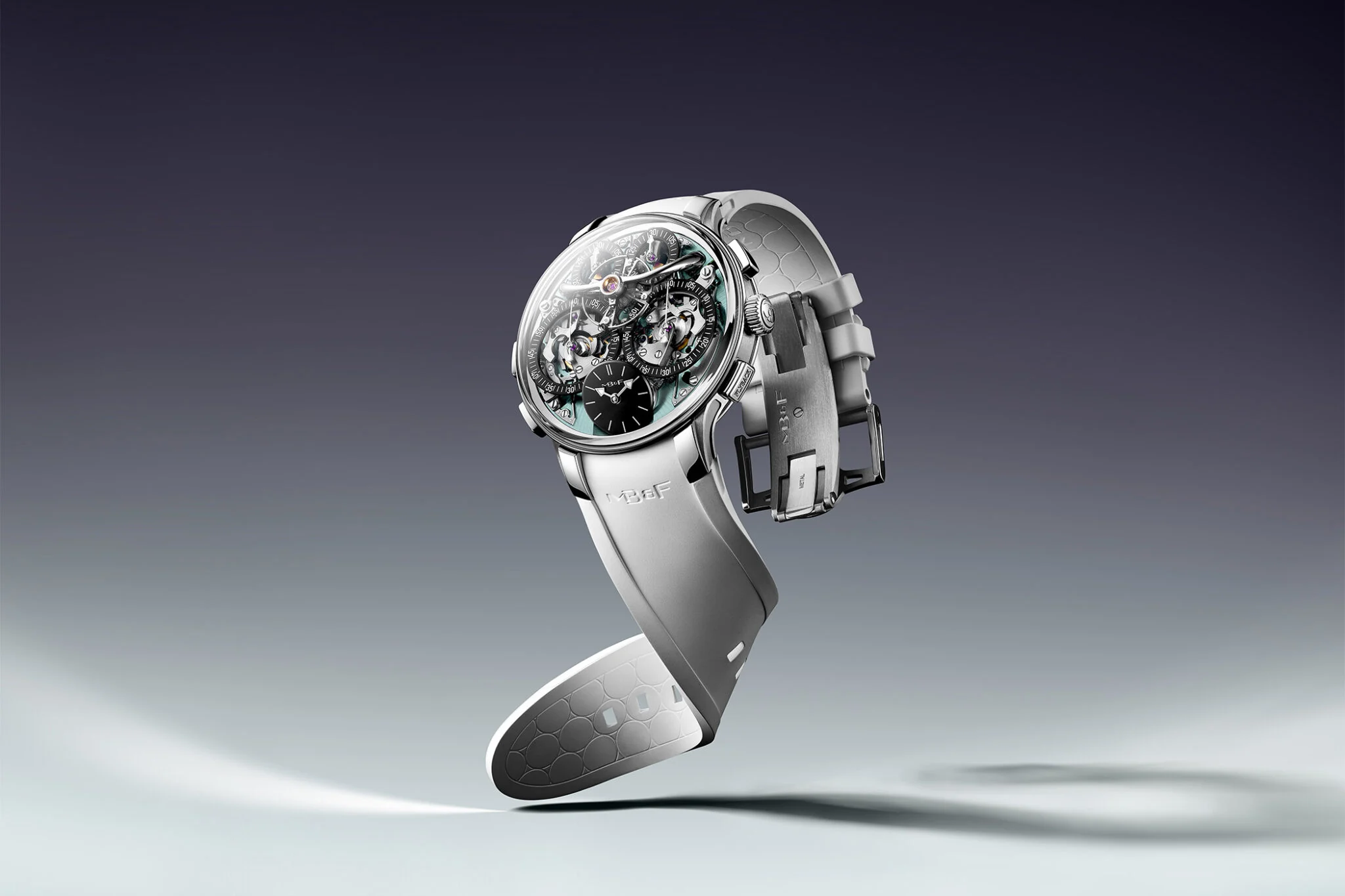
The LM Sequential EVO, introduced in 2022, marked another major technical milestone.
The watch was developed with Stephen McDonnell and became MB&F’s first chronograph. Its movement features two independent chronograph mechanisms, allowing several timing modes that are not available in a conventional chronograph.
The Twinverter switch controls the relationship between the two chronographs. It can start or stop both simultaneously, or reverse their operating state.
This arrangement allows the watch to perform independent timing, split-second timing, cumulative timing and lap timing.
The ability to measure two separate events or compare elapsed times makes the Sequential particularly versatile. It also introduces a new way of interacting with a chronograph.
The movement is presented within the Legacy Machine architecture, with the balance wheel prominently displayed and the chronograph mechanisms visible through the dial.
The LM Sequential EVO received the Aiguille d’Or, the highest prize at the Grand Prix d’Horlogerie de Genève, in 2022.
The recognition was significant. It showed that MB&F’s creative approach could produce not only visually radical watches, but also meaningful innovations in traditional horological complications.
The LM Sequential Flyback, introduced in 2024, added a flyback function to the chronograph system. The development extended the watch’s timing capabilities and demonstrated the continued evolution of the original concept.
Legacy Machine FlyingT: A watch conceived for women
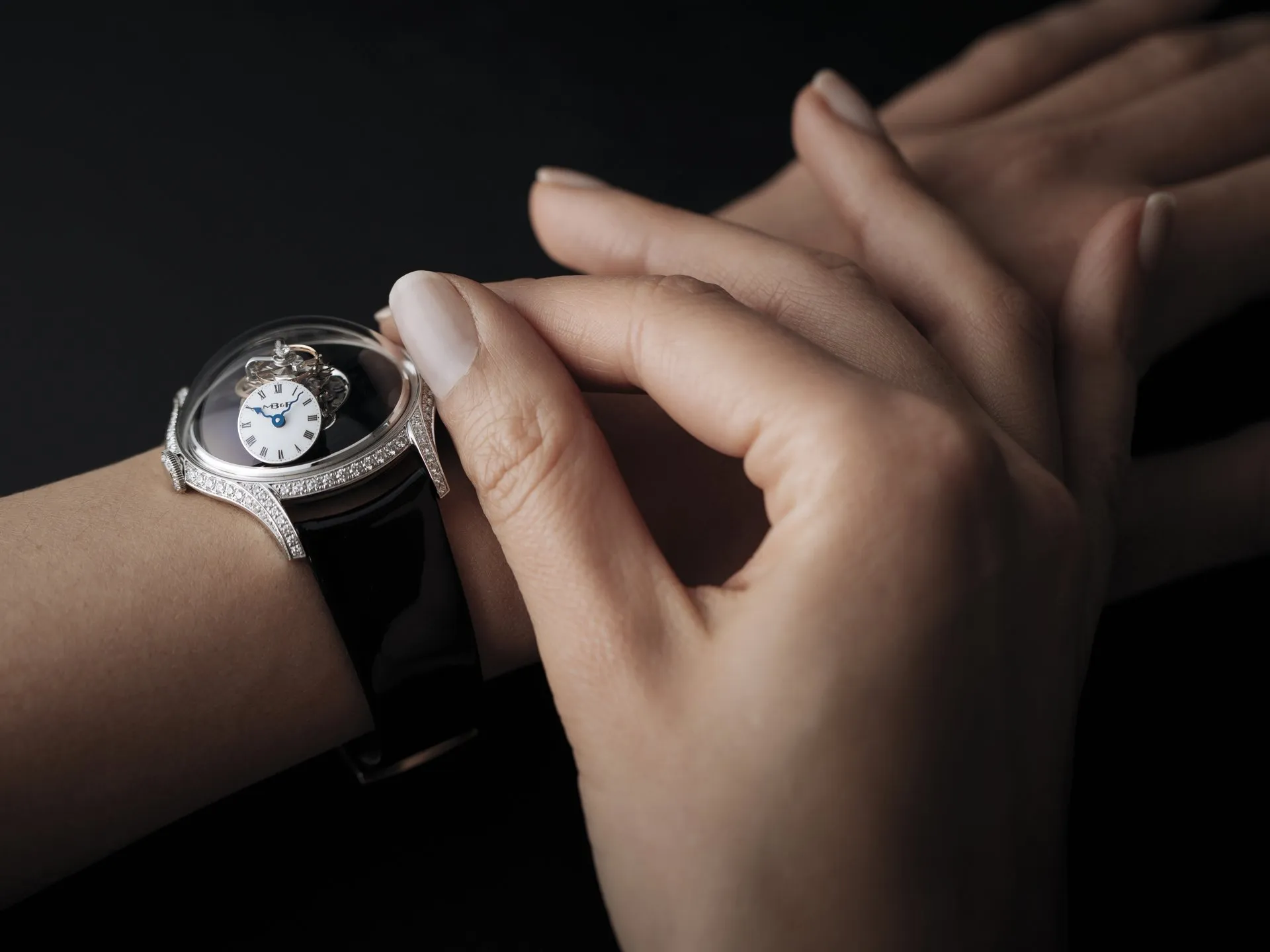
LM FlyingT, introduced in 2019, marked a new direction for MB&F.
The watch was conceived specifically for women, but it did not follow the conventional approach of reducing the size of an existing men’s watch or adding decorative elements to a familiar design.
Its movement is arranged vertically, with a flying tourbillon positioned at the top of the dial. The time is displayed through a small inclined dial, allowing the wearer to read the hours and minutes from a natural viewing angle.
The watch is designed around the experience of wearing it. The vertical architecture, the placement of the tourbillon and the inclined time display create a different relationship between the wearer and the movement.
The collection has been developed in several artistic variations, including editions with precious stones and distinctive dial treatments.
FlyingT is significant because it demonstrates that MB&F’s design philosophy can be applied to different audiences without abandoning its identity. The watch remains mechanically ambitious and sculptural, while its proportions and display are considered for a specific wearing experience.
Co-creations: When MB&F leaves the wrist
MB&F’s creative activity extends beyond wristwatches.
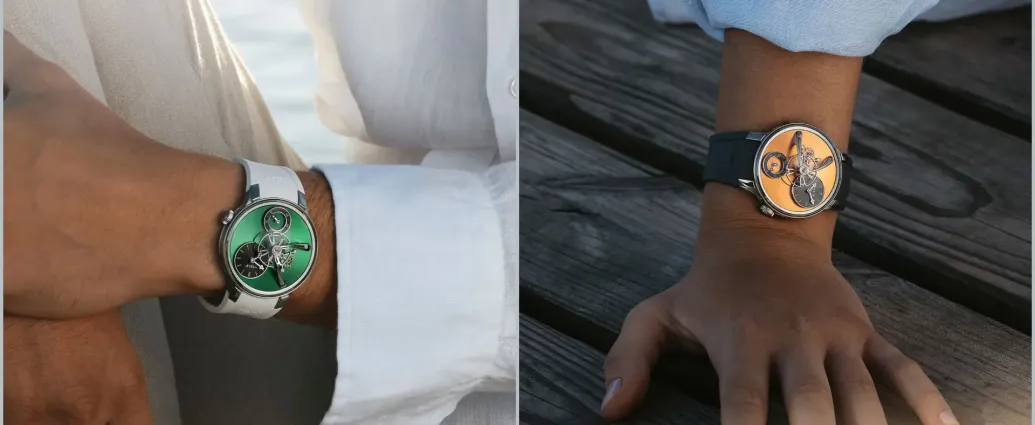
The company has collaborated with specialist manufacturers to create mechanical clocks, music boxes, writing instruments and other objects. These projects are grouped under the broader idea of co-creations.
One of the most notable collaborations is with L’Epée 1839, the Swiss clock manufacture known for its mechanical clocks.
Together, MB&F and L’Epée have created objects such as the Sherman robot clock, Balthazar, Melchior and the various MusicMachines.
Sherman is a robot-shaped clock whose mechanical structure is visible through its body. Balthazar and Melchior take the form of larger mechanical figures, with moving elements and time displays integrated into their designs.
The MusicMachines, developed with Reuge, combine mechanical music-box technology with sculptural forms inspired by spacecraft and futuristic objects.
These creations are not simply accessories for watch collectors. They occupy a different category of mechanical art.
The collaboration allows MB&F to work with expertise beyond wristwatch manufacturing. L’Epée contributes its knowledge of clock mechanisms, while Reuge brings its experience in mechanical music.
The result is a creative process that extends the company’s original idea: mechanical objects can be developed as artistic expressions rather than being limited to their conventional function.
M.A.D.Gallery: Creating a space for mechanical art
The M.A.D.Gallery project was established in 2011, with the first gallery opening in Geneva.
The concept was to create a space where MB&F’s mechanical creations could be presented alongside works by artists and designers working in related fields.
The gallery includes mechanical sculptures, kinetic art, unusual objects and creations that combine engineering with artistic expression.
The idea reflects the wider philosophy of MB&F. The company does not see watchmaking as an isolated discipline. It is part of a broader creative world in which mechanics, design, art and imagination can overlap.
The galleries have expanded to different locations, including Taipei, Dubai and Hong Kong, while the company has continued to develop its retail and creative spaces.
The M.A.D.Gallery also provides a context for understanding MB&F’s watches. The objects are presented not only as luxury products, but as examples of a particular way of thinking about mechanical design.
M.A.D.Editions: A more accessible expression
MB&F introduced M.A.D.Editions as a parallel label with a different approach to pricing and production.
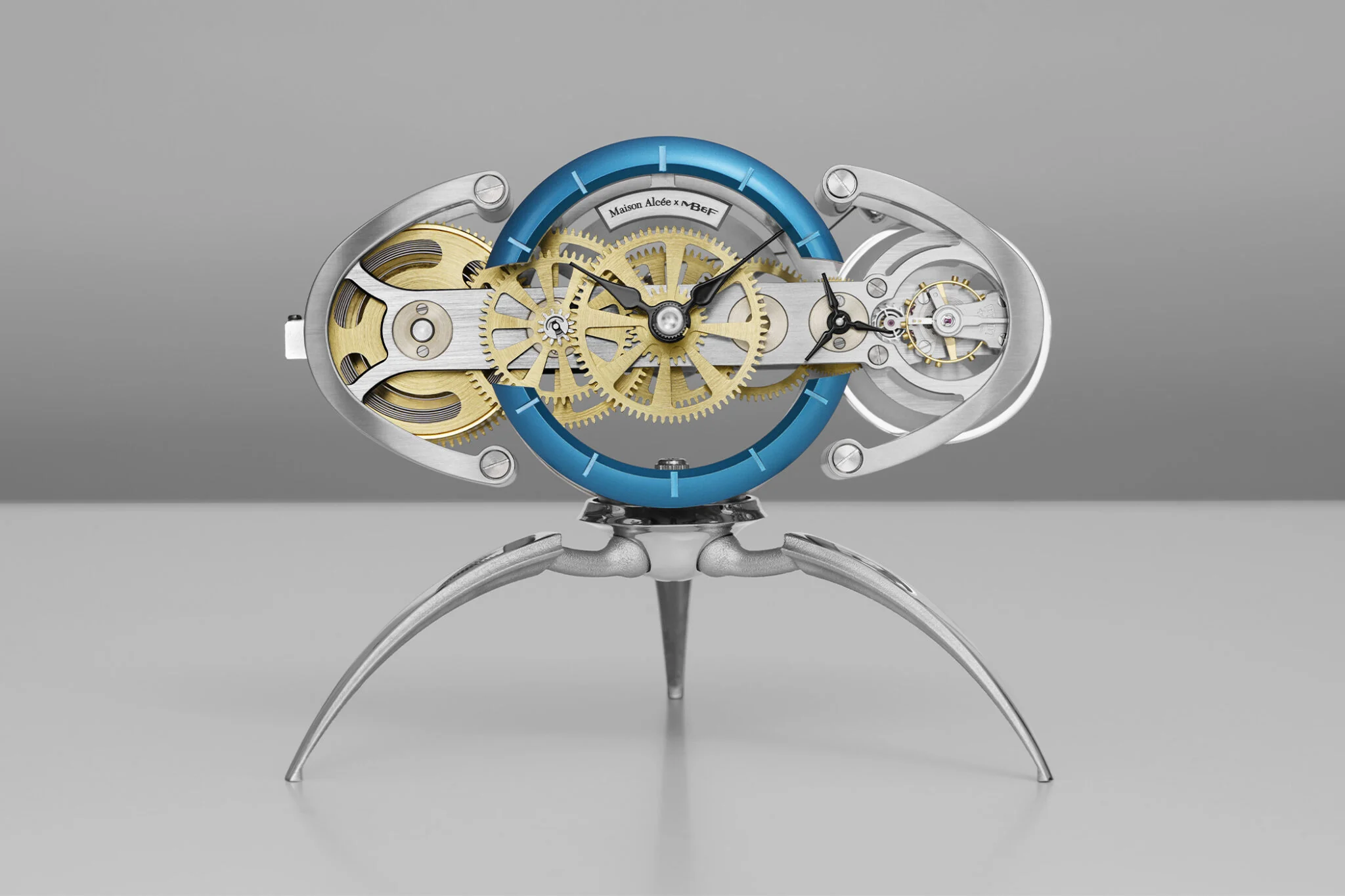
The first watch, M.A.D.1, was introduced in 2021. Its design drew inspiration from the rotating turbine blades of an aircraft engine. The time is displayed through rotating cylinders positioned around the side of the case.
The watch uses a Miyota movement, modified to support the display and the distinctive rotor arrangement.
The concept was deliberately different from the highly complicated and expensive MB&F Machines. M.A.D.Editions sought to make the company’s creative design language accessible to a wider audience.
The watches are not positioned as substitutes for the main MB&F collection. They operate under a separate label and use a different manufacturing and pricing structure.
The initiative is important because it shows that the company’s creative identity is not necessarily tied to extreme complications or very high prices. A distinctive mechanical concept can be expressed at a different level of complexity and cost.
The Friends behind the machines
The collaboration model remains one of the defining features of MB&F.
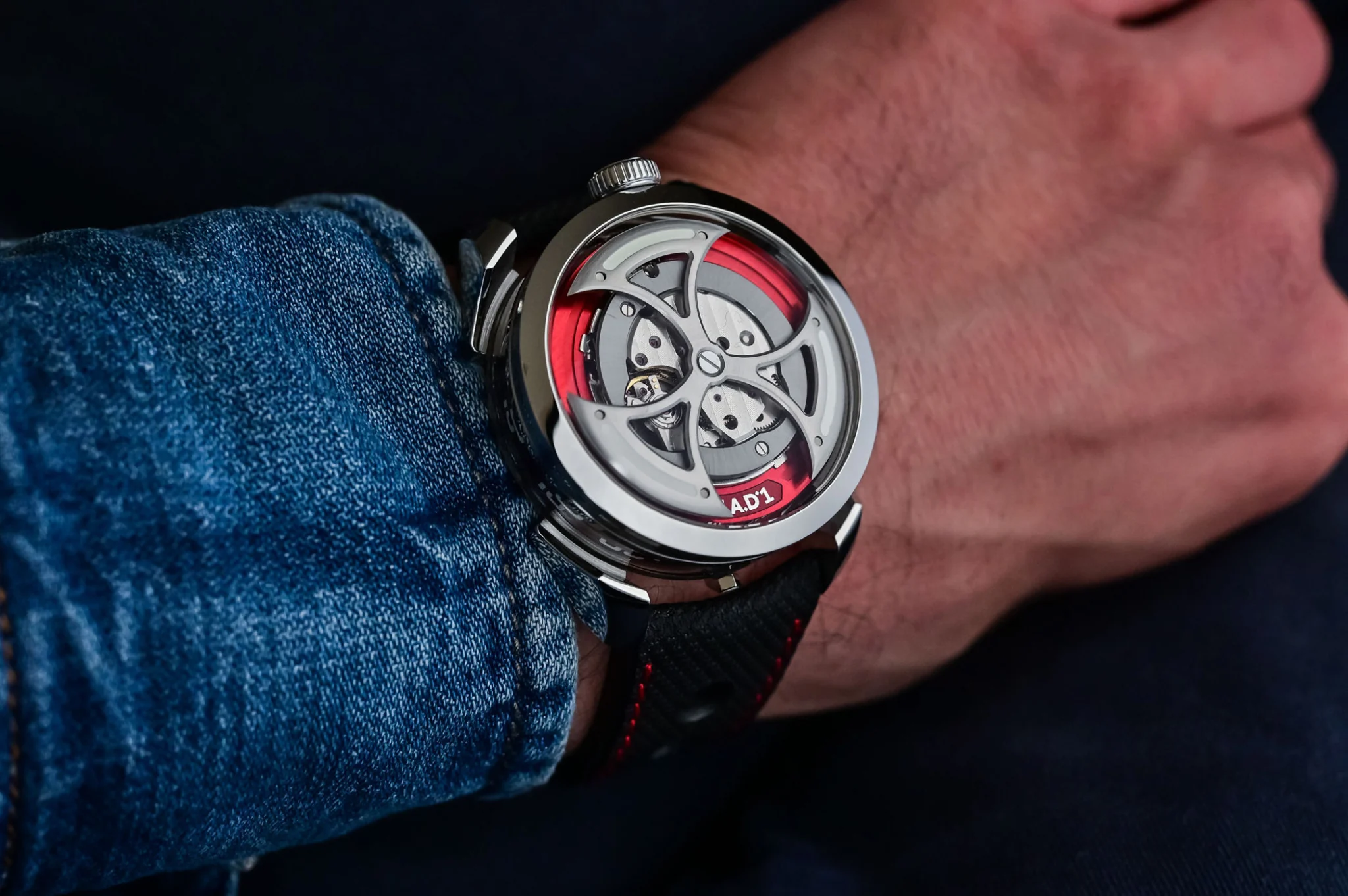
The company has worked with a broad network of independent watchmakers, designers, engineers, artists and specialist manufacturers. Their contributions are visible in the development of movements, complications, cases, artistic objects and collaborative editions.
The relationships are not limited to one project. Some collaborators have been involved in several major developments over the years.
Jean-François Mojon contributed to the development of LM1 and LM2. Kari Voutilainen brought his expertise in classical movement architecture and finishing to early Legacy Machines. Stephen McDonnell played a central role in the development of LM Perpetual and LM Sequential.
Other collaborations have involved artists and designers whose work extends beyond watchmaking. These partnerships have produced editions that combine mechanical watchmaking with sculpture, illustration, jewellery or other forms of artistic expression.
The company’s identity is therefore not based solely on the personality of its founder. Büsser provides the creative direction, but the machines are the result of a wider network of expertise.
The name MB&F acknowledges this shared authorship.
Twenty years of creative development
In 2025, MB&F celebrated its twentieth anniversary.
The company had grown from a small project initiated by Maximilian Büsser into a team of more than sixty people, with over twenty calibres developed during its history.
The anniversary was marked by special editions and collaborations, including the Legacy Machine Perpetual Longhorn and Legacy Machine Sequential Flyback Longhorn.
The Longhorn editions revisited the design language of LM1, introducing elongated lugs and a distinctive aesthetic treatment. The watches were limited to twenty pieces each.
The anniversary was not simply a celebration of the number of years in business. It provided an opportunity to reflect on the evolution of the company’s creative approach.
The original Horological Machines challenged the appearance of traditional watches. Legacy Machines explored historical watchmaking through a sculptural perspective. Complications such as the perpetual calendar and Sequential chronograph demonstrated the company’s technical ambitions. Co-creations and mechanical art expanded the concept beyond the wrist.
The anniversary also reinforced the importance of the people involved. MB&F’s history is a record of collaborations, experiments and ideas that have developed over two decades.
What makes MB&F distinctive?
MB&F occupies a position that is difficult to compare directly with traditional luxury watch brands.
Its watches are not primarily defined by a particular complication, case shape or historical collection. The company’s identity emerges from the way it approaches the creative process.
The Horological Machines begin with unconventional concepts. The Legacy Machines reinterpret traditional watchmaking. The co-creations extend mechanical design into clocks, music boxes and artistic objects. M.A.D.Editions explores a more accessible expression of the same creative spirit.
The common element is the willingness to reconsider the purpose and appearance of a mechanical object.
This approach has obvious strengths. MB&F has developed a recognisable identity, and its creations often combine technical ingenuity with a strong visual concept. The collaborations bring together expertise that would be difficult to replicate within a conventional manufacture.
There are also limitations. The watches are expensive, highly individual and often visually unconventional. Their appeal is unlikely to be universal. Collectors who prefer understated classical watches may find the designs too expressive, while others may be more interested in the mechanical ideas than in the artistic presentation.
The price and limited production also make the watches difficult to acquire. Their value is closely tied to the complexity of the movements, the specialist work involved and the scale of production.
The company’s creative freedom exists within the realities of luxury manufacturing. The development of a new movement, case or complication requires considerable investment, and the production of each machine depends on a network of skilled specialists.
MB&F’s distinction lies in maintaining that creative ambition while building a sustainable business around it.
Beyond the watch
Maximilian Büsser’s original idea was to create a company that could bring together people with different skills and allow them to develop mechanical objects that would not fit comfortably within the conventions of the watch industry.
Two decades later, MB&F has expanded that idea into a wider creative universe.
The watches remain at the centre of the company, but they are connected to a broader network of artists, designers, manufacturers, galleries and collectors. The machines are not isolated products. They are part of a continuing conversation about mechanics, design and imagination.
A Horological Machine may resemble an aircraft, an animal or a spacecraft. A Legacy Machine may draw on the architecture of a nineteenth-century pocket watch. A perpetual calendar may be redesigned around a mechanical processor. A music box may become a sculptural object.
Each creation reflects a particular idea and the people who helped bring it to life.
At Oceane Istanbul, MB&F is compelling because it demonstrates how a brand can be built around a creative philosophy rather than a conventional product category. The company’s work connects watchmaking with engineering, art, design and collaboration.
The most interesting aspect of MB&F is not simply that its watches look different. It is that the difference begins with the way the company thinks.
The mechanism becomes a sculpture. The complication becomes an opportunity to reconsider an established system. The collaboration becomes part of the identity of the object.
MB&F has made mechanical watchmaking a platform for creative expression, and its machines continue to explore what that platform can become.
Stacked from 33 images. Method=B (R=4,S=1)