Blog
NAOYA HIDA & Co.: The Art of Making a Modern Vintage Watch

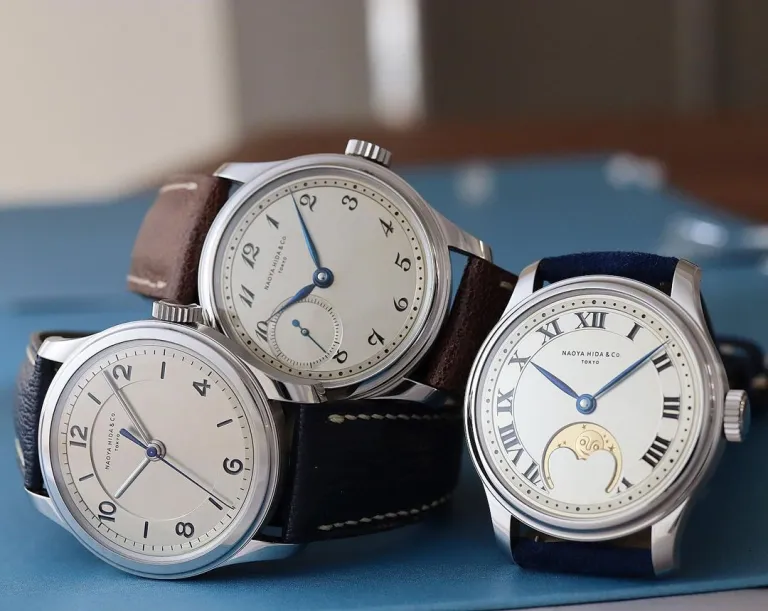
The appeal of a Naoya Hida & Co. watch often begins with its dial. The numerals are finely engraved, the hands have a shape that feels familiar from another era, and the case proportions are deliberately restrained. Nothing appears to be chasing the latest design trend. A closer look, however, reveals a watch made with contemporary precision and a distinctly Japanese approach to craftsmanship.
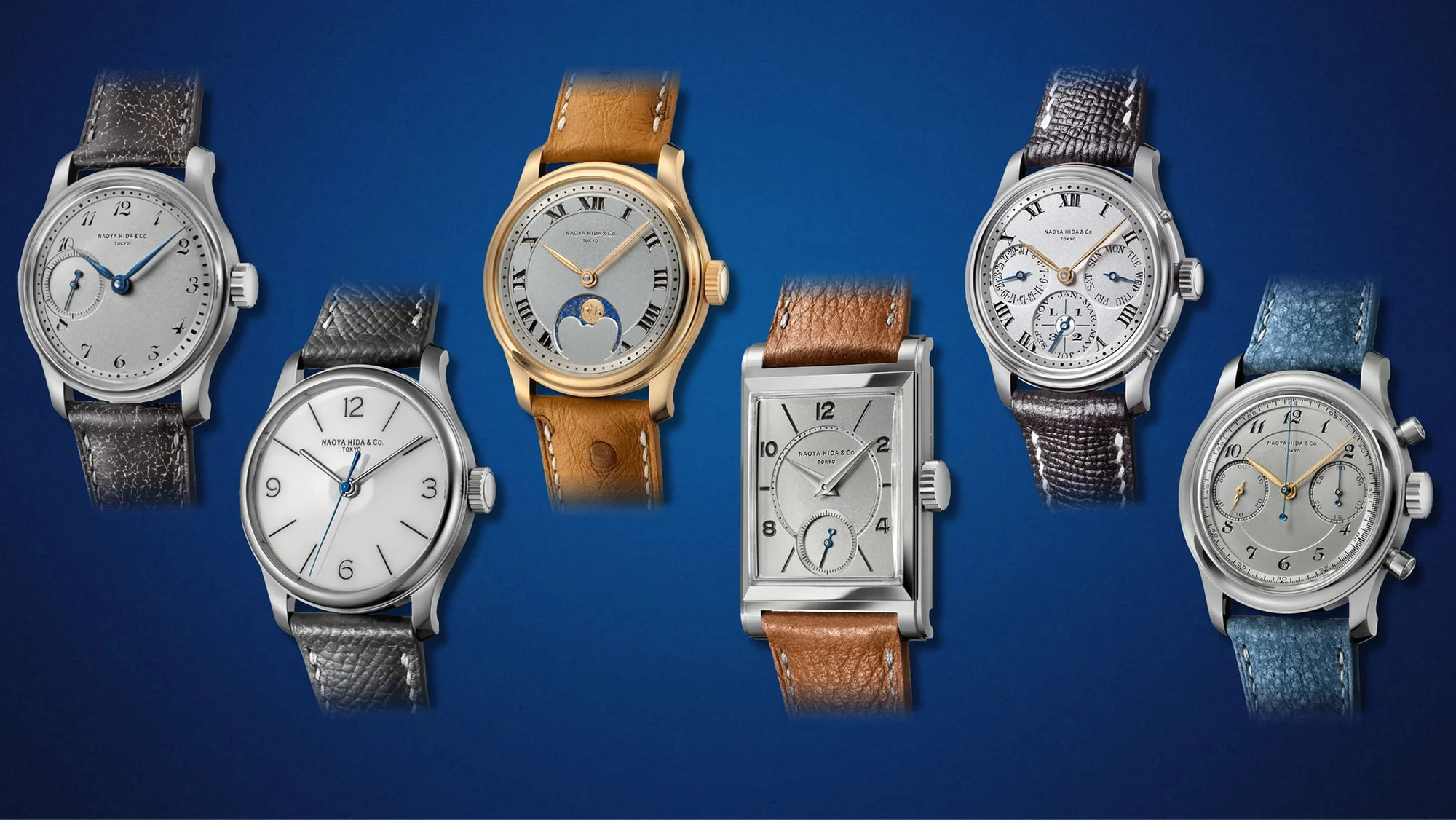
Founded in Tokyo in 2018, NAOYA HIDA & Co. has developed a collection of mechanical watches inspired by the design language of the 1930s to the 1960s. The brand describes its concept as a modern vintage watch, combining the work of skilled craftsmen with the capabilities of advanced machine tools.
The distinction is important. These watches are not intended to reproduce a particular historical reference. Their design draws from an earlier period of watchmaking, while their construction and details reflect what can be achieved today.
The result is a brand whose character comes from a careful balance of restraint, precision and handwork.
Naoya Hida: From the luxury watch business to his own vision
Naoya Hida’s path to founding his own watch company was different from that of a traditional watchmaker.
Beginning in 1990, Hida worked in sales and marketing for specialised foreign trading companies. His career brought him into contact with high-end watch brands, including F.P. Journe and Ralph Lauren Watch & Jewelry, where he served as the representative in Japan.
The experience gave him a close understanding of the luxury watch business, from product development and positioning to the expectations of collectors. He was involved in the Japanese market for watches created by other designers and watchmakers, but eventually wanted to develop a product that reflected his own preferences.
The idea was not simply to establish another luxury watch label. Hida wanted to create the kind of watch he personally admired: one with classical proportions, carefully executed details and a clear relationship between design and craftsmanship.
In March 2018, he established NH WATCH Co. Ltd. in Tokyo. The first prototype, NH TYPE 1A, was produced that year. The first commercial model, NH TYPE 1B, followed in 2019.
The early production was extremely limited. Seven examples of the TYPE 1B were sold, and the model was discontinued. This small scale was not an incidental characteristic of the brand. It reflected the nature of the production process and the level of detail Hida wanted to maintain.
The idea of modern vintage
Vintage-inspired watches are a familiar part of the contemporary market. Many brands draw on the designs of their historical collections, reproducing cases, dials and hands from earlier decades.
NAOYA HIDA & Co. takes a slightly different approach.
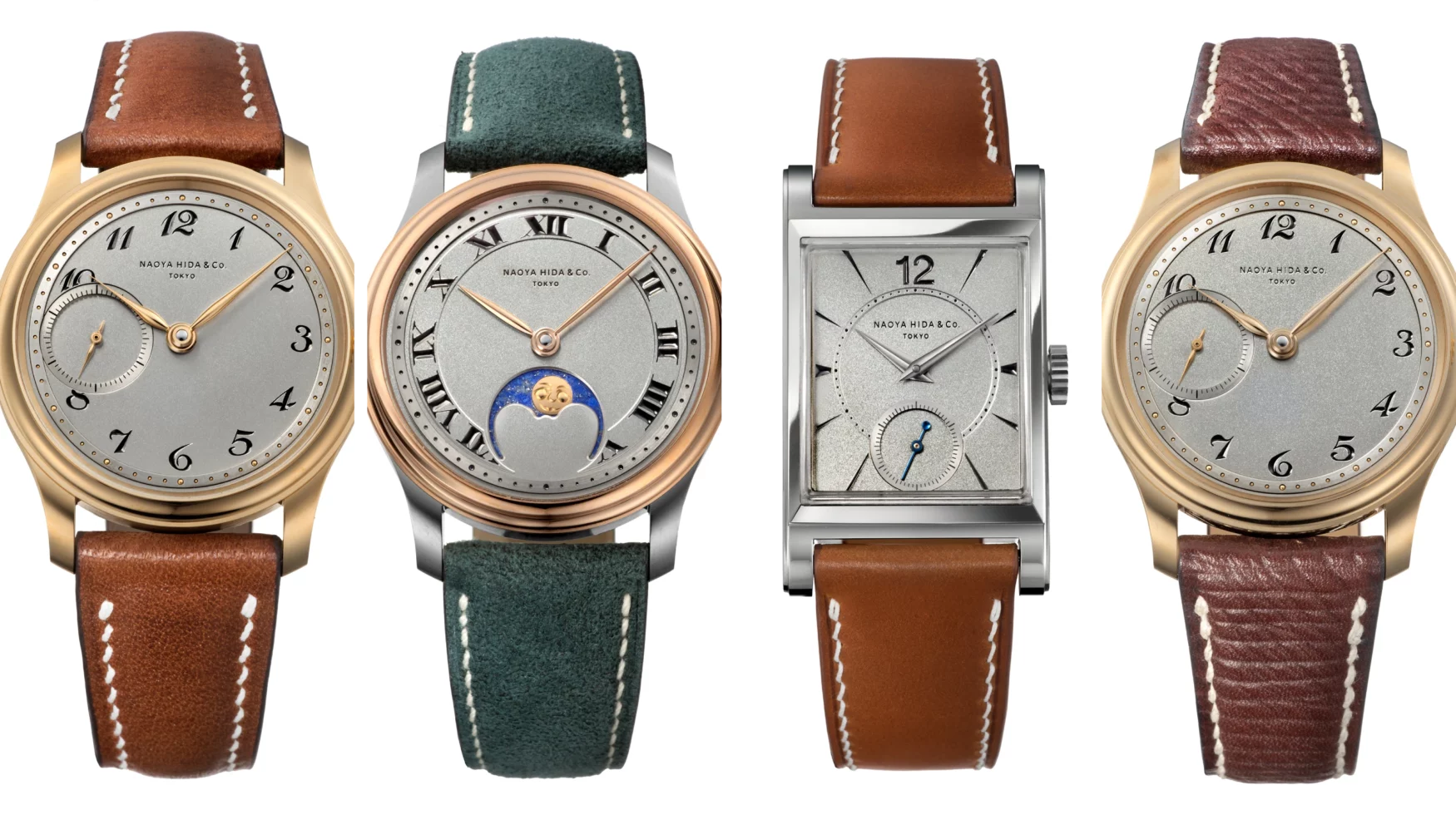
The design references are clear. The watches often feature compact cases, traditional dial layouts, Arabic or Roman numerals, small-seconds displays and curved crystal profiles. The overall proportions recall the mechanical watches of the mid-twentieth century.
But the brand does not describe its work as simple reproduction. Its stated ambition is to create watches that could only have been produced in the modern era.
This becomes apparent in the construction. The cases and hands are machined using highly precise microfabrication equipment. The dials, numerals and indexes receive hand-engraving or other specialist finishing. Modern production technology provides the accuracy needed for the components, while skilled craftsmen contribute details that cannot be reduced to machine work alone.
The relationship between these two methods is central to the brand.
A finely engraved numeral, for example, may appear to be a small decorative detail. Its shape, depth and position affect the entire character of the dial. The precision of the machining allows the design to be executed consistently, while the engraving gives the surface a distinctly human quality.
The watches are modern in construction, but their visual language is deliberately familiar.
A collaboration between machine precision and human skill
One of the most interesting aspects of NAOYA HIDA & Co. is its use of advanced microfabrication machinery.
The brand’s early development involved a collaboration with Roku-Roku Sangyo, a Japanese manufacturer known for high-precision machining equipment. The project brought together the capabilities of microfabrication machines and the expertise of watchmaking craftsmen.
The technology is used to produce components with extremely fine tolerances. This is particularly relevant for small watch parts, where even minor deviations can affect the appearance, fit or function of a component.
The machine does not replace the craftsman. Instead, it creates a level of precision that allows the handwork to be carried out with greater control.
This distinction can be seen in the brand’s hands. Their shapes are machined to precise dimensions, then polished and heat-treated to produce blued steel. The tips of the long hands are manually bent so that they align closely with the minute track around the dial.
The result is a detail that may go unnoticed during a casual glance, but becomes meaningful when examining the watch closely.
The same philosophy applies to the cases. The use of advanced machining allows the brand to work with materials such as 904L stainless steel, which can be challenging to machine. The cases are produced with an emphasis on fine tolerances and carefully defined geometry.
The technology supports the design. It does not become the design itself.
The dial: Where the brand’s character becomes visible
The dial is perhaps the most distinctive element of a NAOYA HIDA & Co. watch.
The brand’s numerals and indexes are often hand-engraved by Keisuke Kano, a specialist engraver whose background includes work at Seiko and Tiffany. Kano joined NH WATCH in 2022 and is responsible for dial engraving and related work.
The process is particularly demanding because the dial is a small surface. Every numeral must maintain its proportions, and the spacing between the indexes must remain consistent. The depth and shape of the engraving affect how light moves across the surface.
The numerals are not simply applied markers. They are part of the dial itself.
This approach creates a visual quality that differs from printed or stamped indexes. The engraving introduces subtle variations in reflection and depth. The dial can appear restrained from a distance, while the details become more apparent when viewed closely.
The brand’s preference for hand-engraved indexes also has a historical connection. Hida has spoken about the impression made on him by guilloché dials from eighteenth- and nineteenth-century Breguet watches. Their depth and three-dimensional quality influenced his interest in bringing hand engraving to the scale of a modern wristwatch.
That interest became a defining feature of the brand.
The NH TYPE 1 series: A classical dress watch
The TYPE 1 series is the foundation of the brand’s collection.
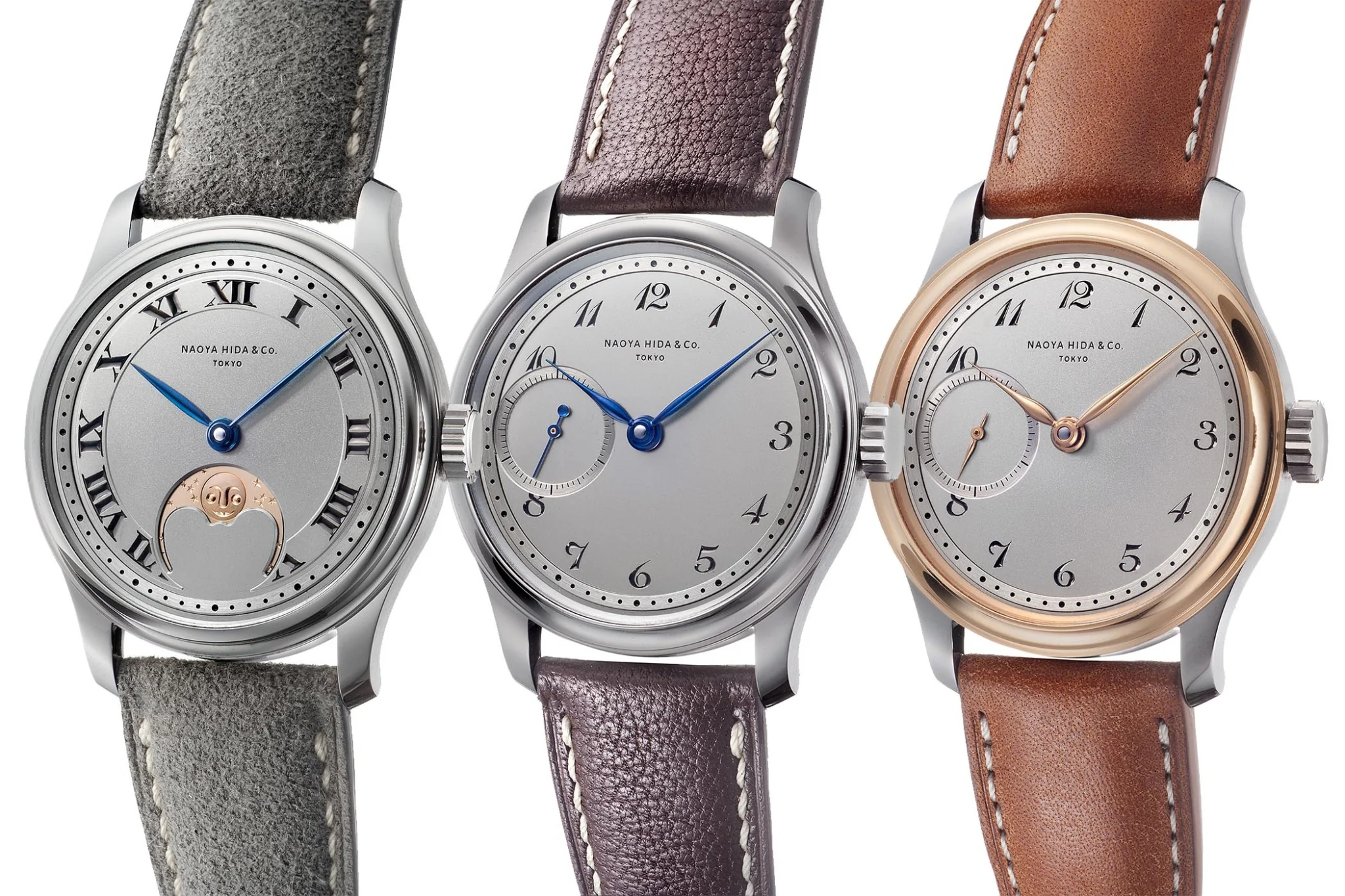
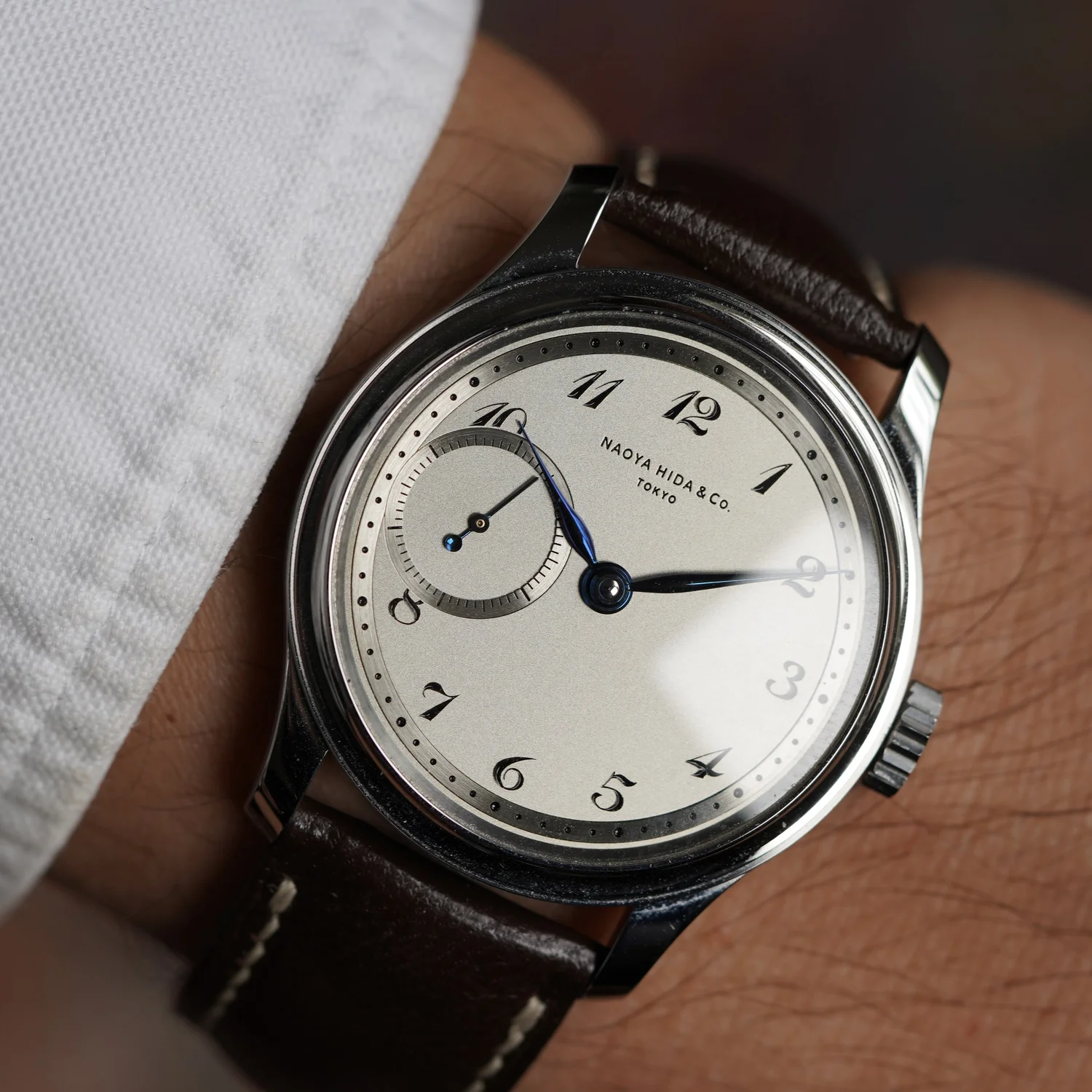
Its small-seconds display at nine o’clock, compact case and restrained dial composition establish the visual language that runs through many of the later models. The design draws on classical dress watches, but the execution is distinctly contemporary.
The series has evolved through several generations, from TYPE 1B to TYPE 1C, TYPE 1D and the more recent TYPE 1E.
The latest TYPE 1E, listed for 2026 production, reduces the case diameter from the previous 37mm to 36mm. The sapphire crystal has also been redesigned with a more pronounced domed profile.
These changes are subtle, yet they demonstrate how the brand approaches product development. The evolution is not based on dramatic redesigns. Small adjustments to proportions and crystal geometry can alter the impression of a watch considerably.
The TYPE 1 remains a dress watch in the classical sense. Its appeal lies in the balance between the dial, case and hands, rather than in a complication or an elaborate display.
TYPE 2: The central seconds
The TYPE 2 series takes a different approach to the display of time.
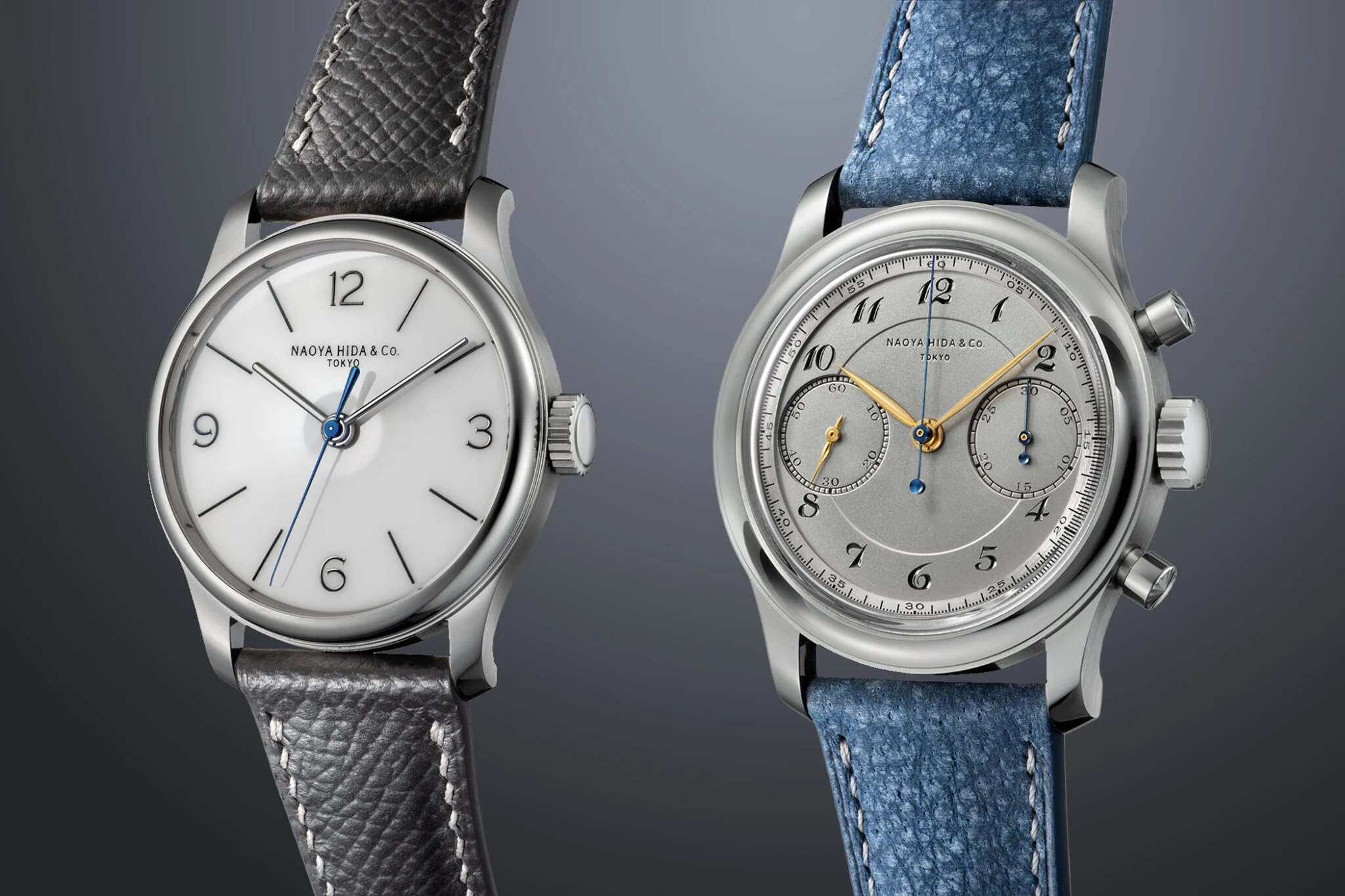
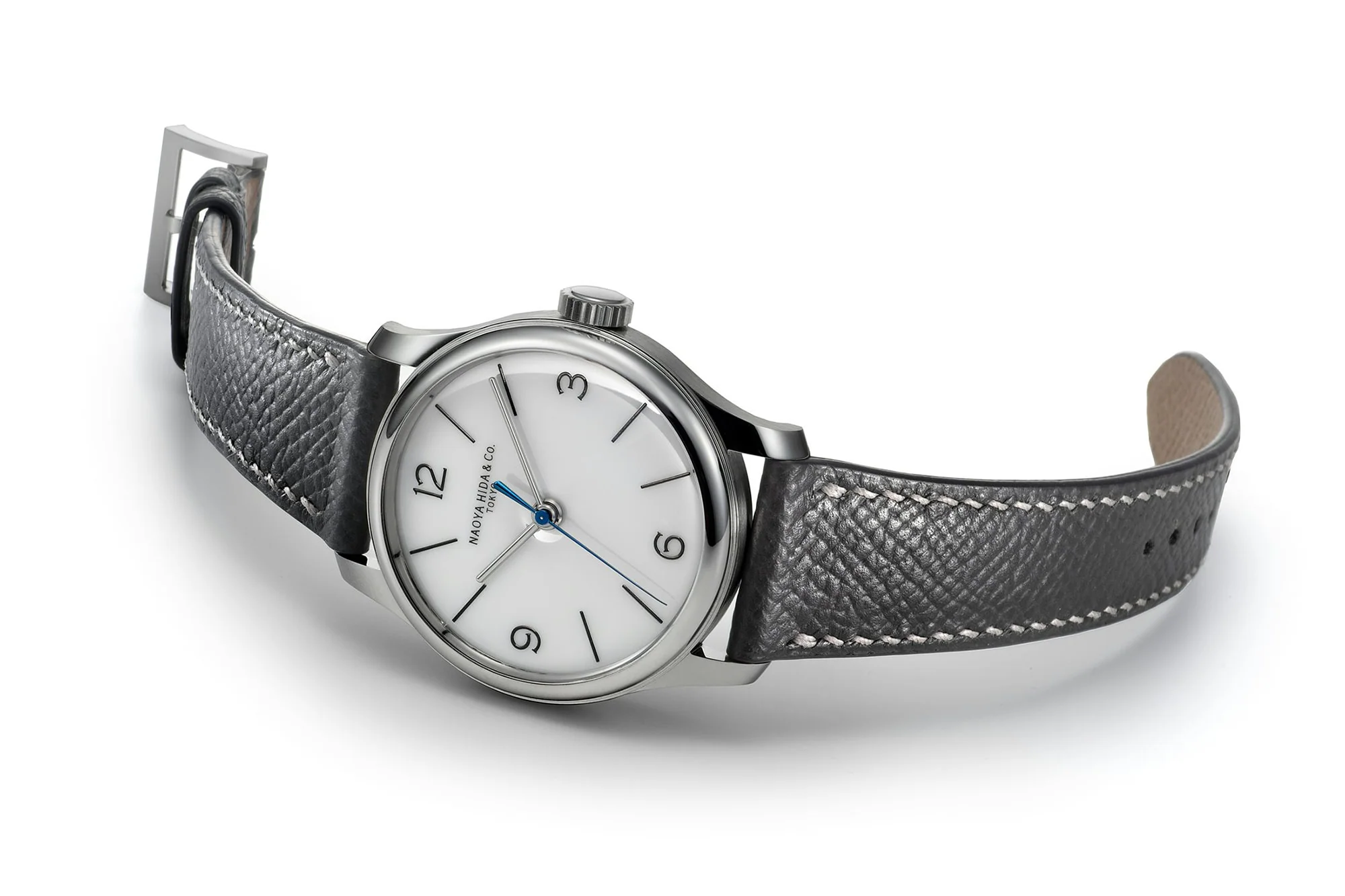
Where the TYPE 1 places the small seconds at nine o’clock, TYPE 2 uses a central seconds hand. The change creates a more conventional reading of the time, while retaining the brand’s characteristic dial treatment.
The series also demonstrates the importance of restraint in design. The central seconds hand introduces movement to the dial without requiring additional visual elements.
The TYPE 2C-2, listed for 2026 production, is particularly notable for its porcelain dial. It is the first porcelain dial in the TYPE 2C series, with the indexes and logo hand-painted by skilled artisans.
Porcelain introduces a different surface quality from metal. Its appearance is more closely associated with traditional decorative objects than with contemporary industrial materials. The hand-painted indexes reinforce that character.
The watch brings together several distinct disciplines: mechanical watchmaking, porcelain dial production and manual painting.
The result remains understated, but the work behind the dial is considerable.
TYPE 3: Moon phases and a more expressive dial
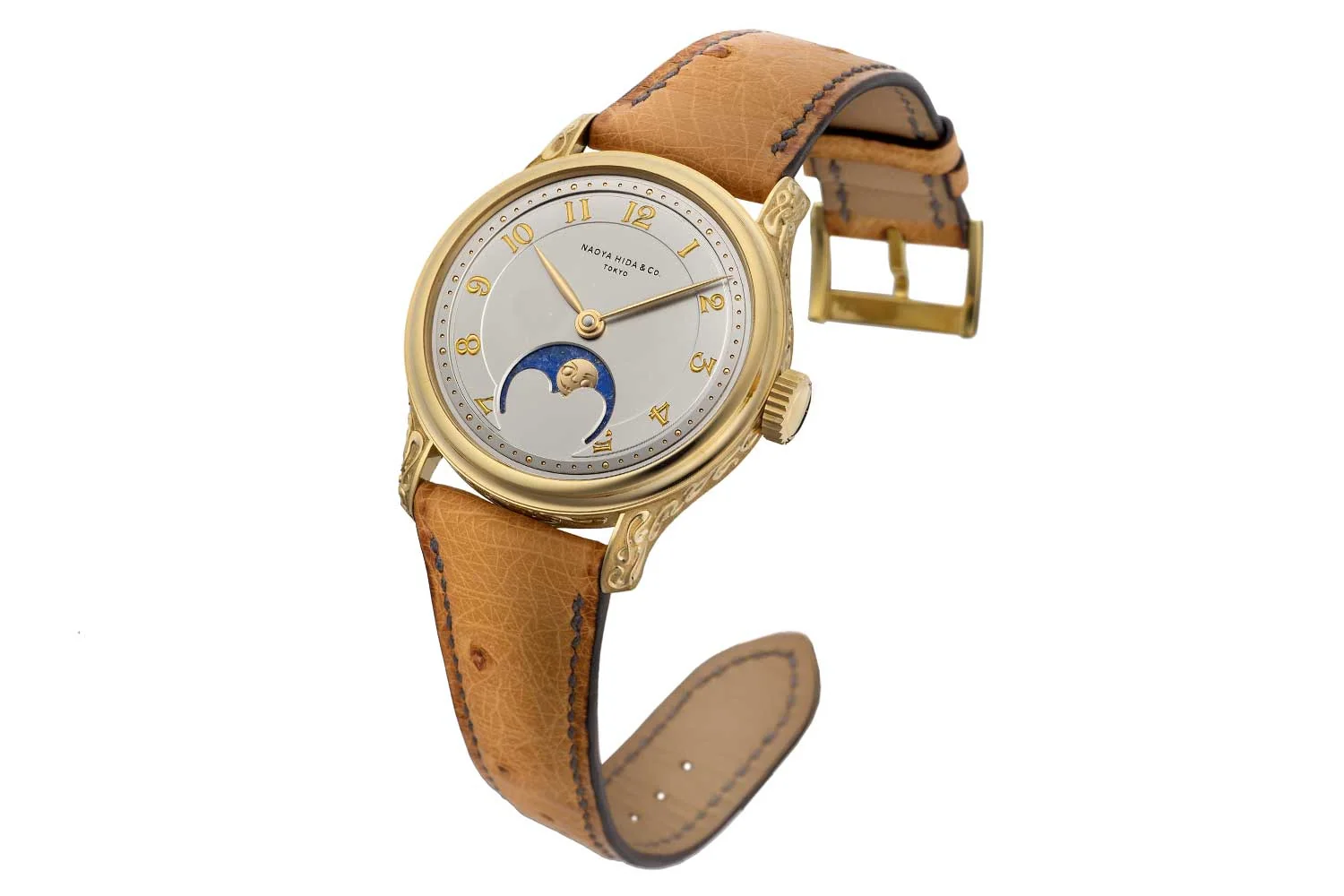
The TYPE 3 series introduces a moon-phase display and a two-hand arrangement.
The complication adds a more expressive element to the otherwise restrained design. The moon-phase indication is not treated as a purely functional addition. Its disc and moon face are designed as part of the overall dial composition.
The TYPE 3B, introduced in 2022, brought several developments to the series, including a screw-down caseback and a redesigned moon-phase disc and moon face.
The more elaborate TYPE 3B-3 combines an 18-karat yellow-gold case with a lapis lazuli moon-phase disc. The gold moon face is hand-engraved, as are the Roman numerals visible through the large aperture.
The TYPE 3B-4 takes the craftsmanship further. Its yellow-gold case features hand-engraved detailing across much of the exterior, while sculpted Arabic numerals receive gold leaf.
These versions show how the brand can move beyond its more restrained aesthetic without abandoning its underlying approach. The decoration is still based on carefully executed craftsmanship, and the dial remains the central point of attention.
The moon-phase complication provides a practical indication, but its visual character is equally important.
TYPE 4 and TYPE 5: Exploring different forms
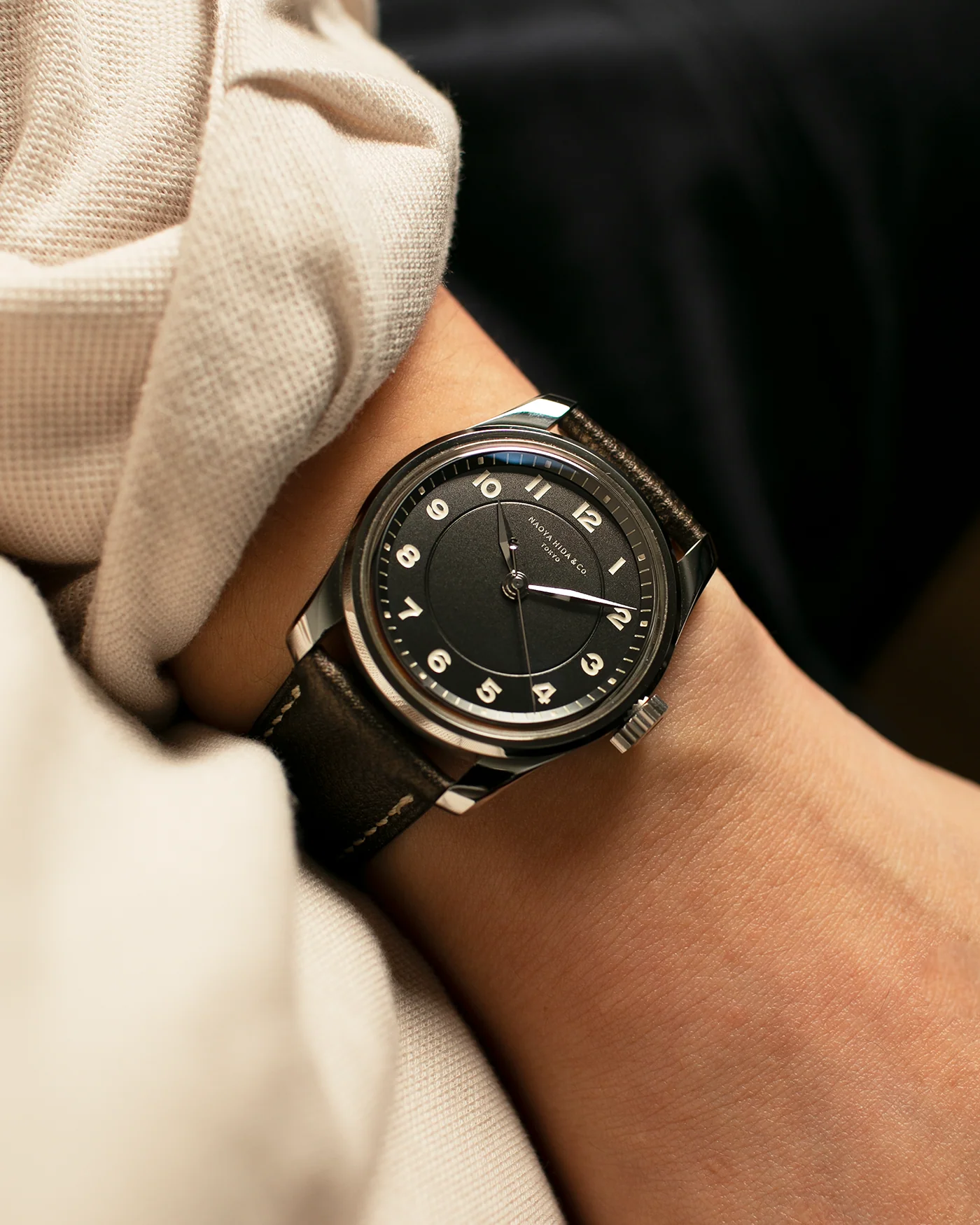
The TYPE 4 series introduces a sportier dress-watch character, with central seconds and a case design that differs from the more traditional TYPE 1 and TYPE 2 models.
The TYPE 4A and TYPE 4A-1 demonstrate the brand’s continued interest in developing new variations within a coherent design language.
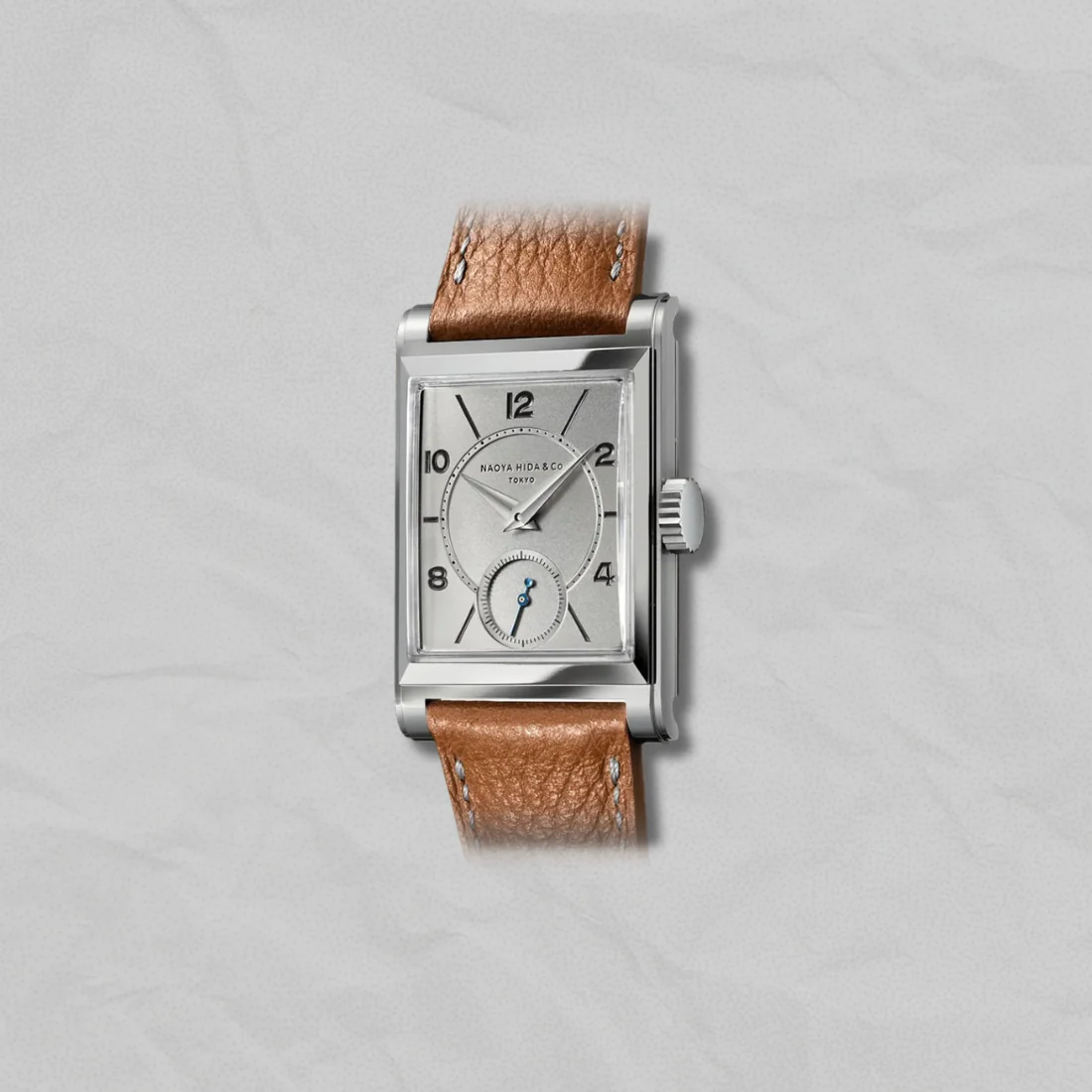
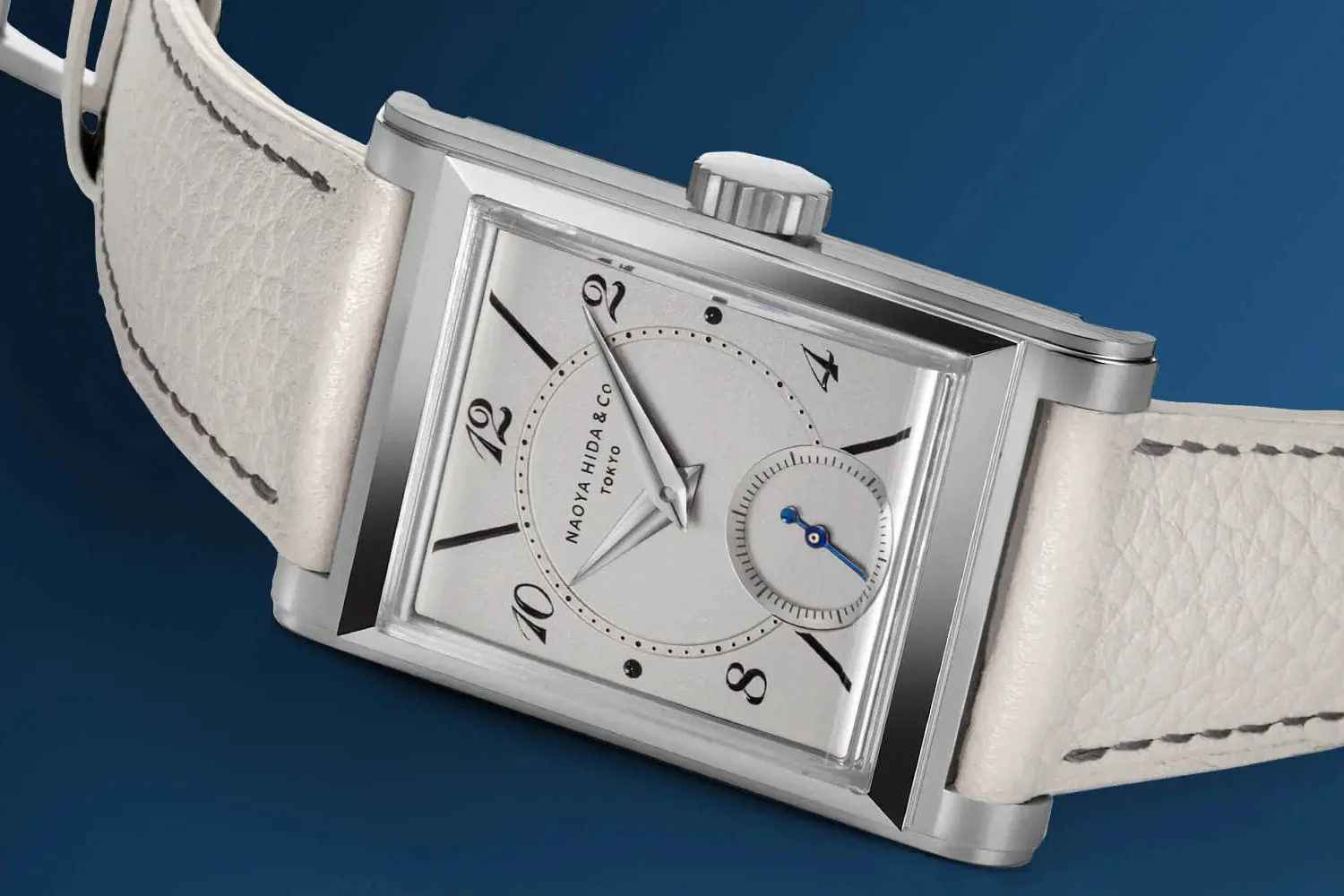
TYPE 5 moves in another direction, adopting a rectangular case. The shape brings the brand closer to the design vocabulary of vintage rectangular watches, while retaining its approach to precise machining and hand-finished dial details.
The TYPE 5B and TYPE 5B-1, listed among the 2026 production models, feature redesigned cases and dials. The lugs have been shortened, and the stepped section on the case side has been widened.
The TYPE 5B-1 retains the acrylic crystal introduced on the previous generation. Acrylic is a material often associated with vintage watches. It produces a different visual effect from sapphire, including a subtle distortion when the dial is viewed through the crystal.
This is a deliberate design choice. The material contributes to the character of the watch rather than serving only as a protective cover.
The TYPE 4 and TYPE 5 series illustrate the range of the brand’s design exploration. Different case forms and dial arrangements are introduced, while the focus on proportion, precision and manual details remains consistent.
TYPE 6: A perpetual calendar
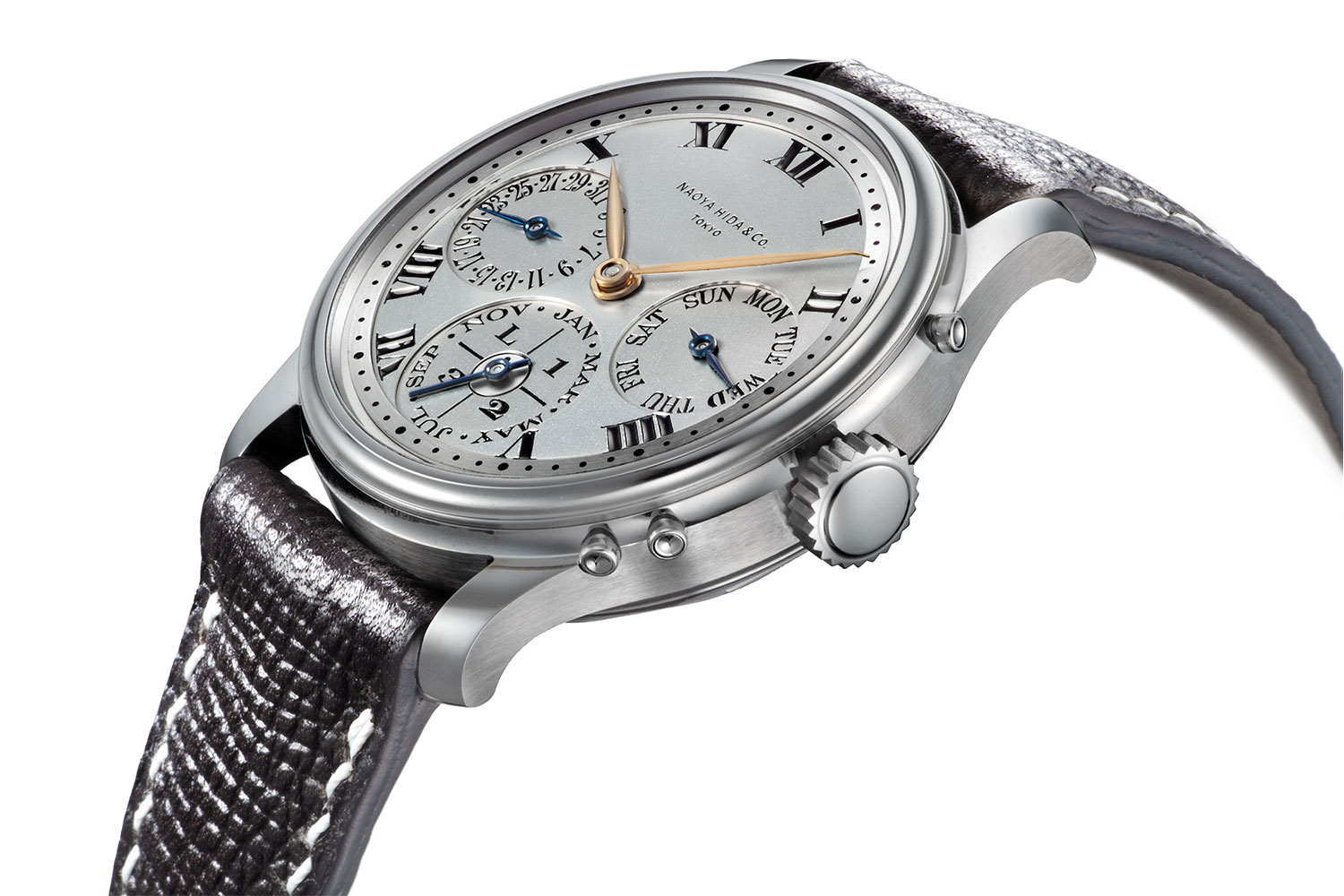
The TYPE 6A, introduced in 2025, marks an important development for NAOYA HIDA & Co. It is the brand’s first watch equipped with a perpetual calendar.
The complication displays the date, day of the week, month and leap-year indication. The watch combines these functions within a dress-watch design, rather than adopting a larger or more overtly technical case.
The dial is particularly significant. The Roman numerals and the calendar indications are hand-engraved by Keisuke Kano. For the first time, the brand uses Argentium silver as the dial material. Argentium is known for its resistance to tarnishing, making it an interesting choice for a silver dial.
The perpetual calendar requires a more complex mechanism than the brand’s earlier time-only and moon-phase watches. Yet the display remains visually controlled.
The TYPE 6A is a meaningful step in the brand’s development. It introduces a major complication while maintaining the restrained aesthetic that has defined its earlier collections.
The watch demonstrates that the brand’s design philosophy can accommodate more complex mechanics without becoming visually crowded.
TYPE 7: A chronograph with a historical movement
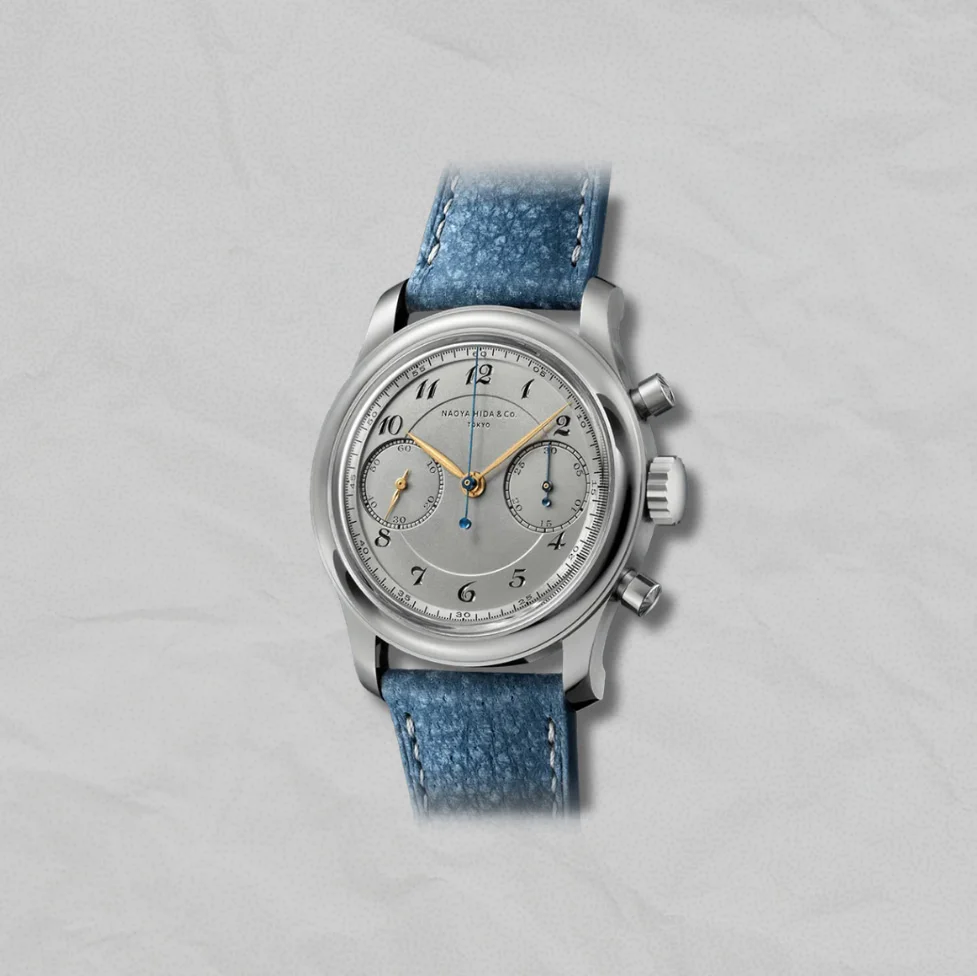
The TYPE 7A introduces a chronograph to the NAOYA HIDA & Co. collection.
Unlike the brand’s other models, which generally use movements developed specifically for its watches, TYPE 7A is equipped with a vintage Valjoux 23 chronograph movement.
The choice is significant. Valjoux 23 is a respected historical chronograph calibre, and its use connects the watch directly to the period that informs the brand’s design language.
The case is produced using modern manufacturing techniques, while the indexes are hand-engraved and the three-dimensional hands are machined with precision.
The watch brings together a historical movement and contemporary component production. The combination is consistent with the brand’s broader idea of modern vintage watchmaking.
Rather than treating the movement as a decorative reference to the past, the TYPE 7A uses a genuine historical calibre within a watch designed and manufactured in the present.
TYPE 8: A new movement and a smaller case
The TYPE 8A adds another direction to the collection.
The watch features a 31mm case and a newly developed round manual-winding movement, Cal. 2326SS. Its case uses a three-piece construction, with a domed sapphire crystal and a transparent caseback.
The smaller diameter gives the watch a different presence on the wrist. Its design is closer to the compact dress watches that influenced the brand, while the movement and case construction reflect contemporary production capabilities.
The TYPE 8A is also an indication that the brand is continuing to develop its own mechanical foundations. The introduction of a new movement expands the range of technical possibilities available to the manufacture.
A small team with specialist skills
NAOYA HIDA & Co. operates with a small team whose individual expertise is central to the brand.
Naoya Hida leads the company and its product direction. Kosuke Fujita, a watchmaker who joined the company in 2020, is responsible for watch design using CAD and movement assembly. His background includes training at Hiko-Mizuno Watchmaking School, work at F.P. Journe and Seiko Service Center, and WOSTEP certification.
Keisuke Kano joined in 2022 as the brand’s engraver. His work is particularly visible on the dials, where the hand-engraved numerals and indexes have become a defining feature.
The relationship between these roles is important. The watches are not simply designed by one person and manufactured by an anonymous production team. Their character emerges from the collaboration between product direction, watchmaking and engraving.
This structure also explains the brand’s limited production. The work depends on specialist skills that cannot be expanded quickly without affecting the nature of the process.
The small scale is therefore not just a marketing characteristic. It is closely connected to the way the watches are made.
Limited production and the collector
NAOYA HIDA & Co. produces its watches in small quantities. Many models are offered in limited annual production, and several earlier references have been discontinued.
The brand’s official production history records the quantities made for individual models. The figures are unusually transparent for a luxury watch company, providing collectors with a clear record of production.
The limited numbers are connected to the brand’s manufacturing approach. Hand-engraved dials, specialist assembly and carefully controlled component production require time.
For collectors, the appeal is not only rarity. The watches offer a particular combination of design, materials and craftsmanship. Their character is more closely tied to the details of the object than to the recognition of a widely known luxury name.
The brand’s purchasing process also reflects its scale. Applications are accepted during limited periods, and production is planned around the quantities the manufacture can support.
This can make acquiring a watch more difficult than purchasing from a conventional retail collection. It also means that availability should not be assumed from the presence of a model on the website.
The collector’s interest is likely to be strongest among those who appreciate the design language of vintage watches and the quality of their execution.
What distinguishes NAOYA HIDA & Co.?
The brand’s appeal rests on a combination of elements that are individually familiar but unusually coherent when brought together.
The design references the mechanical watches of the mid-twentieth century. The cases, hands and other components are produced using highly precise modern machinery. The dials receive hand-engraving and other specialist finishing. The movements range from time-only calibres to moon-phase displays, perpetual calendars and chronographs.
The watches are not visually dramatic. Their character is built through proportion, surface and detail.
That approach has its own limitations. The classical aesthetic may not appeal to collectors who prefer contemporary sport watches or more conspicuous designs. The small production numbers and handwork also place the watches in a high price category.
Yet the brand has developed a clear identity within Japanese independent watchmaking. It does not depend on a single complication or a signature case shape. Instead, it applies a consistent philosophy across different collections.
The most compelling aspect is the relationship between technology and craftsmanship. Modern machinery creates the precision required for the components. The engraver and watchmaker contribute the details that give the watch its character.
The value of a carefully made detail
A NAOYA HIDA & Co. watch may appear simple at first. The dial is restrained, the case is compact, and the display of time is often conventional.
The details change that impression.
A hand-engraved numeral catches the light differently from a printed index. The tip of a blued hand is shaped to meet the minute track precisely. A domed crystal introduces a subtle distortion that recalls the visual qualities of older watches. A porcelain dial or a silver surface gives the watch a different character from a conventional metal dial.
Each of these decisions contributes to the finished object.
The brand’s work is interesting because it treats these details as essential rather than incidental. The design does not rely on complexity for its own sake. A watch can be visually restrained while demanding considerable skill to produce.
At Oceane Istanbul, NAOYA HIDA & Co. represents a thoughtful relationship between heritage and contemporary craftsmanship. The watches draw from the past without becoming reproductions, and they use modern technology without losing the character of handwork.
Their appeal lies in the precision of the details and the consistency of the design. A closer look reveals the decisions that shaped the watch, from the proportions of the case to the engraving on the dial.
For collectors who appreciate classical watch design, Japanese craftsmanship and the subtle qualities of a finely made mechanical object, NAOYA HIDA & Co. offers a distinctive perspective on modern independent watchmaking.