
Blog
SYLVAIN PINAUD: The Art of Mechanical Clarity Independent Watchmaking at the Crossroads of Art, Science, and Craftsmanship

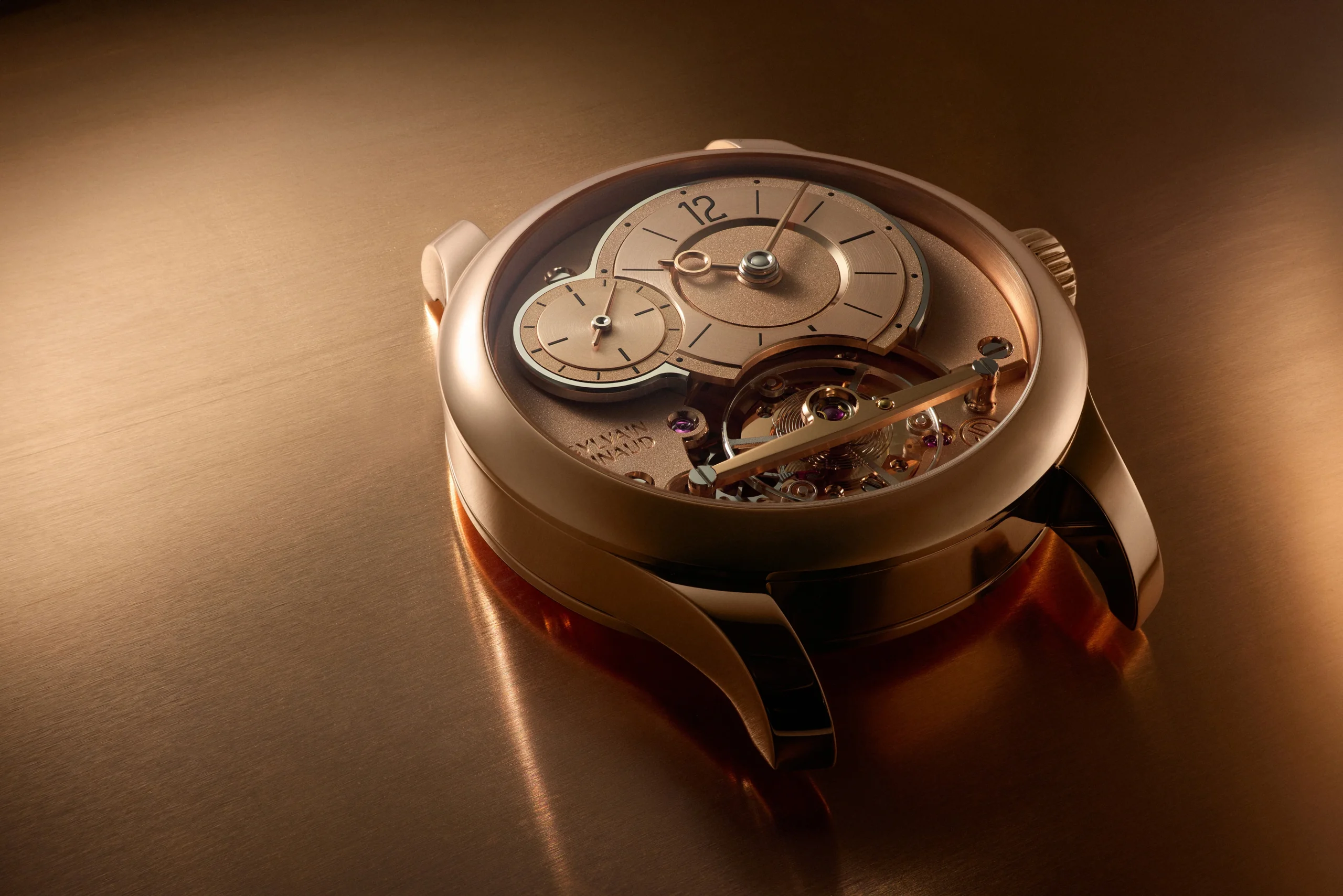
Independent Watchmaking at the Crossroads of Art, Science, and Craftsmanship
In the world of independent haute horlogerie, originality is not always expressed through complexity. Sometimes it emerges from the ability to understand a mechanical problem deeply, reduce it to its essential elements, and create a solution whose beauty lies in its precision and clarity.
Sylvain Pinaud represents this approach to watchmaking.
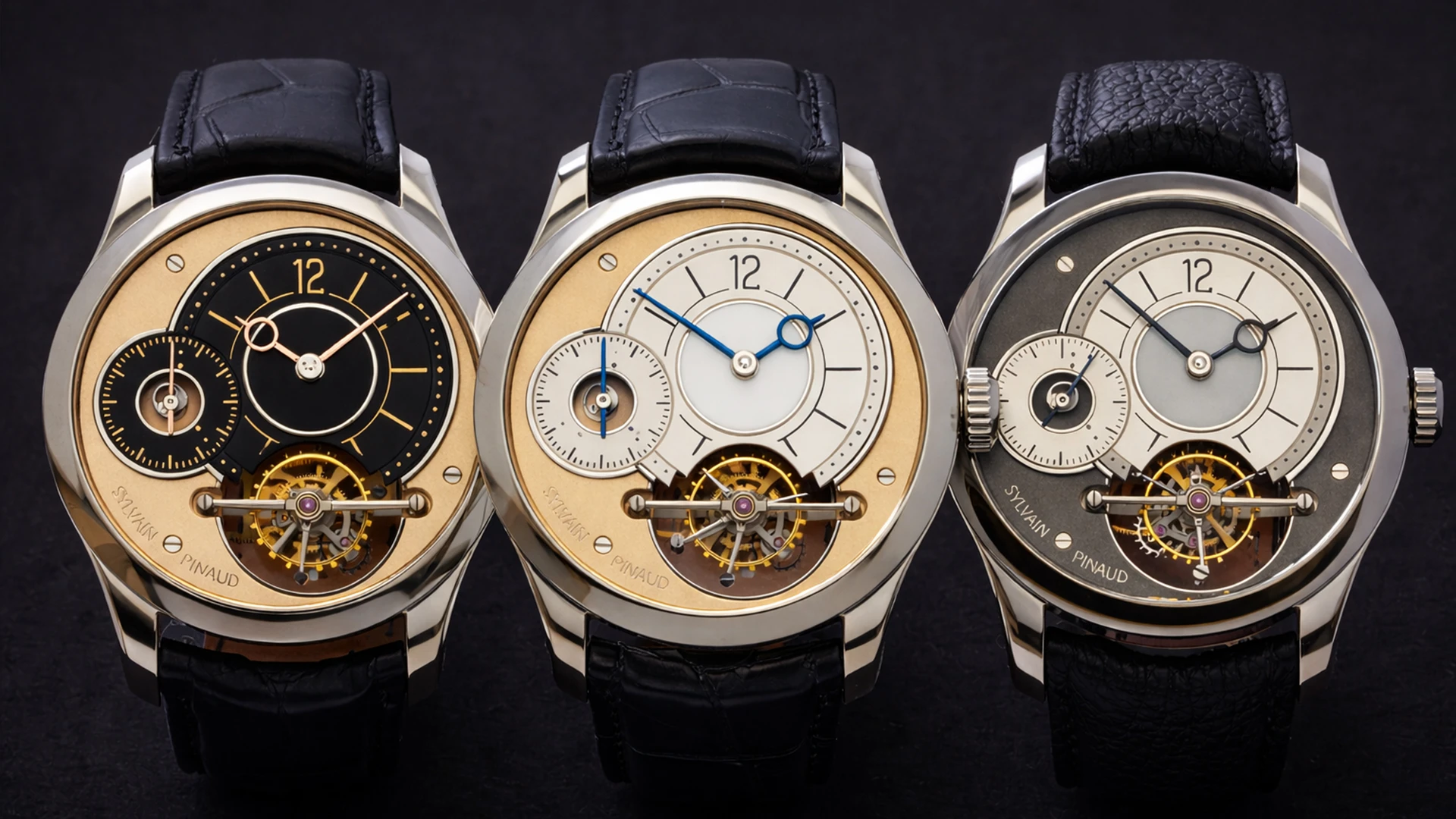
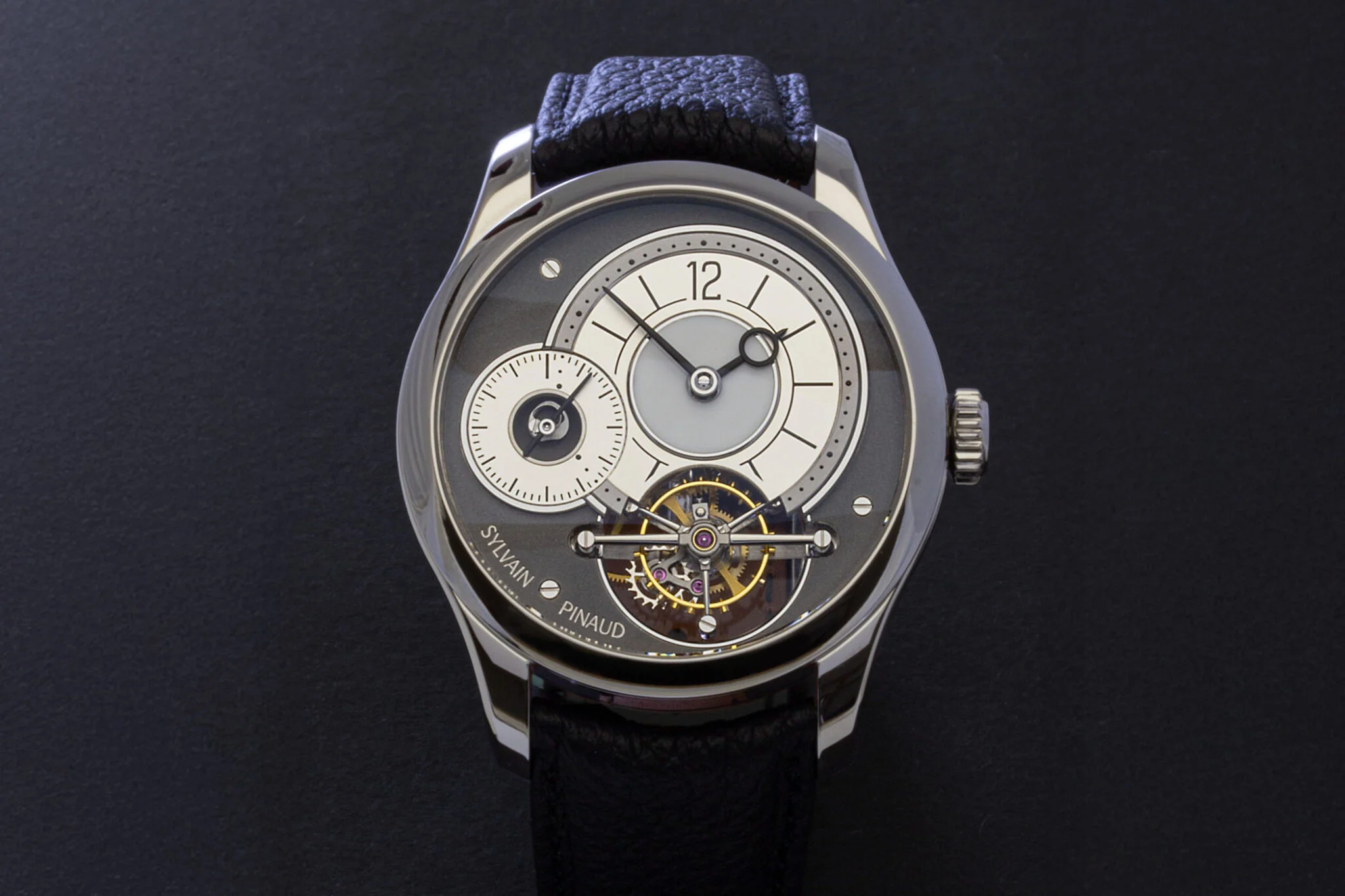
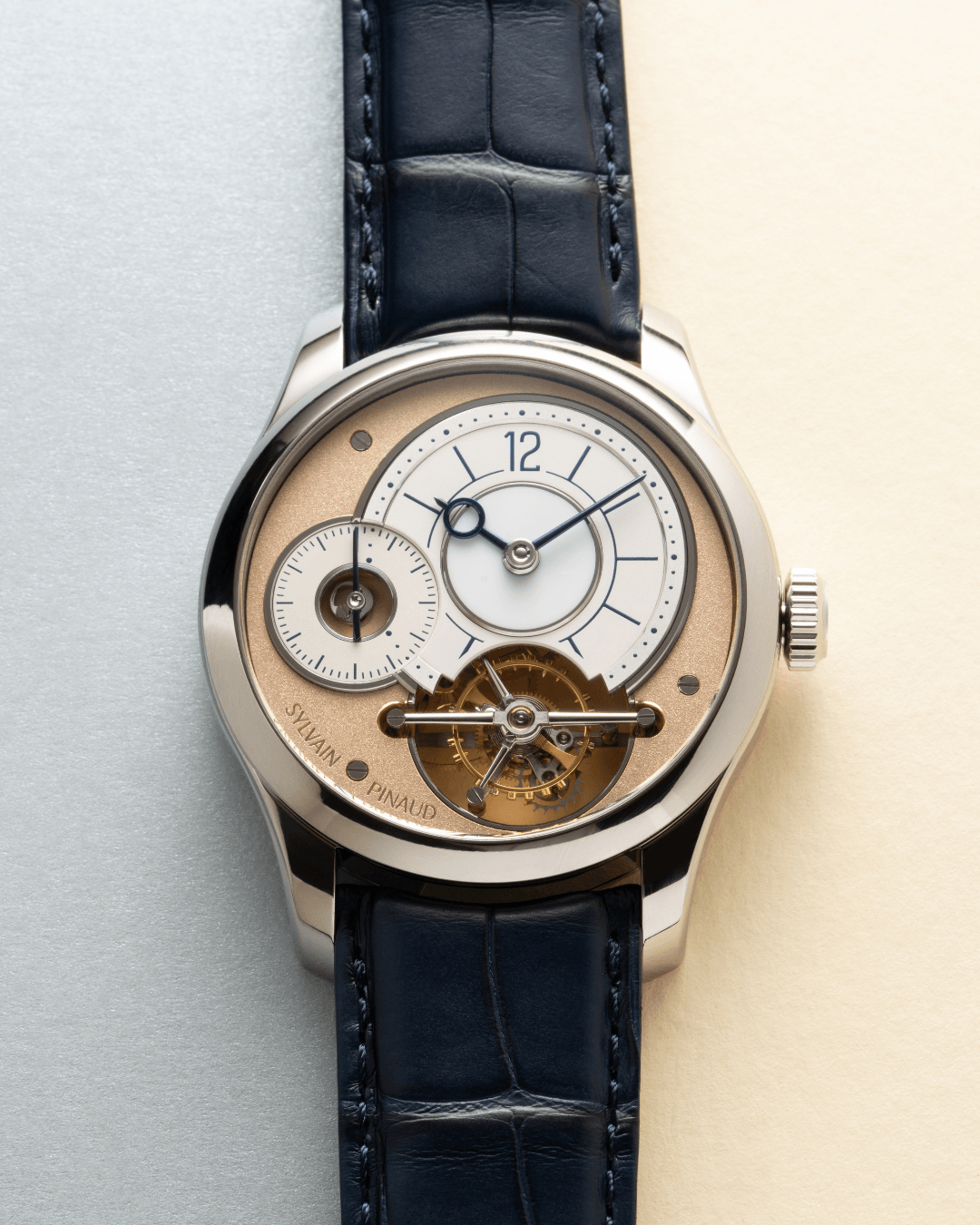
A French-born independent watchmaker based in Sainte-Croix, Switzerland, Pinaud has developed a distinctive horological identity through a combination of technical ingenuity, historical sensitivity, and an uncompromising commitment to artisanal production. His watches are immediately recognisable through their asymmetrical architecture, exposed regulating mechanisms, restrained use of materials, and carefully considered proportions.
Yet the visual language is only one part of the story. Beneath the dial lies a deeper philosophy: a mechanical timepiece should be conceived as a complete object, in which the movement, display, finishing, and functional purpose are inseparable.
Pinaud’s work draws upon the great traditions of classical watchmaking while avoiding the temptation to reproduce historical designs. He studies the achievements of earlier masters, understands the principles behind their constructions, and uses that knowledge as a foundation for his own creations.
The result is a contemporary form of independent watchmaking that feels both familiar and original. His watches possess the elegance of historical horology, but their architecture and mechanical solutions belong unmistakably to the present.
From the award-winning Origine to the Monopusher Chronograph and the technically ambitious 30s Tourbillon, Sylvain Pinaud’s work reflects a consistent belief: watchmaking should be an expression of intelligence, craftsmanship, and artistic judgement, rather than complexity for its own sake.
A Childhood at the Watchmaker’s Workbench
Sylvain Pinaud was born in France in 1978 into a family with a direct connection to horology. His father was a watchmaker, and the workshop became a familiar environment during his childhood.
This early exposure was more than an introduction to a profession. It provided an opportunity to observe the relationship between mechanical objects and the hands that bring them back to life.
As a child, Pinaud spent time around his father’s workbench, fascinated by the mechanisms of clocks and watches. He developed an interest in dismantling and reassembling objects, discovering how individual components interacted to create movement.
The experience established a foundation that would later influence his approach to watchmaking. The profession was not presented as an abstract technical discipline. It was something tangible, requiring observation, patience, and an understanding of how things worked.
His formal education began at the École d’Horlogerie de Morteau, a respected watchmaking school in eastern France, close to the Swiss border.
He graduated in 1998.
The school provided the technical grounding required to enter the profession, but Pinaud’s ambitions extended beyond conventional watchmaking. He was interested in the complete process of creation: movement architecture, mechanical engineering, decorative techniques, prototyping, and the possibility of developing original timepieces.
The aspiration to become an independent watchmaker was already present during his education.
At a time when the Swiss watch industry was increasingly structured around specialised production and established manufacturers, the idea of creating a complete watch independently represented a challenging path.
Pinaud nevertheless pursued it.
Two Decades of Technical Experience
Before establishing his own workshop, Sylvain Pinaud spent approximately twenty years developing his expertise across different areas of the watchmaking industry.
This period was essential to the formation of his technical capabilities and his personal aesthetic.
His professional experience included complicated watchmaking, restoration, movement development, prototyping, and reliability work. These disciplines provided different perspectives on the construction of a mechanical timepiece.
Complicated watchmaking requires an understanding of how multiple mechanisms can operate within a single movement. Restoration involves a different type of knowledge, demanding the ability to interpret historical constructions and recover the original function of components. Prototyping requires the watchmaker to move between theoretical design and practical execution, identifying problems that may not become apparent until a mechanism is physically constructed.
Pinaud’s early career included work at Franck Muller, where he gained experience with high complications such as perpetual calendars, tourbillons, and minute repeaters.
The environment exposed him to complex movements and the technical demands of sophisticated mechanical constructions.
He subsequently worked in clock restoration at Atelier Dominique Mouret in Sainte-Croix. This experience introduced him to historical masterpieces by figures such as Abraham-Louis Breguet, Ferdinand Berthoud, and Antide Janvier.
The restoration of historical clocks provided a particularly important influence.
Working with these objects required an understanding of their original construction, proportions, mechanical principles, and decorative treatment. The objective was not to impose a contemporary aesthetic on the object, but to preserve and recover the integrity of its original design.
Through this work, Pinaud developed a strong appreciation for the elegance of classical horology.
He became interested in the relationship between mechanical complexity and visual simplicity. The great historical watchmakers often achieved extraordinary technical results without resorting to excessive decoration or complicated visual arrangements.
This principle would become central to his own work.
Pinaud later joined THA, the movement development company associated with François-Paul Journe, Denis Flageollet, and Vianney Halter, subsequently acquired by Carl F. Bucherer.
There, he worked on movement development, prototypes, laboratory projects, reliability, and the design of additional plates and components.
The experience completed a broad technical education. He had worked across restoration, high complications, industrial production, and movement development.
By the end of 2016, Pinaud had reached a point where he could begin to translate this accumulated knowledge into his own creations.
Sainte-Croix: A Workshop and a Horological Environment
Sainte-Croix is a small town in the Swiss Jura, with a long history of mechanical craftsmanship.
The region is associated not only with watchmaking but also with the manufacture of mechanical music boxes, automata, and other intricate mechanical objects.
Its culture is built around precision, specialised skills, and the ability to produce complex mechanisms in relatively small workshops.
For Sylvain Pinaud, Sainte-Croix offered an environment that was particularly compatible with his ambitions.
In 2018, he established his independent workshop in the town.
The workshop was conceived as a complete horological environment, capable of supporting the creation of original timepieces from the initial design stage through component production, decoration, and assembly.
Its equipment includes lathes, milling machines, measurement and control instruments, specialised tools, and traditional equipment used in the production and finishing of watch components.
The workshop also accommodates restoration work and the development of prototypes.
This combination is significant. Restoration provides a connection to historical mechanical knowledge, while prototyping allows the workshop to investigate new ideas and develop contemporary solutions.
Pinaud’s philosophy is that history should inform the future rather than restrict it.
The workshop therefore operates as both a place of craftsmanship and a laboratory for mechanical experimentation.
The scale of production remains deliberately small. Sylvain Pinaud works with a specialised team, including watchmakers and finishing professionals, while maintaining direct involvement in the design and creation of the watches.
This structure allows the workshop to preserve the personal character of independent watchmaking while supporting the technical demands of increasingly sophisticated movements.
The Independent Decision: Creating a Personal Watchmaking Language
The decision to become independent was not an attempt to escape the technical discipline of established watchmaking.
Pinaud had already acquired substantial experience within major manufacturers and specialised workshops. He understood the requirements of professional production, the importance of reliability, and the complexity of developing mechanical movements.
What independence offered was the opportunity to make decisions according to his own values.
He could determine the architecture of a movement, choose how a complication should function, establish the relationship between the dial and the mechanism, and decide how the finished watch should be expressed visually.
The freedom was accompanied by significant responsibilities.
An independent watchmaker must manage design, manufacturing, component sourcing, finishing, assembly, communication, and the commercial sustainability of the workshop. The creation of a watch becomes a complete undertaking rather than one specialised task within a larger organisation.
Pinaud’s first independent project was the Monopusher Chronograph.
It was not an obvious starting point. Chronographs are among the most demanding complications in mechanical watchmaking, requiring the coordination of several additional mechanisms and precise control over their operation.
The project was nevertheless an appropriate expression of his ambition.
The chronograph allowed him to demonstrate his understanding of movement architecture, mechanical construction, and finishing while developing a watch that was entirely his own.
The Monopusher Chronograph: The First Independent Creation
The Monopusher Chronograph was the first major creation of Sylvain Pinaud’s independent career.
The project was developed in connection with the Meilleur Ouvrier de France competition, one of the most respected distinctions in French craftsmanship.
The competition recognises exceptional artisans across numerous disciplines. It requires participants to demonstrate technical competence, originality, and a high level of execution through a demanding practical project.
For Pinaud, the competition provided a framework for creating his first complete watch.
The chronograph was designed and constructed through an intensive process of development. The work required him.