Blog
ROGER W. SMITH: The Art of Time, Made Entirely by Hand The Continuation of a British Horological Tradition

The Continuation of a British Horological Tradition
There are watchmakers who design movements, manufactures that produce exceptional calibres, and independent brands whose identity is built around a distinctive complication or aesthetic language. Roger W. Smith belongs to a different category. His work represents the continuation of a particular tradition of horological craftsmanship, one in which the creation of a watch is understood as an integrated act of design, engineering, finishing, and hand construction.
Based on the Isle of Man, Roger W. Smith has established one of the most distinctive positions in contemporary independent watchmaking. His watches are produced in extraordinarily small numbers, with each timepiece created through an extensive process that begins with the design of the movement and extends to the finishing of individual components, the assembly of the calibre, and the final construction of the watch.
The defining principle is the Daniels Method, a system of watchmaking developed by the late Dr. George Daniels. It places exceptional emphasis on the watchmaker’s ability to create a complete mechanical timepiece using traditional hand skills, while maintaining the highest standards of precision, durability, and mechanical efficiency.
Roger W. Smith is the only watchmaker continuing this method in the creation of his handmade wristwatches.
His work is therefore not merely an interpretation of traditional British watchmaking. It is a continuation of a specific technical and philosophical legacy, advanced through his own innovations and personal approach to the mechanical timekeeper.
The resulting watches are restrained in appearance, complex in construction, and deeply connected to the idea of longevity. They are not designed around the rapid cycles of luxury consumption. Each one represents a substantial investment of time, knowledge, and manual skill.
Roger W. Smith: A Watchmaker’s Journey
Roger W. Smith was born in Bolton, near Manchester, in 1970. His interest in watchmaking developed early, leading him to study at the Manchester School of Horology. He graduated in 1989, receiving the Bronze Medal from the British Horological Institute for his academic achievement.
The ambition to create a watch entirely by hand emerged during his early years of training. Rather than limiting himself to the repair and servicing of existing timepieces, Smith wanted to understand the complete process of watchmaking: how a movement is conceived, how its components are manufactured, how the mechanisms interact, and how a finished watch can be made to function reliably over generations.
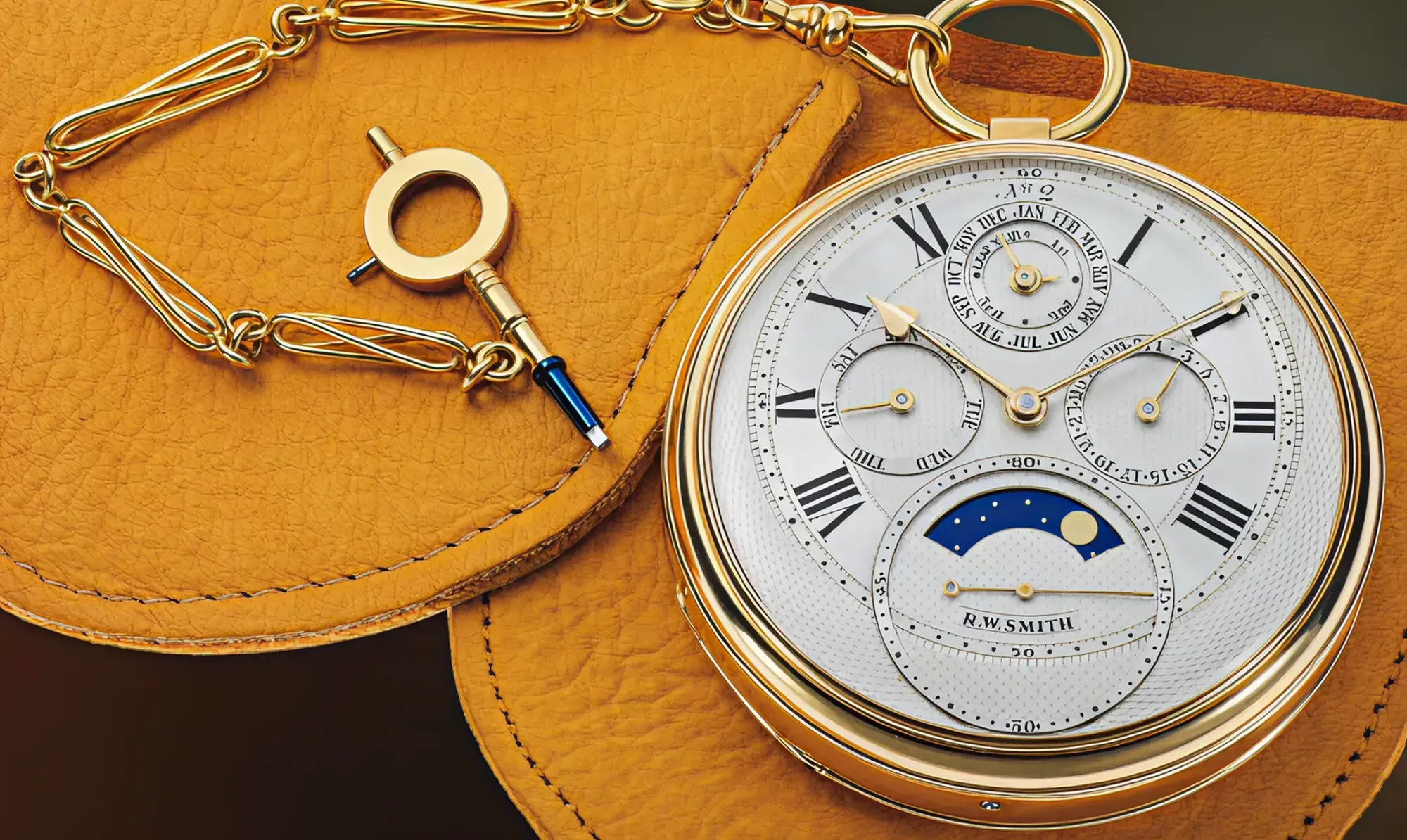
This ambition led him to begin constructing his own pocket watch.
His first attempt, Pocket Watch No. 1, was completed in 1990. It demonstrated considerable ability, but the watch did not meet the standards of the watchmaker he most wanted to impress.
That watchmaker was George Daniels.
George Daniels: The Mentor and the Mechanical Foundation
George Daniels was one of the most influential horologists of the twentieth century. His contribution to mechanical watchmaking extended beyond the creation of exceptional pocket watches. He developed the co-axial escapement, a major innovation intended to reduce friction within the escapement and improve the long-term performance of mechanical timekeeping.
Daniels was also a passionate advocate of traditional hand craftsmanship. He believed that a watchmaker should understand and be capable of creating every component of a complete watch, rather than relying entirely on industrially produced parts.
This conviction became known as the Daniels Method.
When Roger W. Smith presented his first pocket watch to Daniels, the response was not the approval he had hoped for. Daniels considered the watch insufficiently handmade. The criticism was demanding, but it established the standard that Smith would pursue.
Smith returned to the workbench.
Pocket Watch No. 2 took approximately five and a half years to complete. It represented a profound period of learning, experimentation, and refinement. The objective was no longer simply to produce a functioning watch. It was to understand and execute the complete craft to the standard set by Daniels.
The second pocket watch earned Daniels’ approval.
The relationship between the two watchmakers developed into a mentorship that would shape Smith’s entire career. Daniels recognised in Smith the determination, technical ability, and patience required to continue his work.
In 1998, Daniels invited Smith to collaborate on the Millennium series of wristwatches, developed to celebrate the adoption of the co-axial escapement by Omega. The project brought the two watchmakers together in a practical context, allowing Smith to work directly with Daniels on the creation of a series of timepieces.
Their collaboration was not simply an apprenticeship in technique. It was an immersion in a philosophy of watchmaking, one in which mechanical efficiency, traditional craftsmanship, and the integrity of the finished object were inseparable.
The Millennium project was completed in 2001. That same year, Roger W. Smith established his own company.
The transition from student to independent watchmaker was complete, although the relationship with Daniels and the continuation of his principles would remain central to Smith’s work.
The Daniels Method: The Complete Watchmaker
The Daniels Method is fundamental to understanding Roger W. Smith.
It is a traditional system of watchmaking in which the watchmaker undertakes the complete creation of a mechanical timepiece, from the design of the movement to the production, finishing, assembly, and regulation of its components.
The process demands an extraordinary range of skills.
A watchmaker must understand the geometry of the gear train, the relationship between the mainspring and the regulating system, the tolerances required for reliable operation, and the construction of the escapement. The knowledge must then be translated into physical components, each produced and finished with exceptional precision.
The method involves the creation of components such as:
- Movement plates and bridges
- Wheels and pinions
- Barrel components
- Escapement elements
- Balance components
- Hands
- Dial components
- Screws and other small mechanical parts
The creation of these elements requires a combination of traditional hand tools, specialised machinery, and an intimate understanding of materials.
The watchmaker must be able to shape, cut, drill, turn, polish, and finish components while maintaining the required dimensional accuracy. The production of a component is only one stage. It must subsequently be assembled into a functioning mechanism, tested, adjusted, and often reworked.
This is where the Daniels Method becomes particularly demanding.
A watch may contain hundreds of individual components, yet each must operate within a precisely coordinated system. The slightest error in geometry, surface finish, or assembly can affect the movement’s performance.
The method therefore requires a complete understanding of the watch, rather than a specialised knowledge of one isolated production stage.
For Roger W. Smith, this approach is not a historical exercise. It is the foundation of his contemporary watchmaking practice.
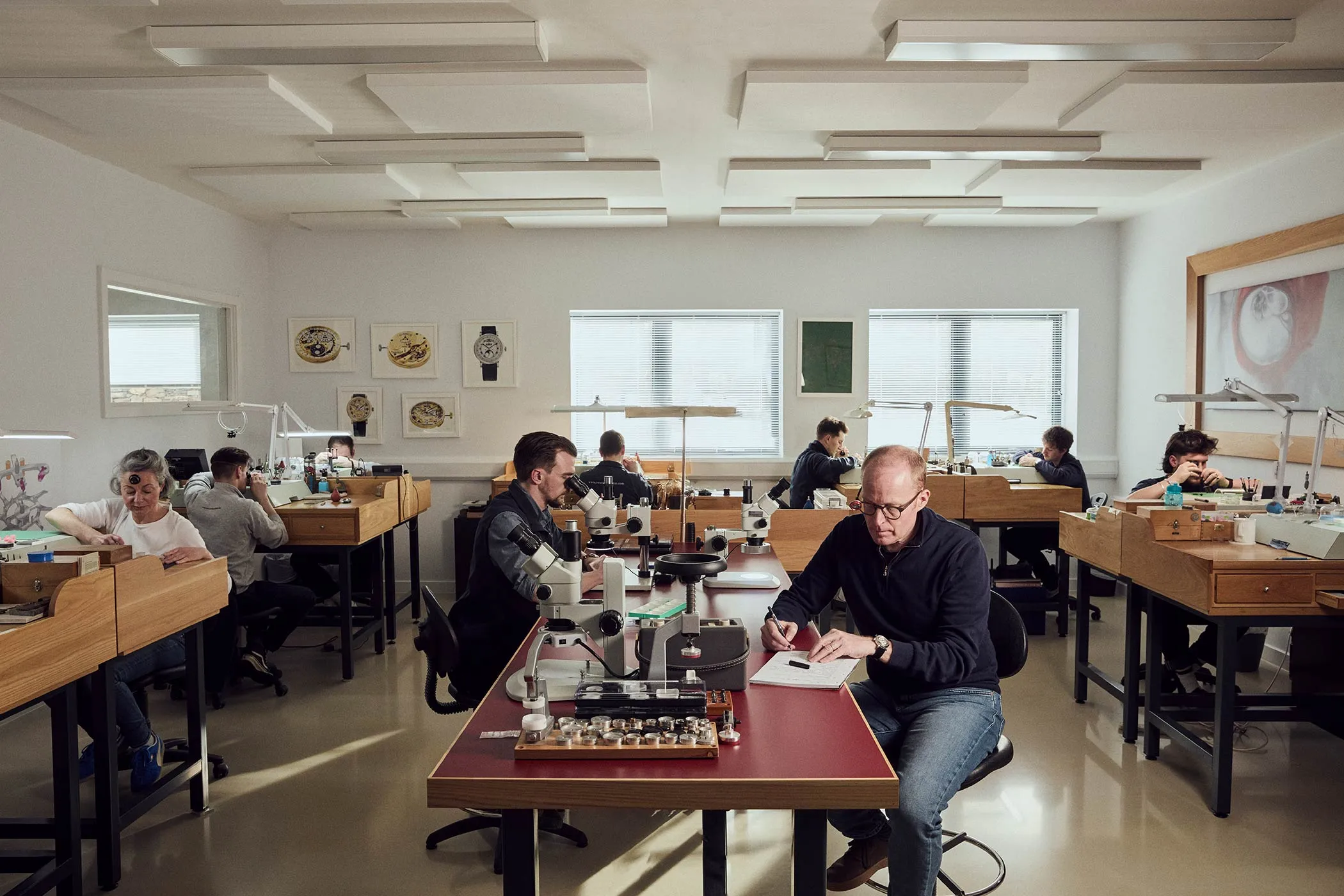
The Isle of Man: A Workshop Built Around Time
Roger W. Smith’s workshop is based on the Isle of Man, an island with a distinctive cultural and geographical identity between Great Britain and Ireland.
The location has become inseparable from the brand. The watches are signed R.W. Smith, Isle of Man, establishing a direct connection between the maker, the workshop, and the finished timepiece.
The workshop’s production model is deliberately limited. The manufacture produces approximately fifteen to twenty handmade watches annually, although the complexity and individual requirements of each piece influence the final output.
Some watches require more than two years to complete.
This is not simply a consequence of low production volume. It is a reflection of the construction method. Each watch involves extensive manual work, and the production process cannot be accelerated without compromising the principles on which the workshop is built.
The workshop’s growth has therefore been gradual. What began as a solitary undertaking has developed into a specialised team working under Smith’s direction, while retaining the central commitment to handmade mechanical watchmaking.
The scale is fundamentally different from that of a conventional luxury watch manufacture.
There is no requirement to support a broad catalogue of products, maintain high-volume production, or introduce frequent new references. The workshop can concentrate on the development and refinement of a relatively small number of watch designs.
This allows the time required for construction, finishing, and assembly to remain central to the process.
The workshop is not organised around the speed of production. It is organised around the quality of the finished watch.
The Co-Axial Escapement: George Daniels’ Innovation, Roger W. Smith’s Development
The co-axial escapement is one of the most significant developments in modern mechanical watchmaking.
Traditional Swiss lever escapements rely on sliding contact between the pallet stones and the escape wheel. This contact introduces friction, which affects the efficiency of the mechanism and creates a need for lubrication.
George Daniels developed the co-axial escapement as an alternative.
Its architecture separates aspects of the impulse and locking functions through a system of coaxial escape wheels and specially arranged pallet components. The objective is to reduce the sliding friction associated with the conventional lever escapement, particularly at the points where impulse is delivered to the balance.
The innovation was intended to improve mechanical efficiency and reduce the dependence on lubrication at critical contact surfaces.
The co-axial escapement was not an immediate commercial success. Its construction required a level of precision and manufacturing capability that made it difficult to implement at scale. It also demanded a different understanding of movement design and regulation.
Omega eventually adopted a production version of the escapement, bringing Daniels’ invention into a much wider commercial context.
Roger W. Smith’s work is distinct from this industrial implementation.
He continues to develop the co-axial escapement through his own hand-built movements, refining the architecture and adapting it to the requirements of his watches.
His current production movements employ a single-wheel version of the Daniels co-axial escapement. This configuration represents an evolution of the original system, designed to achieve the intended mechanical advantages while supporting the practical requirements of handmade watchmaking.
The escapement is not treated as a historical feature that must remain unchanged. It is a continuing area of technical development.
Smith’s work explores how the escapement can be improved through refinements in geometry, construction, and the relationship between its components.
This is an important distinction in the brand’s identity. Roger W. Smith is not simply reproducing George Daniels’ watches. He is continuing the development of Daniels’ ideas through his own mechanical work.
The Philosophy of Mechanical Efficiency
Roger W. Smith’s approach to watchmaking is closely connected to the pursuit of mechanical efficiency.
The objective is not merely to produce a movement that functions. It is to create a mechanism that delivers its energy with the greatest possible consistency, minimises unnecessary friction, and maintains reliable performance over an extended period.
This philosophy influences the design of the entire movement.
The relationship between the mainspring, barrel, gear train, escapement, and balance must be considered as a complete system. The movement’s architecture is therefore not determined solely by aesthetic preferences or the inclusion of complications.
The design process begins with the mechanical requirements.
The escapement must receive sufficient energy to maintain oscillation. The balance must operate under stable conditions. The gear train must transmit energy efficiently. The components must be constructed and finished to minimise unwanted friction and wear.
The co-axial escapement is central to this philosophy, but it is not the only element.
The workshop’s approach to component production, finishing, assembly, and regulation also contributes to the long-term performance of the watch.
Smith has consistently emphasised durability and serviceability. His watches are intended to be maintained and repaired over generations, rather than treated as objects whose useful life is determined by the availability of replacement products.
This creates a different understanding of luxury.
The value of a watch is not defined exclusively by its material, rarity, or complication. It is also determined by the quality of its mechanical construction and the possibility of preserving it through time.
Series One: The Purity of Timekeeping
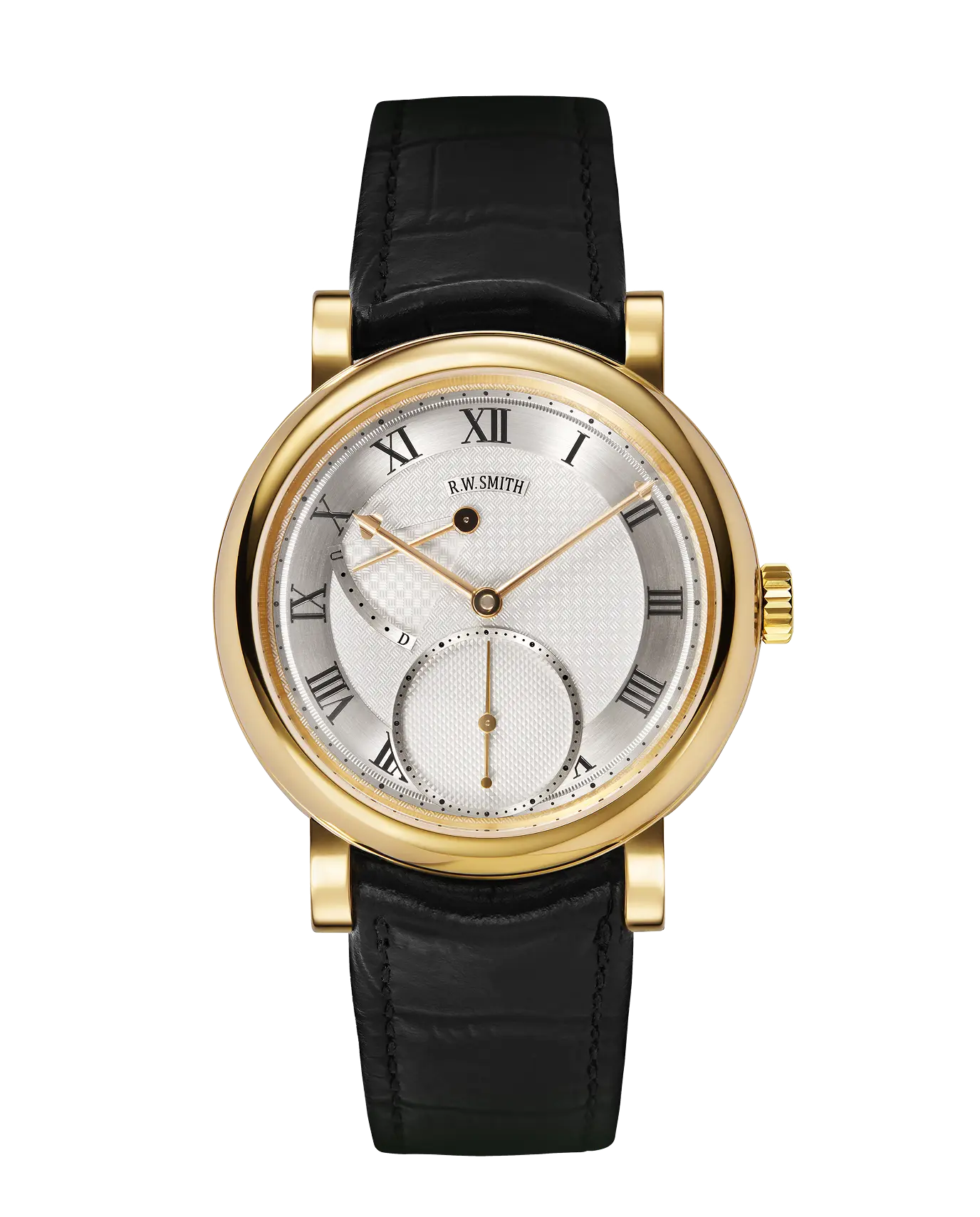
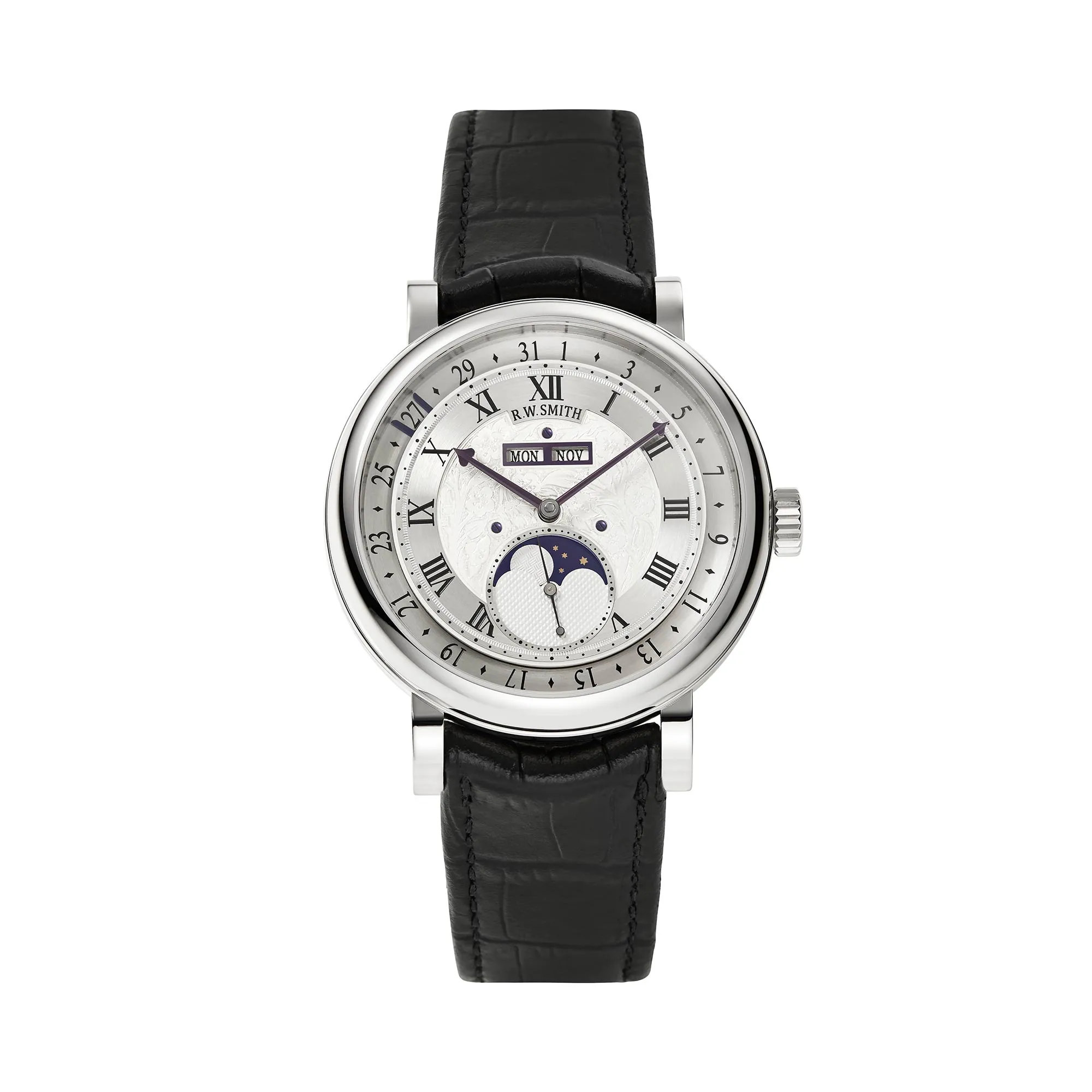
Series One represents the most restrained expression of Roger W. Smith’s contemporary watchmaking.
The modern Series One was inspired by The GREAT Britain, the unique timepiece created in 2013 to celebrate British innovation and technology. Its design focuses on the essential display of hours, minutes, and seconds.
The watch is deliberately simple in appearance.
The dial is designed to provide an immediate reading of the time, without unnecessary visual elements. The movement, however, remains a sophisticated expression of the Daniels Method and the workshop’s technical capabilities.
The contemporary Series One is available in 38mm and 40mm case sizes. It is also offered in an Open Dial version, which reveals the movement’s architecture and finishing.
The simplicity of the display is significant.
In a watchmaking environment where complications are often used to demonstrate technical achievement, Series One takes a different approach. It places the emphasis on the fundamental purpose of a watch: to indicate time clearly and accurately.
The absence of additional complications allows the construction, finishing, and proportions to become the primary focus.
The watch is not an entry-level simplification of the brand’s philosophy. It is an expression of the idea that a time-only watch can represent the highest level of mechanical craftsmanship.
Series Two: The Cornerstone of the Workshop
Series Two is arguably the most important model in Roger W. Smith’s body of work.
Its development began in 2004, when Smith concluded that the next stage of his career required the creation of a completely new watch using the Daniels Method.
The prototype was completed in February 2006.
Series Two was the first wristwatch movement designed and produced entirely in-house by Roger W. Smith using the Daniels Method. It established the technical foundation for the workshop’s subsequent production and helped define the identity of the brand.
The watch displays hours, minutes, seconds, and a power reserve indicator.
The power reserve complication is particularly appropriate within the context of the Daniels Method. It provides a practical indication of the energy remaining in the mainspring, while reinforcing the relationship between the watch’s mechanical construction and its daily use.
The movement incorporates the Daniels co-axial escapement, a free-sprung balance, and a distinctive three-dimensional architecture.
The raised barrel bridge and balance cock are characteristic elements. Their forms create depth within the movement, while their engraved surfaces contribute to the visual language of traditional English watchmaking.
The movement’s finishing includes frosted and gilded plates, gold chatons, and flame-coloured screws. These details establish a refined contrast between the mechanical structure and the decorative treatment.
The dial is also highly individual. Depending on the specification, it may incorporate hand engraving or engine turning, with the hands sculpted specifically for the watch.
Series Two is available in platinum or 18-carat yellow, red, and white gold, with 38mm or 40mm case options.
The model’s significance extends beyond its technical specifications.
Its development took place during a difficult period for the workshop, and the completion of the watch represented a decisive transformation of the business. Series Two established a production movement that could serve as the foundation for future watches.
It is the cornerstone of Roger W. Smith’s contemporary horological identity.
Series Two Open Dial: Revealing the Work Beneath the Surface
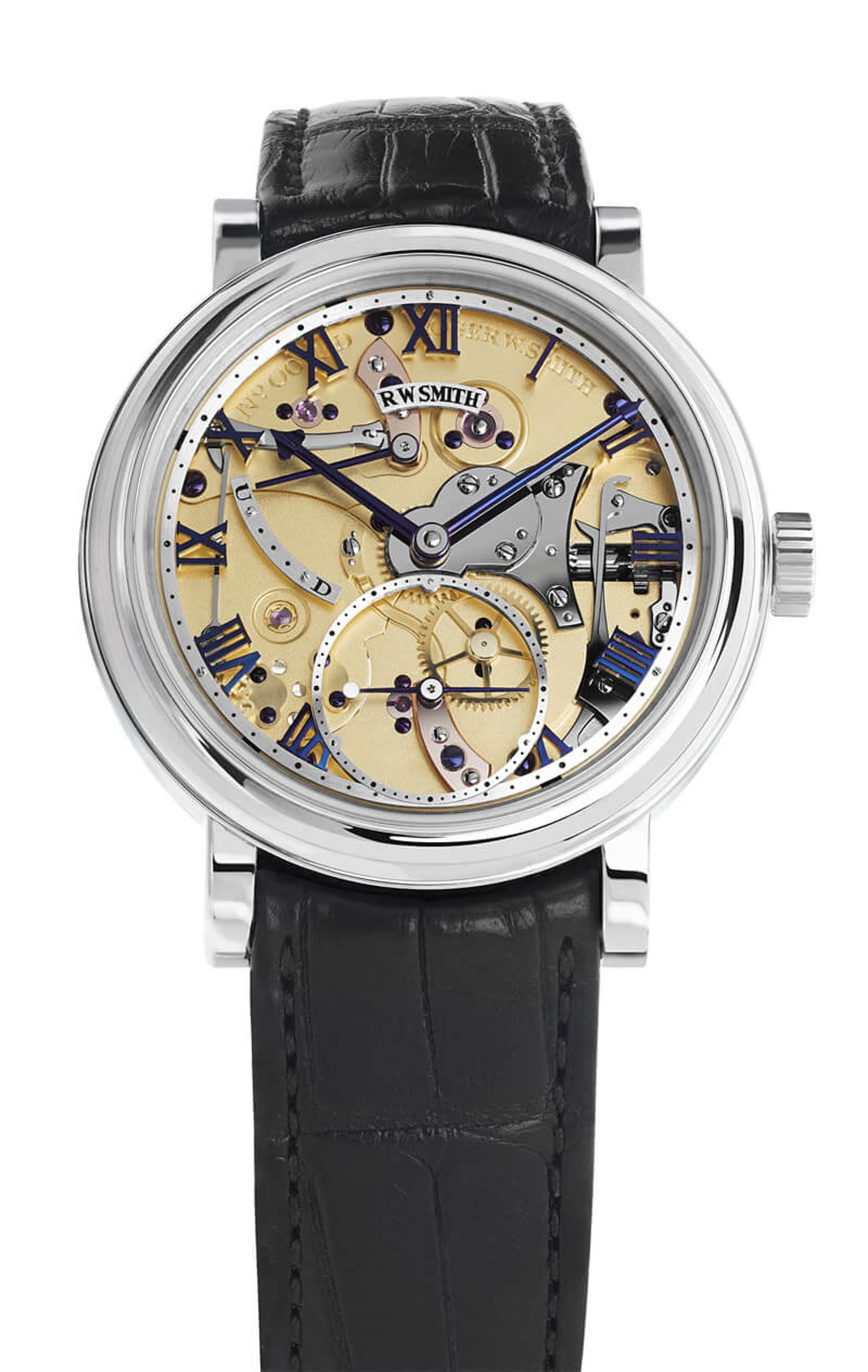
The Open Dial version of Series Two provides a more direct expression of the Daniels Method.
The movement’s under-dial work is revealed, creating a greater sense of depth and exposing components that would ordinarily remain concealed.
The arrangement of the time and power reserve displays allows them to appear suspended above the movement. The result is a three-dimensional composition in which the dial becomes an architectural element rather than a simple surface.
The Open Dial concept is particularly revealing because it changes the relationship between the wearer and the movement.
The watch can be examined through its visible components, allowing the finishing, construction, and mechanical arrangement to become part of the experience.
The black-polished surfaces, hand-bevelled edges, frosted plates, and understated gilded finishes are especially important in this context.
The open dial also demonstrates the workshop’s commitment to finishing components that might otherwise remain hidden. The movement is not prepared solely for the parts that will be visible in a conventional configuration.
The design is based on the belief that every component deserves attention, regardless of whether it is directly exposed.

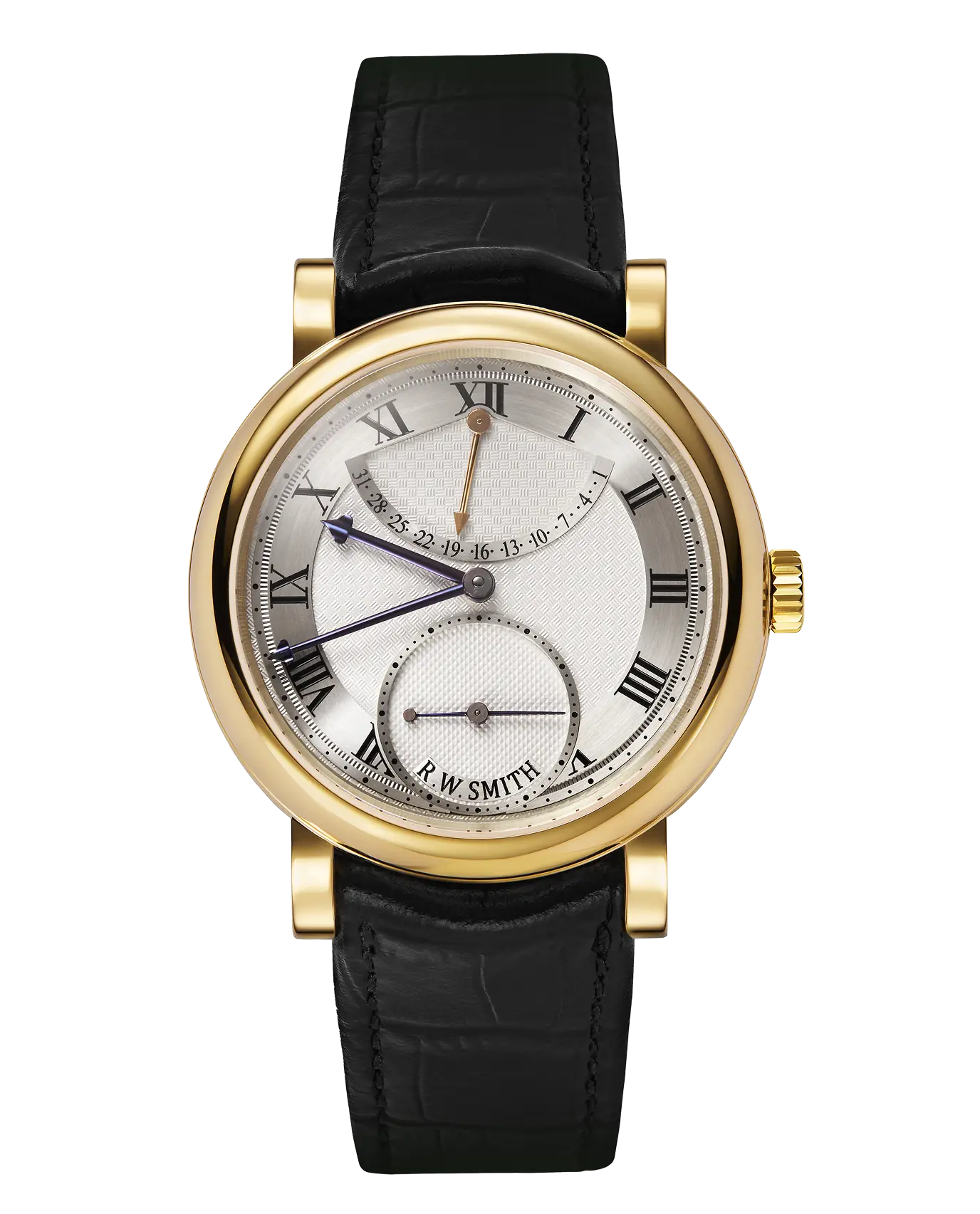
Series Three: The Retrograde Calendar
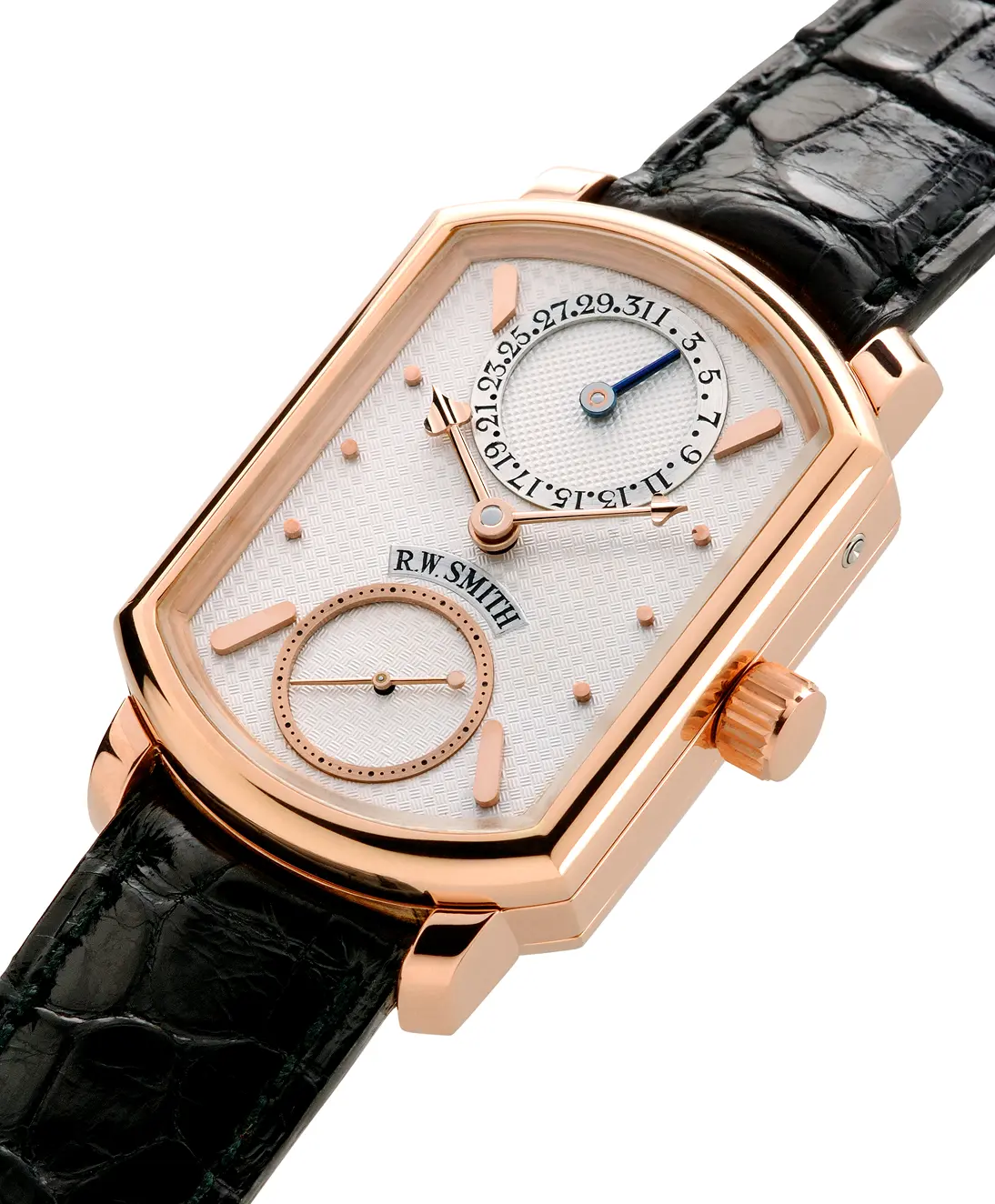
Series Three introduces a retrograde calendar complication into Roger W. Smith’s contemporary collection.
The watch was developed as an alternative to the power reserve display of Series Two, adding a different mechanical function while preserving the brand’s distinctive approach to dial architecture.
The calendar is positioned at the XII location, creating a symmetrical display.
The retrograde mechanism allows the calendar indication to travel across a defined scale before returning to its starting point. This creates a different visual and mechanical experience from the conventional circular date display.
The complication is integrated into the movement rather than treated as an external addition.
The symmetrical arrangement is particularly important to the design. The calendar occupies a position that balances the time display, allowing the watch to retain a clear and refined appearance.
Series Three is also offered in an Open Dial configuration, revealing the complexity of the calendar mechanism beneath the surface.
The watch demonstrates how Roger W. Smith approaches complications. The objective is not to make the dial appear more complex. It is to integrate the function into a coherent design while preserving the clarity of timekeeping.
Series Four: The Travelling Date Aperture and the Pursuit of Legibility
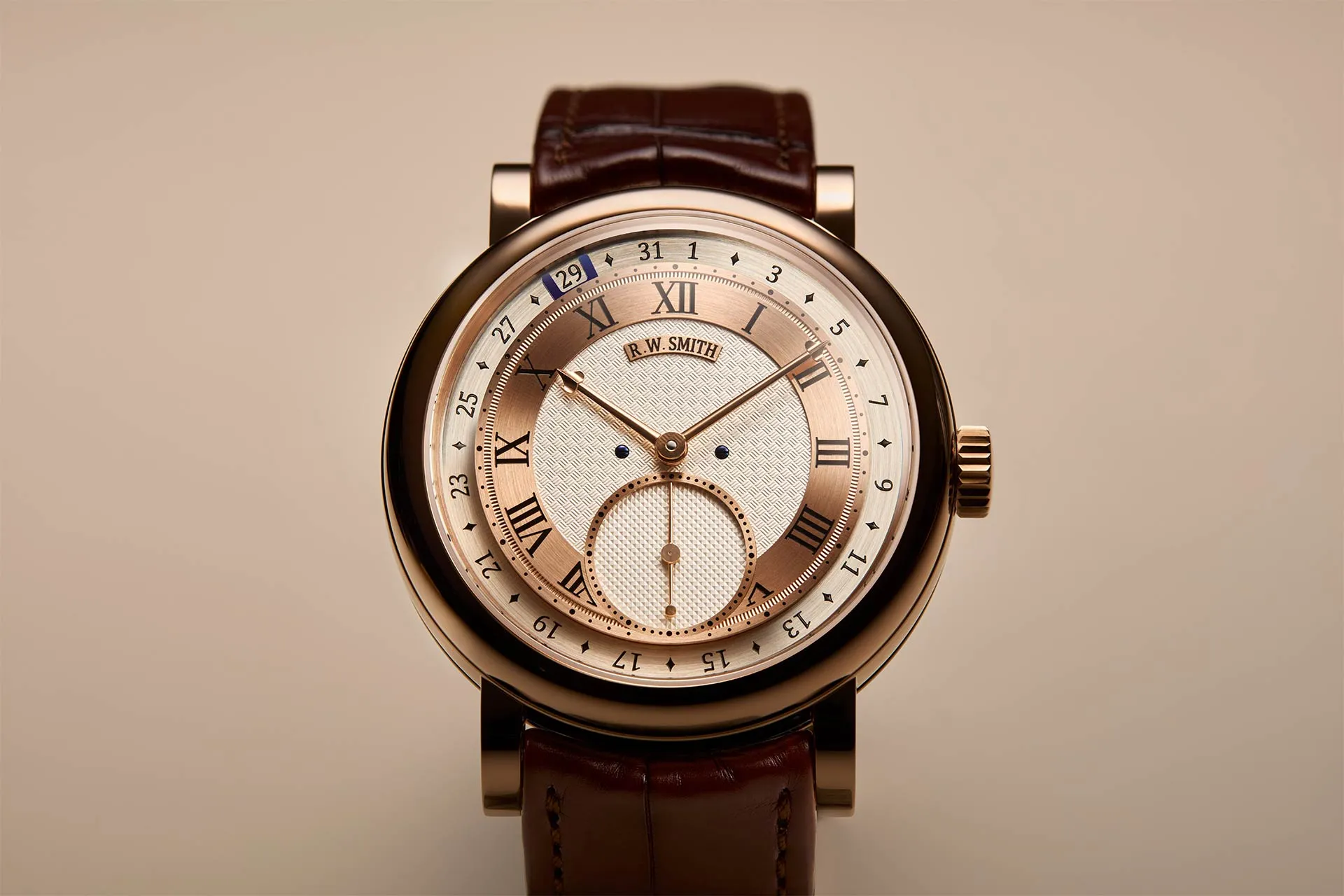
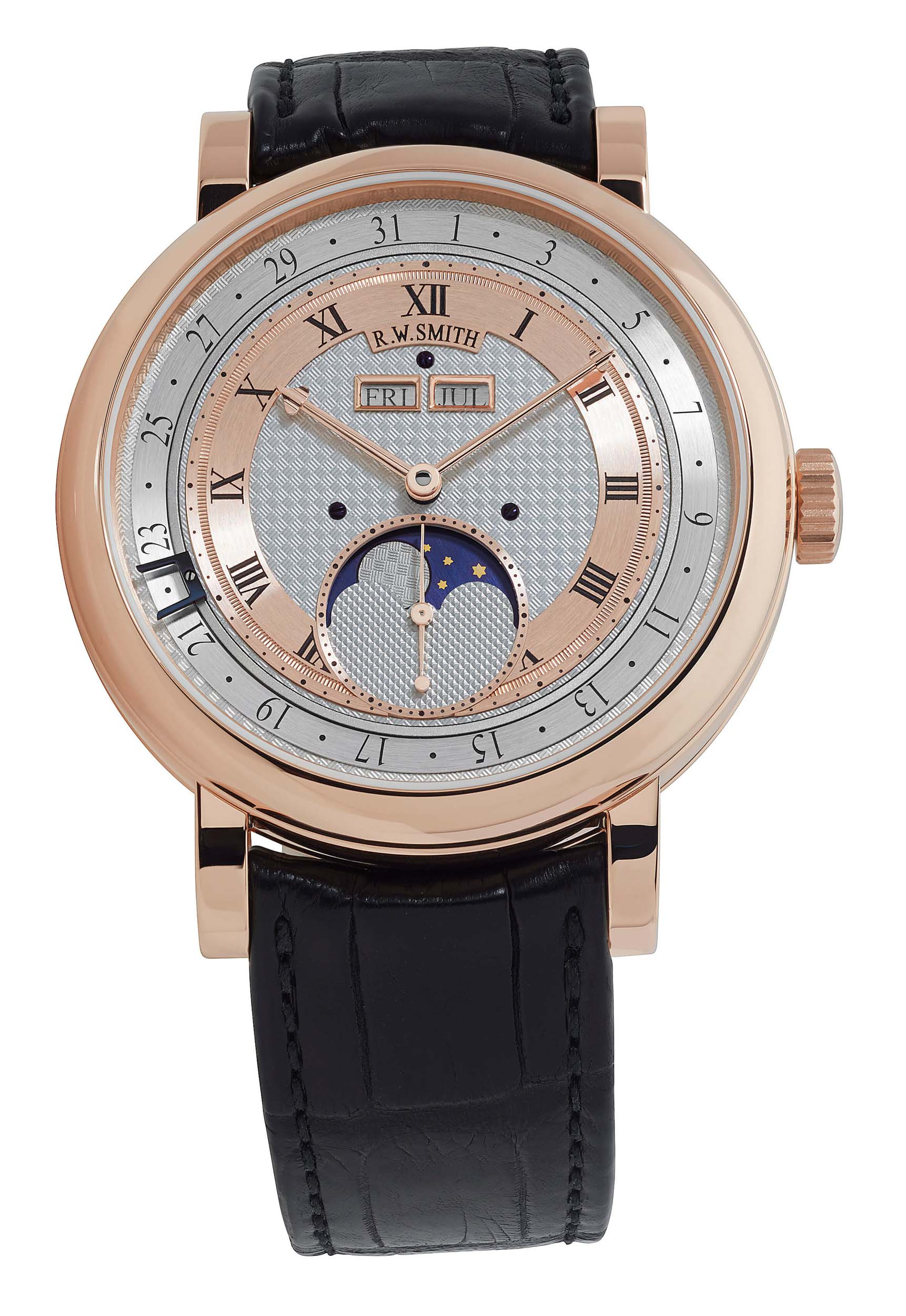
Series Four is one of the most technically and conceptually interesting developments in Roger W. Smith’s collection.
The watch incorporates an instantaneous triple calendar and moon phase, displaying hours, minutes, seconds, day, date, month, and lunar indication.
The initial inspiration was the aesthetic appeal of traditional triple-calendar watches. However, during the design process, Smith identified a problem common to many calendar wristwatches.
The date hand often occupies a large portion of the dial. As it moves around the date scale, it can obscure information for several days at a time. This compromises the legibility of the watch, particularly when the date hand crosses the day or month indications.
For Smith, the problem was not simply visual. It conflicted with a fundamental principle of his watchmaking philosophy: the time should be readable immediately.
The solution emerged after years of drawings and experimentation.
Instead of moving a hand across the date scale, Smith developed a travelling date aperture.
The mechanism reverses the conventional arrangement. The aperture itself travels around the outer edge of the dial, revealing the date through a window. The date indication is therefore presented without the need for a dominant hand crossing the display.
The concept is mechanically distinctive and visually restrained.
The aperture moves around the dial, while the underlying calendar information remains unobstructed. The design preserves the legibility of the watch and creates a new relationship between the calendar mechanism and the dial.
The Series Four is housed in a 41mm case and includes a moon phase display.
The moon phase is particularly expressive. The night sky is represented through a purple-blue hue, with bleached silver moons and riveted gold stars. The treatment reflects Smith’s interest in traditional English decorative techniques while maintaining a restrained aesthetic.
The first Series Four was completed in 2020 and became the 100th watch made under the R.W. Smith name.
The travelling date aperture has subsequently attracted attention beyond the workshop. Its adoption by other watchmakers demonstrates how a mechanical solution developed within a small independent manufacture can influence the wider industry.
Series Four is therefore more than a complicated calendar watch. It is an example of how a practical problem can lead to a genuinely original horological design.
Series Five: The Architecture of the Open Dial
Series Five is the Mark 2 version of the original Series Two Open Dial watch, first designed in 2010.
The model was developed to emphasise the three-dimensional structure of the movement and the quality of its finishing.
The time and power reserve displays appear to float above the movement, creating a visual separation between the dial and the mechanical components beneath it.
This arrangement allows the wearer to examine the movement’s depth and construction more directly.
Series Five is particularly important in the context of traditional English finishing.
The movement incorporates black polishing, hand-beveling, frosted and gilded surfaces, and carefully executed decorative details. The combination creates a distinctive visual character without relying on excessive ornamentation.
The open dial also reinforces the workshop’s philosophy regarding hidden components.
The original intention was to showcase the attention applied to every part of the movement, including those that would not ordinarily be visible. The Mark 2 development continues this principle while refining the architecture and execution.
The watch is available in 38mm and 40mm case sizes.
Series Five demonstrates that the Open Dial concept is not merely a variation in appearance. It is an opportunity to express the craftsmanship of the movement in a more direct and architectural form.
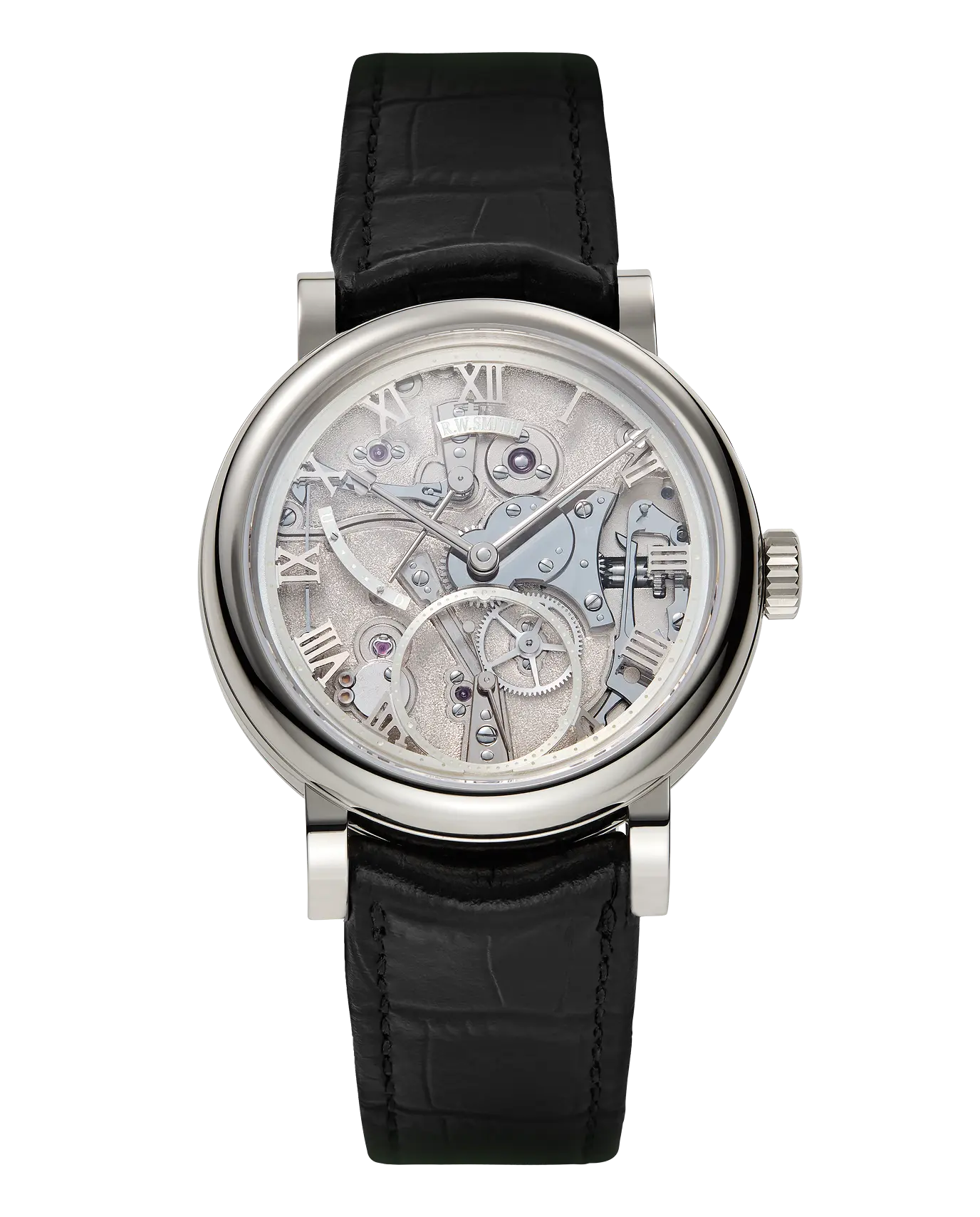
Series Six: A New Interpretation of the Travelling Date
Series Six represents a further development of the travelling date aperture.
The watch was introduced as a more pared-back interpretation of the concept first developed for Series Four.
The hours, minutes, and seconds are displayed on a floating central dial. The date is indicated on a lower level through the travelling aperture.
This stepped architecture creates a strong sense of depth.
The dial is no longer a single plane. It becomes a series of carefully organised layers, each corresponding to a specific function. The time display occupies the central position, while the date mechanism operates around the periphery.
The arrangement reflects Smith’s architectural approach to movement and dial design.
The watch is intended to preserve the clarity of the time display while allowing the calendar mechanism to remain visible and mechanically integrated.
Series Six is particularly significant because it shows how a technical innovation can continue to generate new design possibilities.
The travelling date aperture was initially developed to solve a legibility problem. Its subsequent application to different dial architectures demonstrates the broader potential of the mechanism.
Rather than treating the complication as a single isolated achievement, Smith has used it as the foundation for further experimentation.
The GREAT Britain: A Watch as a Statement of National Craftsmanship
The GREAT Britain is a unique timepiece created in 2013 to celebrate British innovation and technology.
Roger W. Smith was appointed an ambassador for the GREAT Britain campaign, an initiative intended to promote the country’s capabilities across business, design, technology, and craftsmanship.
The watch was developed as a demonstration of what British watchmaking could achieve.
Its construction is based on Series Two, but the movement and dial were designed specifically for the project.
The movement incorporates three-dimensional architecture, a manually wound calibre, and the Daniels co-axial escapement developed by Smith.
The barrel bridge is raised and hand-engraved with floral decoration, incorporating the Isle of Man’s Triskelion symbol. Two applied sterling silver cartouches carry the GREAT Britain and MMXIII inscriptions.
The watch’s dial is particularly complex.
Smith’s intention was to create a timepiece that expressed British craftsmanship through every element, from the dial and movement to the hands and presentation box.
The GREAT Britain was not conceived as a commercial collection. It is a unique piece that functions as a statement about the capabilities of the workshop and the broader tradition of British watchmaking.
The watch was also a significant moment in Smith’s career. It provided an opportunity to communicate his philosophy on an international stage and to demonstrate how traditional craftsmanship could be applied to a contemporary mechanical timepiece.
Daniels Anniversary: Completing a Shared Legacy
The Daniels Anniversary project represents one of the most important chapters in the relationship between Roger W. Smith and George Daniels.
The project began during Daniels’ lifetime. The intention was to create a wristwatch that would celebrate his horological achievements and provide a practical expression of the Daniels Method.
The watches were designed and created by George Daniels and Roger W. Smith.
The project was entrusted to Smith, reflecting the confidence Daniels placed in his protégé and the continuity of their shared watchmaking philosophy.
The Daniels Anniversary wristwatch was conceived around the principles of traditional hand craftsmanship. It incorporated the co-axial escapement and a movement constructed using the Daniels Method.
The project required an extraordinary commitment of time and skill.
The watches were produced in extremely limited numbers, with variations in precious metals. The total series comprised 35 yellow-gold pieces, four platinum pieces, four white-gold pieces, and four red-gold pieces.
The final Daniels Anniversary wristwatch was completed in 2025, sixteen years after the project began.
Its completion marked the end of a significant chapter in Smith’s career. The watch was the final timepiece designed and created during George Daniels’ lifetime.
The project also carried a personal significance. Following Daniels’ passing, Smith was entrusted with the Daniels workshop collection, further reinforcing his responsibility for the preservation and continuation of the master watchmaker’s legacy.
The completion of the Anniversary project was therefore not simply the conclusion of a production series. It represented the fulfilment of a commitment made between two watchmakers.
English Watchmaking: A Distinctive Aesthetic Tradition
Roger W. Smith’s watches are closely connected to the historical tradition of English watchmaking.
British horology developed a distinctive visual and mechanical language during the eighteenth and nineteenth centuries. It was characterised by an emphasis on precision, mechanical integrity, restrained elegance, and highly refined craftsmanship.
The work of John Harrison, Thomas Mudge, and other historical watchmakers established a tradition in which mechanical innovation was closely connected to the pursuit of accurate timekeeping.
George Daniels later became one of the most important figures in the revival of this tradition.
Roger W. Smith continues it through his own interpretation.
The aesthetic of his watches is characterised by:
- Three-dimensional movement architecture
- Raised bridges and balance cocks
- Hand-engraved components
- Frosted and gilded plates
- Flame-coloured screws
- Gold chatons
- Sculpted hands
- Engine-turned or engraved dials
- Restrained dial layouts
These elements create a visual language that differs from the more familiar decorative codes of Swiss haute horlogerie.
The movements are not designed to appear thin or minimal. Their architecture is deliberately substantial, allowing the mechanical components to possess depth and visual presence.
The result is a style that feels both historical and contemporary.
The traditional finishing techniques establish a connection with English horology, while the movement design and mechanical innovations reflect the work of a modern independent watchmaker.
Hand Finishing: The Quality of the Invisible
The finishing of a Roger W. Smith watch is an integral part of its construction.
The movement’s surfaces are refined through a combination of traditional techniques, each requiring a different level of manual skill.
Frosting creates a controlled texture across plates and bridges. Gilding introduces a warm tonal quality. Black polishing produces highly reflective surfaces that can appear almost black depending on the angle of light.
Hand-beveling is particularly important.
The edges of bridges and components are shaped and polished to create smooth, reflective transitions between surfaces. This requires considerable precision, especially when working around curves or complex geometries.
The finishing process also extends to components that remain concealed beneath the dial.
The principle is that the quality of a watch should not depend on whether a particular component is visible to the owner. Every part contributes to the overall integrity of the movement.
This approach is closely connected to the Daniels Method.
The watchmaker is responsible for the complete object, not only the elements that can be seen through the caseback or dial.
The finishing therefore becomes a demonstration of the maker’s discipline and commitment to the craft.
The Meaning of Bespoke Watchmaking
Roger W. Smith’s watches are made to order, with the specifications of each piece developed in close relationship with the client.
The process may involve decisions concerning case material, dial design, engraving, display configuration, and other details.
Bespoke watchmaking is not simply the selection of options from a standard catalogue.
The individual watch is created within the technical framework of the workshop, but its final expression can reflect the preferences of the owner.
The relationship between maker and client is therefore central to the experience.
The client is not purchasing a product that has already been manufactured in large quantities. The watch is created through a process that requires time, communication, and a considerable investment of specialised labour.
This model establishes a different relationship between luxury and ownership.
The value of the watch is connected to the time spent creating it, the expertise required to construct it, and the direct relationship with the watchmaker responsible for its production.
The resulting timepiece is not simply rare because of a limited edition number. It is rare because the process of making it cannot be replicated at scale without fundamentally changing its character.
Production, Scarcity, and the Economics of Independent Watchmaking
The production model of Roger W. Smith is inseparable from the nature of the Daniels Method.
The workshop’s annual output remains limited, and individual watches can require more than two years to complete. This places the brand in a very different operational position from larger luxury watch manufactures.
The production process requires specialised machinery, highly skilled watchmakers, extensive hand-finishing, and considerable time for assembly and regulation.
Each component must be created to the required standards. The movement must then be assembled, tested, and adjusted. Any necessary correction may involve returning to an earlier stage of the process.
This makes the production of each watch a complex undertaking.
The economics of such a workshop are not based on volume. They are based on the value of specialised craftsmanship and the ability to produce an object whose construction is fundamentally different from that of a conventional luxury watch.
The limited output also has implications for the collector.
Acquiring a Roger W. Smith watch is not simply a matter of selecting a reference and purchasing it immediately. The process involves an extended relationship with the workshop and a significant waiting period.
The scarcity is a consequence of the production method rather than an artificial strategy to create demand.
This distinction is important. The workshop’s capacity is constrained by the time and expertise required to make.