Blog
Romain Gauthier: Engineering a Personal Vision of Watchmaking


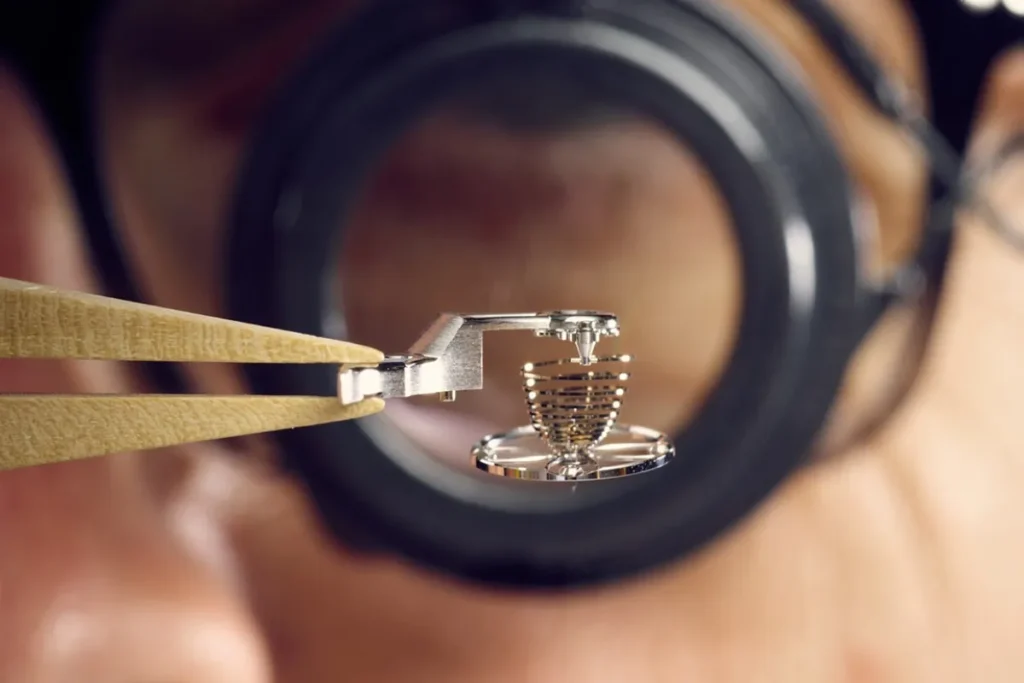
The winding button on a Romain Gauthier Logical One sits on the side of the case where a traditional crown would normally be expected. Press it, and the mechanism advances. Inside the watch, a chain made with synthetic ruby links transfers energy through a snail-shaped cam, replacing the familiar cone of a conventional fusée-and-chain system.
It is an unusual solution to a very old watchmaking problem. It also says something important about Romain Gauthier himself. His watches are shaped by a precision engineer’s instinct to reconsider how a mechanism works, followed by a watchmaker’s determination to make the result beautiful.
Founded in 2005 in Le Sentier, Switzerland, the brand has developed a distinctive identity through its in-house movements, unconventional mechanical ideas and highly detailed hand-finishing. Its creations range from classically styled watches to contemporary titanium pieces and technically ambitious complications.
The appeal lies in the relationship between these elements. Romain Gauthier approaches watchmaking through engineering, but the finished watches are never purely technical objects.
A different route into watchmaking
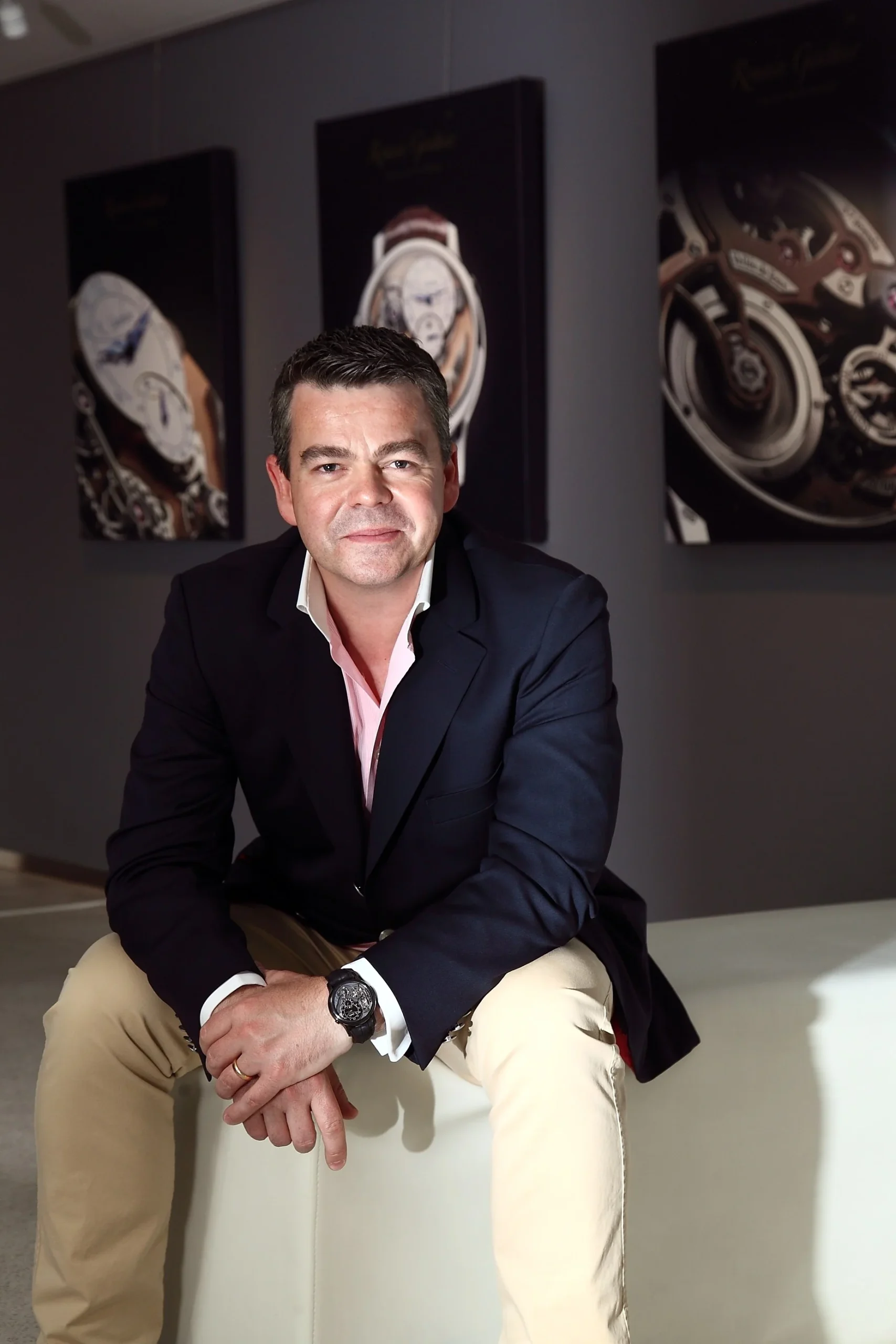
Romain Gauthier was born in 1975 in the Vallée de Joux, a region closely associated with Swiss mechanical watchmaking. His parents both worked in the watch industry, yet his initial interests were directed elsewhere. Music and audio equipment, particularly the design and performance of amplifiers and loudspeakers, occupied much of his attention.
During his teenage years, he studied precision mechanics at the Technical School of the Vallée de Joux. The practical work began to change his direction. Machining components on a lathe, constructing mechanical parts and understanding how machines function gave him a satisfaction that abstract electronics had not.
After completing his studies and military service, he entered the watchmaking supply industry in 1998 as an automatic lathe technician. The work gave him a close understanding of component production, machining tolerances and the technical demands of Swiss watchmaking.
In 1999, he began developing ideas for his own watch in his spare time. The ambition gradually grew from designing a timepiece to establishing a company capable of producing it. He completed an MBA in 2002, with his business plan for the future watchmaking company serving as his final thesis.
A meeting with Philippe Dufour in the same year further strengthened his determination. Dufour’s work demonstrated that the creation of an exceptional mechanical watch could still be driven by an individual watchmaker’s vision.
Gauthier founded his company in Le Sentier in 2005. His first watch, the Prestige HM, was presented at Baselworld in 2007.
The route from precision mechanics to independent watchmaking is central to understanding his work. Gauthier did not begin with a particular aesthetic or a desire to reproduce a historical watch. His starting point was the mechanism, and the design evolved around it.
Prestige HM: Establishing the foundation
The Prestige HM was the first expression of Gauthier’s own watchmaking language.
Its design drew on the classical proportions associated with the Vallée de Joux, while the movement introduced details that would become characteristic of the brand. The architecture, finishing and treatment of individual components were given the same attention as the exterior.
The Prestige HMS followed in 2010, adding a small-seconds indication and introducing a more contemporary dial with a partially openworked area. The evolution was relatively restrained, but it demonstrated that Gauthier was interested in developing a recognisable design language rather than repeating the same watch.
The early Prestige models established several recurring elements: finely finished movement bridges, distinctive screw heads, carefully shaped gears and a balance between traditional watchmaking and modern component production.
The movements were developed in-house, and Gauthier progressively invested in machinery and production capabilities to support this approach. By 2008, the company had established its own CNC machine park and assembled a team of production specialists.
This was an important decision for a young independent brand. The ability to manufacture components internally would give Gauthier greater freedom to pursue mechanical ideas that might otherwise be difficult to realise.

Logical One: Rethinking constant-force transmission
Logical One, introduced in 2013, became the watch that brought Romain Gauthier wider recognition among collectors and watchmaking specialists.
The mechanism addresses a longstanding challenge in mechanical watchmaking. As a mainspring unwinds, the torque it delivers changes. A constant-force system seeks to regulate the energy transmitted to the escapement, helping maintain more consistent performance throughout the power reserve.
Traditional fusée-and-chain mechanisms use a cone-shaped fusée connected to the mainspring barrel by a chain. The geometry of the cone compensates for the changing torque of the mainspring. The principle is effective, but fitting it into a wristwatch presents considerable engineering challenges.
Gauthier approached the problem differently.
Logical One replaces the traditional fusée with a snail-shaped cam. The cam and mainspring barrel are arranged on the same plane, allowing the chain to transmit force along a straight path. The chain is shorter than the conventional arrangement and uses steel links fitted with synthetic ruby rollers to reduce friction.
The mainspring is also enclosed between sapphire plates, reducing friction within the barrel.
The mechanism is wound using a push-button integrated into the caseband. Instead of turning a conventional crown, the wearer presses the button to advance the winding system. The arrangement is both mechanically distinctive and tactile.
The manually wound movement offers approximately 46 hours of power reserve and includes hours, minutes, small seconds and a power-reserve indication.
Logical One received the Men’s Complication Watch Prize at the Grand Prix d’Horlogerie de Genève in 2013.
The award recognised the technical achievement, but the watch also revealed something about Gauthier’s approach to design. Its mechanism is visible on the dial side. The chain and cam are not concealed as purely functional components. Their movement becomes part of the watch’s visual character.
The technical idea and the aesthetic presentation are inseparable.
Engineering that remains visible
Logical One is not the only collection in which Gauthier gives the movement a prominent role.
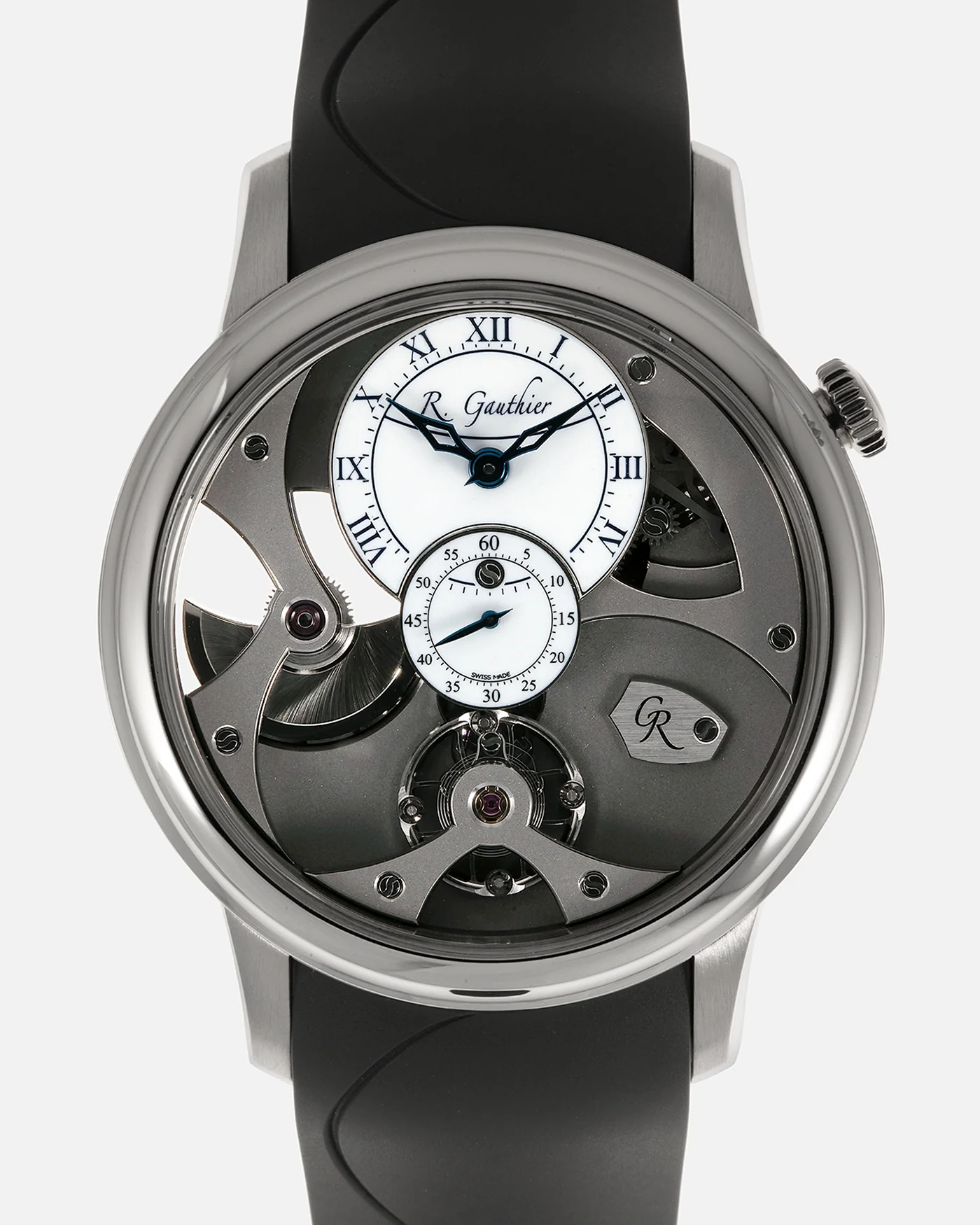
The Insight Micro-Rotor, introduced in 2017, marked the brand’s first automatic watch. Its movement was designed from the beginning to reveal its mechanical architecture through an open dial.
The bidirectional micro-rotor is made from solid 18-karat gold and provides an 80-hour power reserve. The rotor is positioned between bridges, with a circular opening in the mainplate allowing it to be viewed from both sides.
The openworked construction also exposes the movement’s finishing. Titanium bridges and the mainplate provide a lightweight structure, while the edges and surfaces receive detailed hand-decoration.
The Insight is a useful contrast to Logical One. The latter places a complex constant-force mechanism at the centre of the design. Insight focuses on the visual presentation of an automatic movement, with the rotor and architecture becoming part of the dial-side composition.
The collection demonstrates Gauthier’s interest in visibility. Mechanical components are not simply functional necessities. Their shape, movement and finishing can contribute directly to the experience of wearing the watch.
Hand-finishing and the precision of the smallest details
Romain Gauthier’s movements are known for their finishing, particularly the treatment of bridges and edges.
Hand-bevelling, also known as anglage, involves shaping and polishing the edges of movement components. The process requires considerable skill. A bevel must be consistent in width and angle, and its polished surface must remain free of imperfections.
The work is particularly demanding around internal angles, where a mechanical polishing tool cannot simply follow the geometry. These areas require careful manual execution.
Gauthier’s movements also feature circular-grained surfaces, snailing, hand-frosting and polished components. His signature S-slot screw heads are another example of the relationship between function and appearance. The slot is designed to provide practical advantages during assembly while also creating a distinctive visual detail.
The brand’s craftsmanship extends beyond decoration. Component production, assembly and regulation are closely connected. Since 2014, the manufacture has developed the capacity to produce its own movements with a high degree of autonomy.
The company’s approach also places considerable responsibility on the watchmaker assembling the movement. Each movement is assembled and regulated by a watchmaker who develops an understanding of its complete construction.
The result is a form of watchmaking in which precision machining and manual finishing work together. Modern production equipment provides the consistency needed for complex components. Hand-finishing gives those components their final character.
C by Romain Gauthier: A contemporary expression
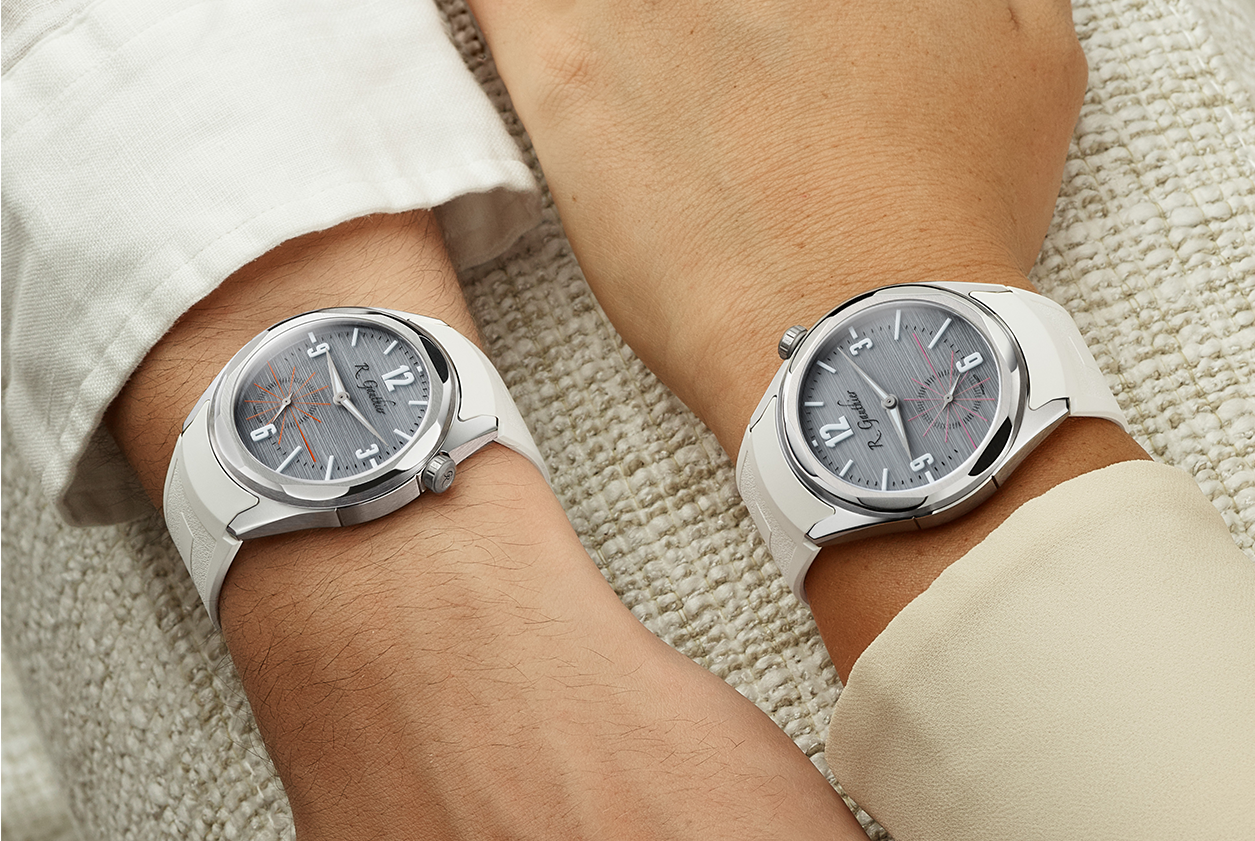
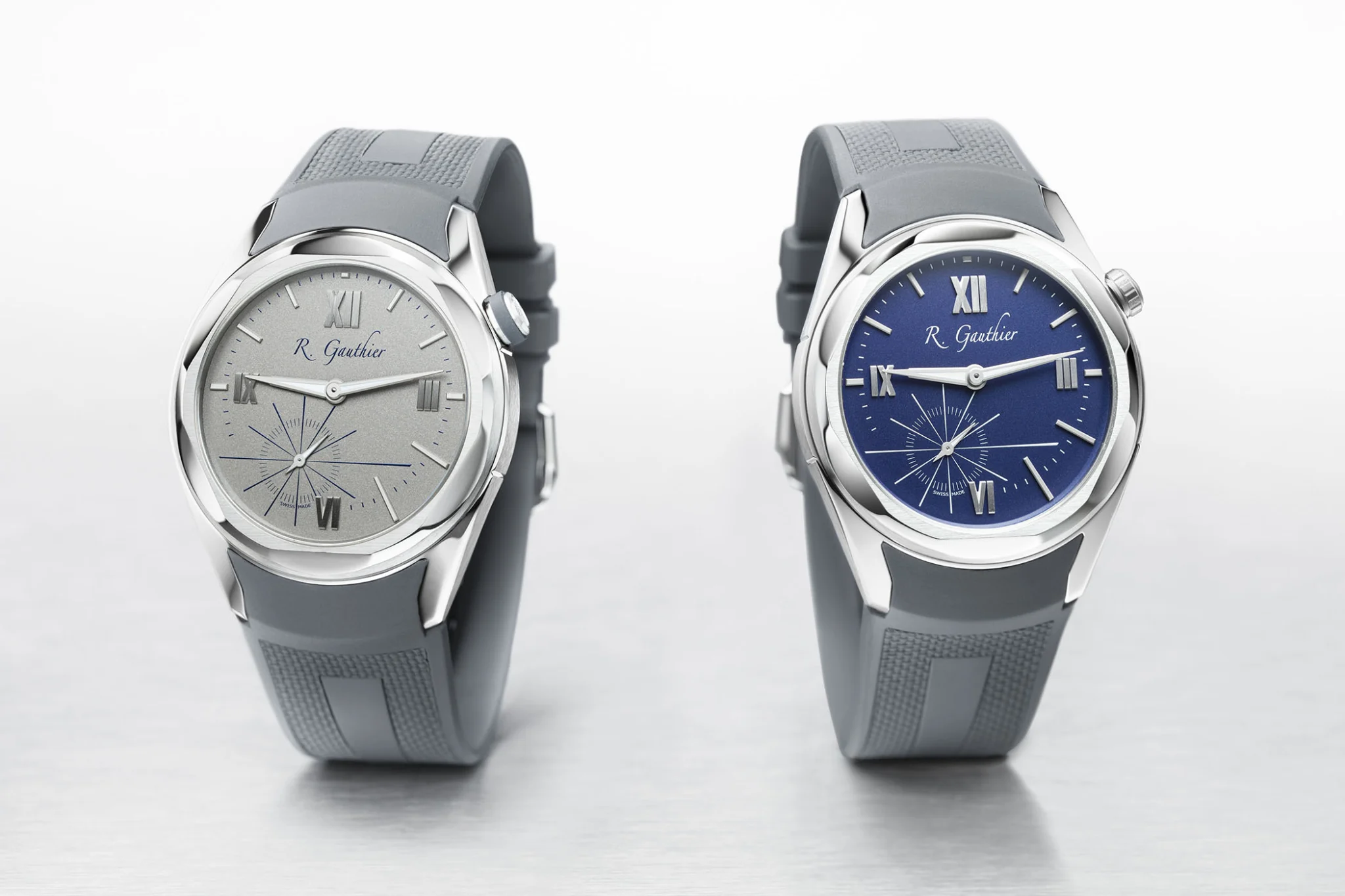
The C by Romain Gauthier collection, introduced in 2021, marked a significant change in the brand’s visual direction.
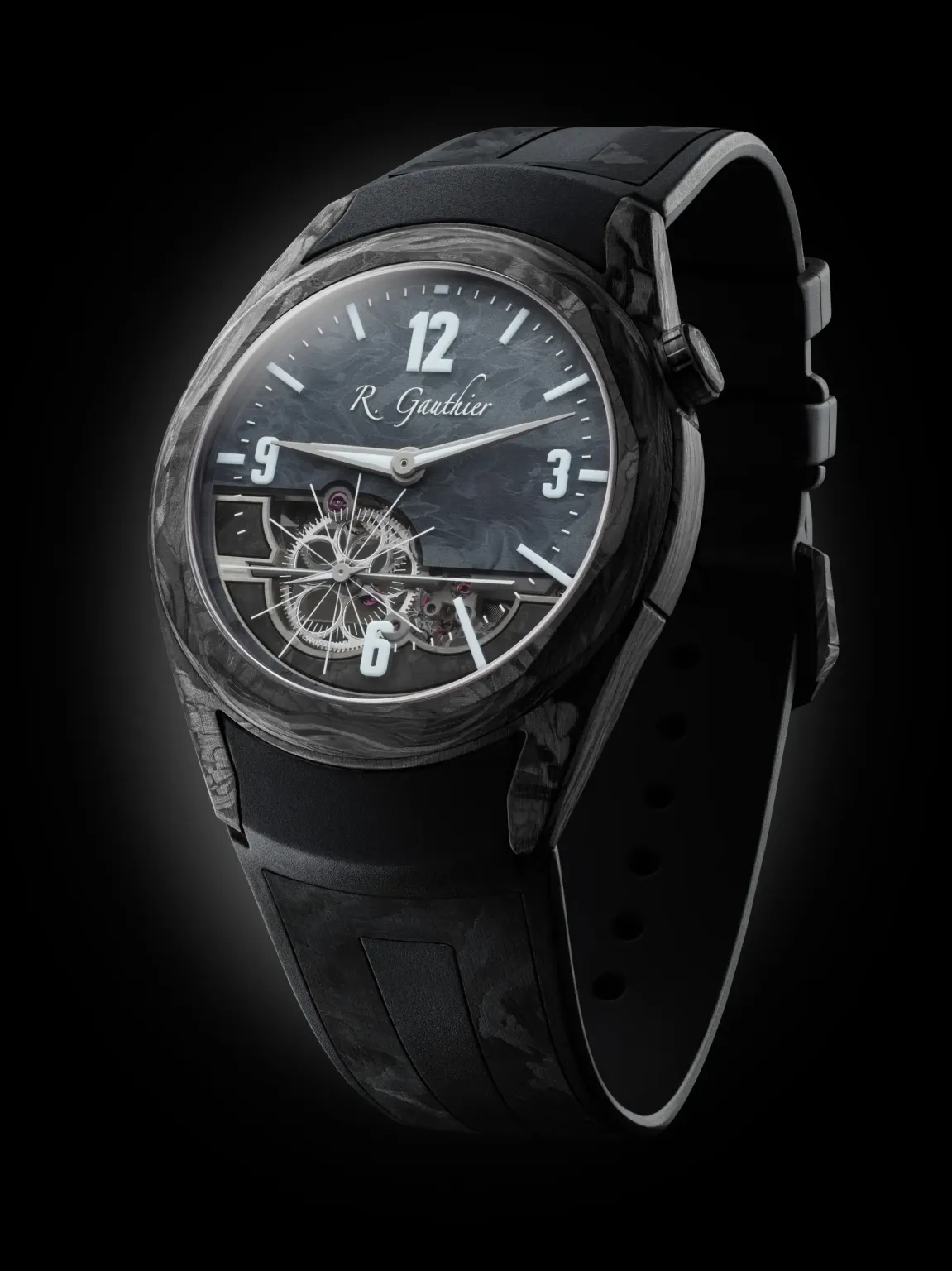
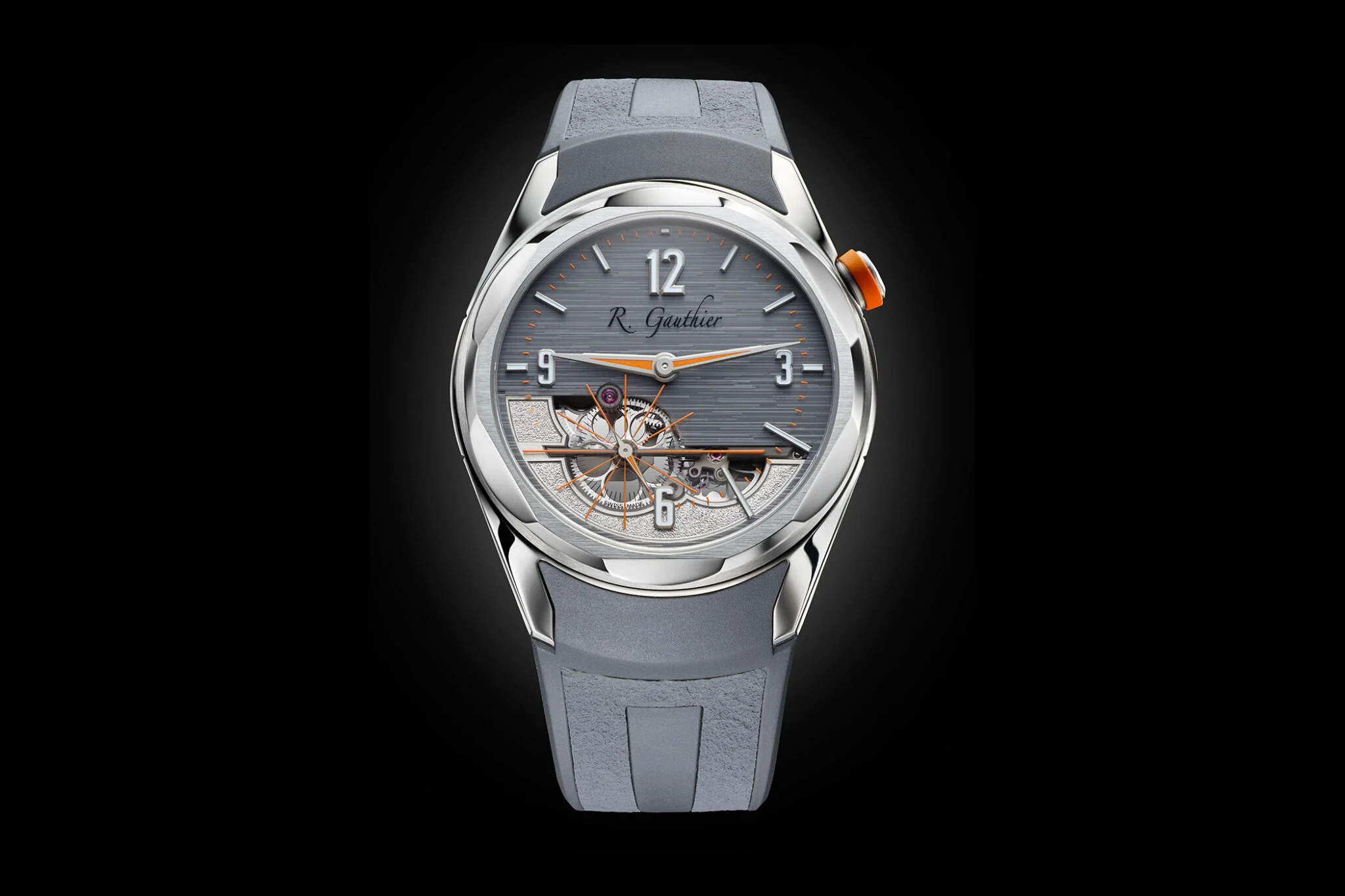
The earlier watches often carried a classical appearance, even when their movements were technically unconventional. The C collection introduced a more contemporary design, with sculpted case geometry, integrated-style titanium bracelets and a cleaner overall composition.
The development was based on more than sixteen years of accumulated experience within the manufacture. Comfort, ergonomics, material selection and a more modern aesthetic were considered from the beginning.
The manual-winding movement is entirely developed in-house. Its architecture draws on the finger bridges historically associated with the Vallée de Joux, but the design reinterprets them in a contemporary way.
The bridges are arranged horizontally, with stepped forms that create depth and allow the movement’s gears and balance to remain visible. Grade 5 titanium provides the structure, while contrasting finishes give the components their individual character.
Hand-finishing remains a central feature. The bridges include double bevels and a distinctive dimpled texture created through a specialised hand-engraving technique. The movement’s gears, ratchet wheel, screws and other components receive carefully differentiated finishes.
The C collection also introduced the brand’s first metal bracelet, made entirely from Grade 5 titanium. Its lightweight construction and integrated appearance reinforce the contemporary character of the watch.
The collection is significant because it shows that Gauthier’s watchmaking does not depend on a classical exterior. The same technical discipline can support a more modern design.
Continuum and the evolution of the movement
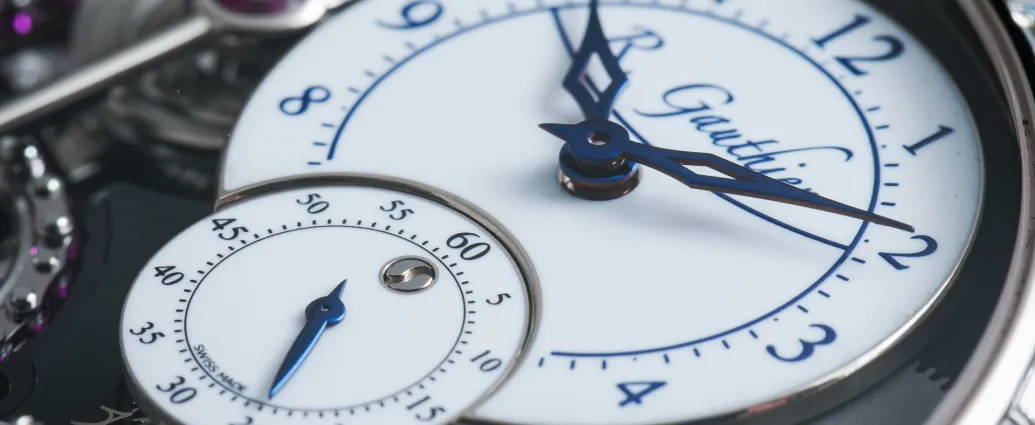
Continuum, presented in 2021, further explored the relationship between movement architecture and contemporary design.
The watch features a manually wound calibre with a 60-hour power reserve. Its finger bridges have a sculptural appearance, with stepped forms and contrasting surface treatments. The movement uses titanium, German silver and stainless steel, combining different materials to create both structural and visual interest.
One of its technical details is the use of a cam to stop the seconds hand, rather than the more conventional spring-lever arrangement.
The small-seconds indication and the balance remain visible through the movement architecture. The design places emphasis on the mechanical components, but the overall composition is restrained enough to remain legible.
Continuum also illustrates Gauthier’s preference for purposeful development. The movement is not built around an accumulation of complications. Its character comes from the arrangement of components, the way the mechanism functions and the treatment of the surfaces.
This is a consistent theme across the brand. Innovation does not necessarily require a complicated display of time. A single mechanical idea, executed with care, can be enough to distinguish a watch.
Independence, production and Chanel
Romain Gauthier remains an independent watchmaking brand, although its business structure has an important dimension worth understanding.
In 2011, Chanel acquired a minority stake in the company. The investment formed part of Chanel’s broader strategy of supporting specialist watchmaking expertise. Chanel has also taken minority stakes in other independent watchmaking businesses, including F.P. Journe and MB&F.
The relationship is particularly interesting in Gauthier’s case because the company’s expertise in movement design and precision manufacturing has also contributed to Chanel’s own high-end watchmaking projects.
A minority investment does not necessarily mean that a watchmaker loses its creative identity. In this instance, the brand continues to operate under Romain Gauthier’s leadership and maintains its own manufacture in Le Sentier.
The investment provides a degree of financial support and access to a wider industrial network, while the brand continues to pursue its own technical and aesthetic direction.
For a small independent manufacture, this kind of relationship can be commercially meaningful. Developing complicated movements, maintaining specialist machinery and employing highly skilled watchmakers requires substantial investment. Long-term support can help preserve those capabilities without forcing the company to pursue large production volumes.
The balance between financial stability and creative autonomy remains an important part of the independent watchmaking landscape.
Legacy: A record of the brand’s development
In 2021, Romain Gauthier introduced the Legacy designation for earlier collections that had reached the end of their production.
The group includes watches such as Prestige HM, Prestige HMS, Logical One and Insight Micro-Rotor. These models are no longer produced, and the Legacy designation preserves their place within the brand’s development.
The collection is useful for understanding how Gauthier’s watchmaking evolved. The Prestige watches established the foundations. Logical One introduced a major mechanical innovation. Insight explored automatic winding and openworked movement architecture.
Each model reflects a particular stage in the development of the manufacture.
For collectors, the Legacy watches also provide an opportunity to explore earlier expressions of the brand’s work. Their limited production and discontinued status distinguish them from current models, although rarity alone does not determine their appeal or value.
The more interesting aspect is the continuity between the earlier watches and the contemporary collections. Gauthier’s approach to mechanics, finishing and component design remains recognisable, even as the external appearance changes.
What makes Romain Gauthier distinctive?
Romain Gauthier occupies a particular position within independent watchmaking. His work combines precision engineering, original mechanical development and traditional hand-finishing, but the balance between these elements is what gives the brand its character.
Logical One is a clear example. The constant-force mechanism is technically ambitious, yet its design allows the wearer to see and interact with the mechanism. Insight takes a different approach, making the automatic movement and its finishing part of the visual experience. C by Romain Gauthier brings the same manufacturing discipline into a more contemporary case and bracelet design.
The brand’s strengths are specific. Its movements are developed with a strong engineering perspective. Component production is closely controlled. Hand-finishing is applied throughout the movement rather than reserved for a few visible details. The designs have a recognisable identity without relying on conventional luxury signals.
The limitations deserve equal consideration. These watches are produced in small numbers and sit at the very high end of the market. Their unusual movement architecture may appeal strongly to technically minded collectors, while those who prefer a more conventional mechanical watch may find the design language less familiar.
The price of a Romain Gauthier reflects the complexity of its production, the level of finishing and the scale of the manufacture. Whether that investment makes sense depends on the collector’s priorities.
For someone interested in independent watchmaking, the attraction is not simply the ownership of a rare object. It is the opportunity to experience a watch whose mechanical design has been developed with a clear and personal point of view.
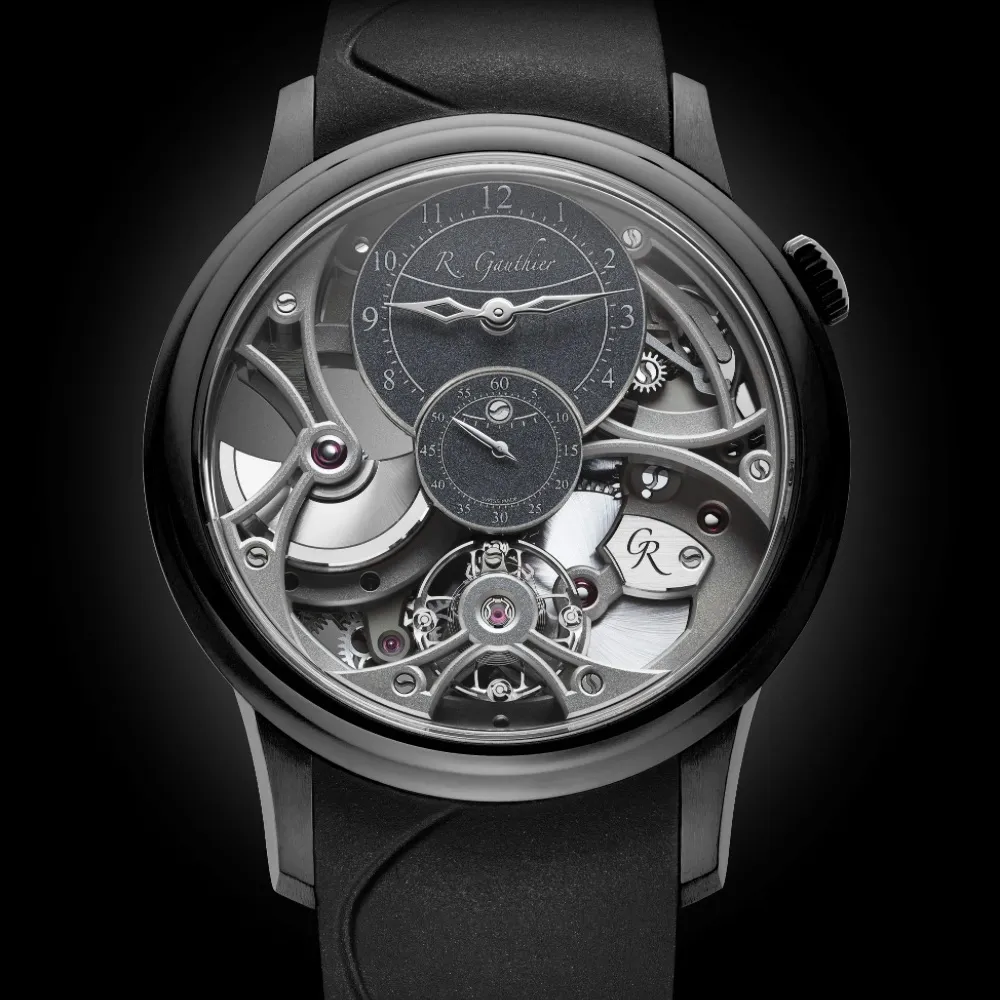
The maker behind the mechanism
Romain Gauthier’s journey began with precision mechanics, machining and an interest in how things work. His watches continue to reflect that background.
The distinctive chain of Logical One, the visible micro-rotor of Insight and the sculptural bridges of the C collection are different expressions of the same approach. Each mechanism is developed with a purpose. Its architecture is considered as part of the design, and its finishing gives the technical work a visual dimension.
The brand’s evolution also demonstrates that traditional watchmaking can accommodate modern production methods without losing its human element. Precision machinery helps create complex components. Skilled watchmakers complete the work through assembly, regulation and hand-finishing.
At Oceane Istanbul, Romain Gauthier is interesting for this very relationship between engineering and craftsmanship. His watches are not defined by a single complication, a particular material or a signature aesthetic. They are defined by the way technical thinking becomes part of the finished object.
A closer look at the movement often reveals the most compelling part of the story. The design decisions are visible, the mechanisms have a clear purpose, and the finishing reflects the time and skill invested in the work.
For collectors who value the reasoning behind a watch as much as its appearance, Romain Gauthier offers a distinctive perspective on contemporary independent watchmaking.