Blog
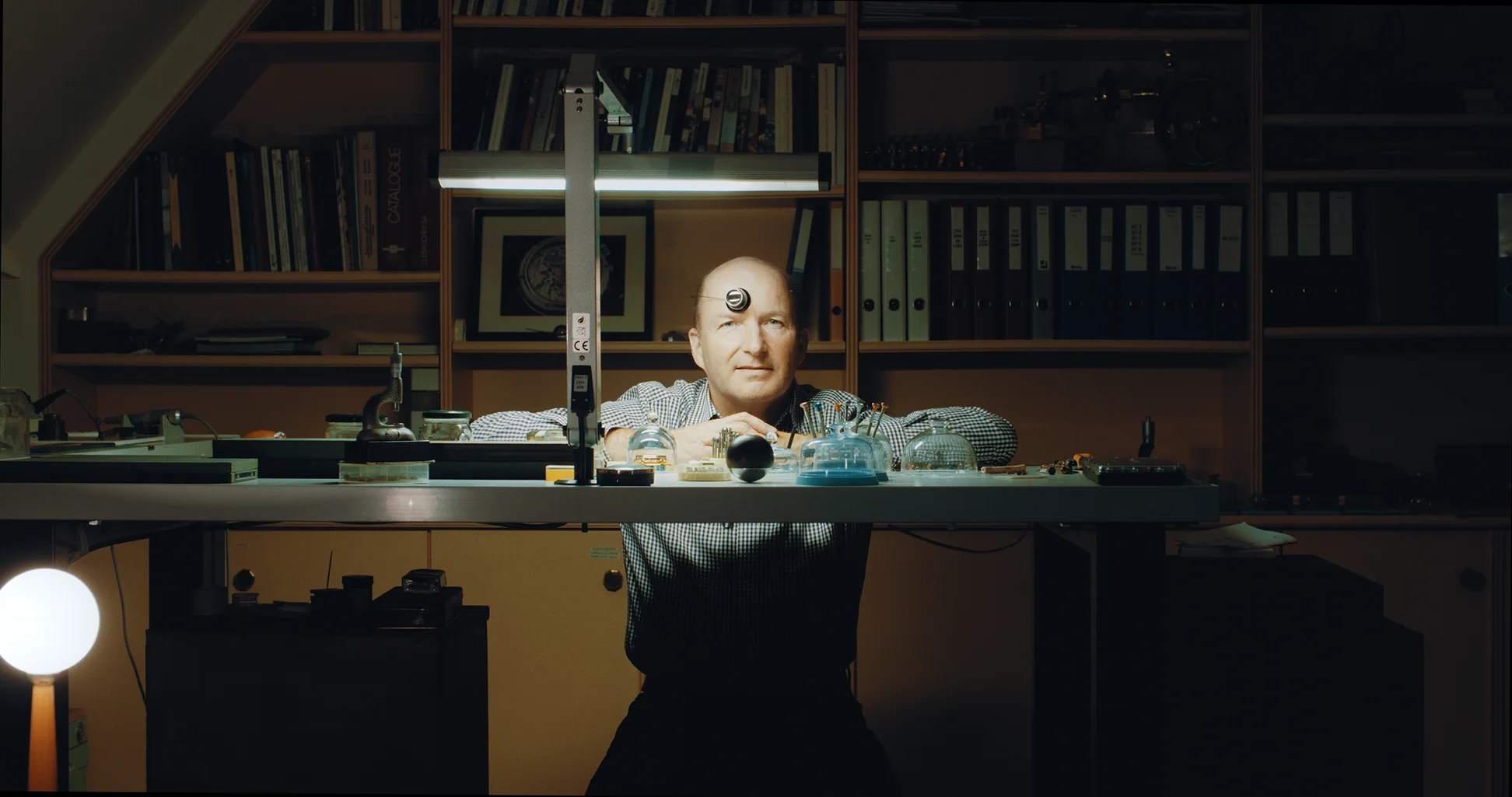
Kari Voutilainen: A Watchmaker’s Own Language

Kari Voutilainen: A Watchmaker’s Own Language
Ryan Reynolds has a rather unusual watch in his collection. The Voutilainen 28 Inversé, made in tantalum, turns the familiar arrangement of a wristwatch inside out. The movement takes centre stage, occupying the space usually reserved for the dial. For anyone accustomed to looking at watches through their hands and indices first, the Inversé offers a different point of view.
The choice is revealing. Kari Voutilainen’s work is not built around immediate recognition. His watches reward a closer look, whether through the architecture of a movement, the precision of a hand-guilloché dial or the proportions of a case. Reynolds’ watch provides an intriguing introduction to a maker whose reputation rests on a much wider body of work.
Understanding Voutilainen means looking at the watchmaker, the workshop and the decisions that shape each timepiece.
A Finnish watchmaker in Switzerland
Kari Voutilainen was born in Finland in 1962. His watchmaking education began at the Espoo School of Watchmaking in 1983, where he graduated in 1986. He continued his training at WOSTEP in Switzerland in 1988, developing his expertise in complicated watches and restoration.
Restoration is a particularly valuable discipline for a watchmaker. It demands close attention to the original construction of a mechanism, an understanding of historical techniques and the judgement to distinguish necessary intervention from unnecessary alteration. Working with older watches can provide a direct education in the choices made by earlier generations of craftsmen.
In 1994, Voutilainen completed a tourbillon pocket watch of his own, a project that reportedly required more than 2,000 hours. He established his independent atelier in Môtiers, in Switzerland’s Val-de-Travers, in 2002.
The move marked a change in direction. Rather than working within the production structure of an established watch company, Voutilainen began developing his own watches, with direct involvement in their design, mechanics and finishing.
His approach draws on classical watchmaking, but the objective is not to reproduce historical watches. Traditional techniques become a foundation for individual work. The distinction is important: respect for the past does not require the absence of new ideas.
Calibre 28: The mechanics behind the Vingt-8
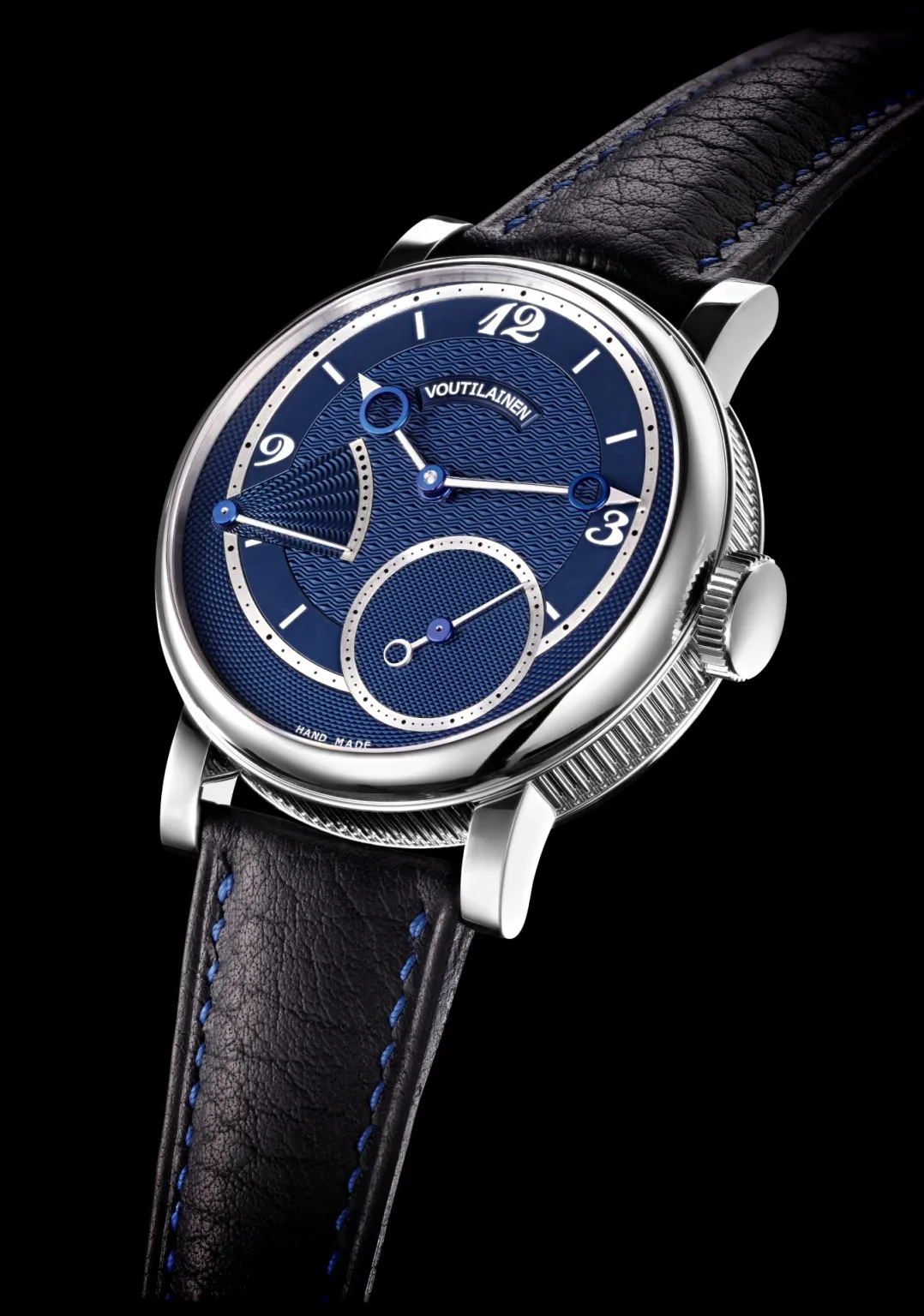
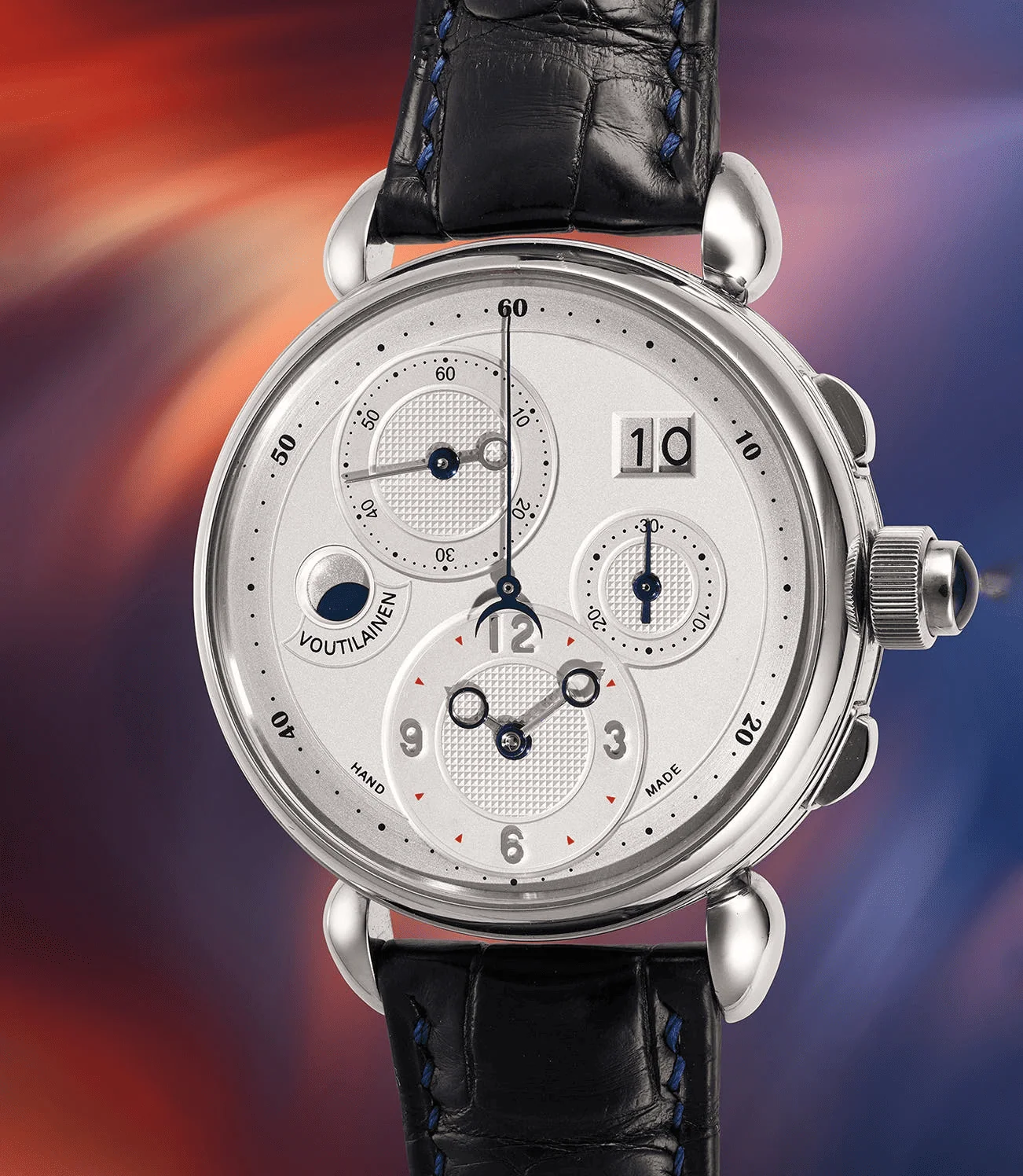
The Vingt-8 is one of the most recognisable expressions of Voutilainen’s watchmaking. Its appearance is classical, with a restrained case, distinctive teardrop-shaped lugs and a dial that often combines several forms of decoration. The movement, however, contains a more unusual technical proposition.
Introduced in 2011, calibre 28 uses a natural escapement with two escape wheels. The design takes inspiration from Abraham-Louis Breguet’s natural escapement, while adapting the principle to Voutilainen’s own movement.
In a conventional Swiss lever escapement, the impulse is transmitted to the balance through a lever. Calibre 28 delivers impulses directly from its two escape wheels to the balance, alternating between them. The arrangement is mechanically complex, but it reflects Voutilainen’s interest in the efficiency and character of the escapement.
The movement also features a large free-sprung balance, a Breguet overcoil and a Grossmann inner curve in the balance spring. Its manual-winding construction provides approximately 65 hours of power reserve.
The technical details deserve attention, but the movement’s appearance is equally distinctive. German silver plates and bridges, carefully finished bevels and polished steel components create a surface that changes as the watch is viewed from different angles. The finishing is not confined to a few visible highlights. It extends throughout the movement.
The Vingt-8 is therefore more than a classical watch with an attractive caseback. Its mechanical architecture and visual treatment are closely connected.
Guilloché: The dial as a working surface
The dial is often the first part of a watch to attract attention. In Voutilainen’s work, it can also be one of the most technically demanding components.
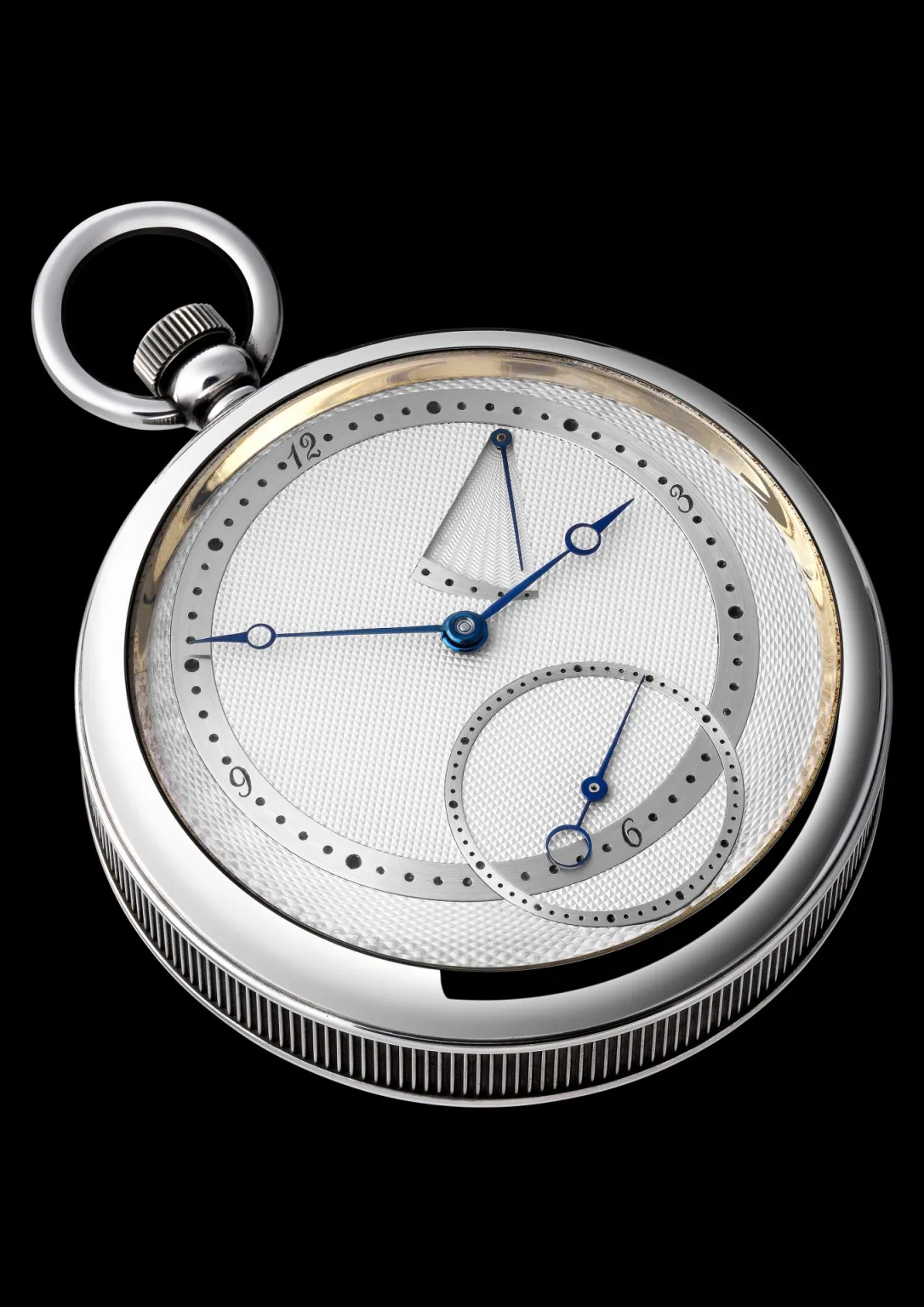
Guilloché is created by cutting precise, repeating patterns into a surface using specialised mechanical tools. The resulting texture is physical rather than printed. Light catches the grooves and ridges, giving the dial a changing appearance as the watch moves.
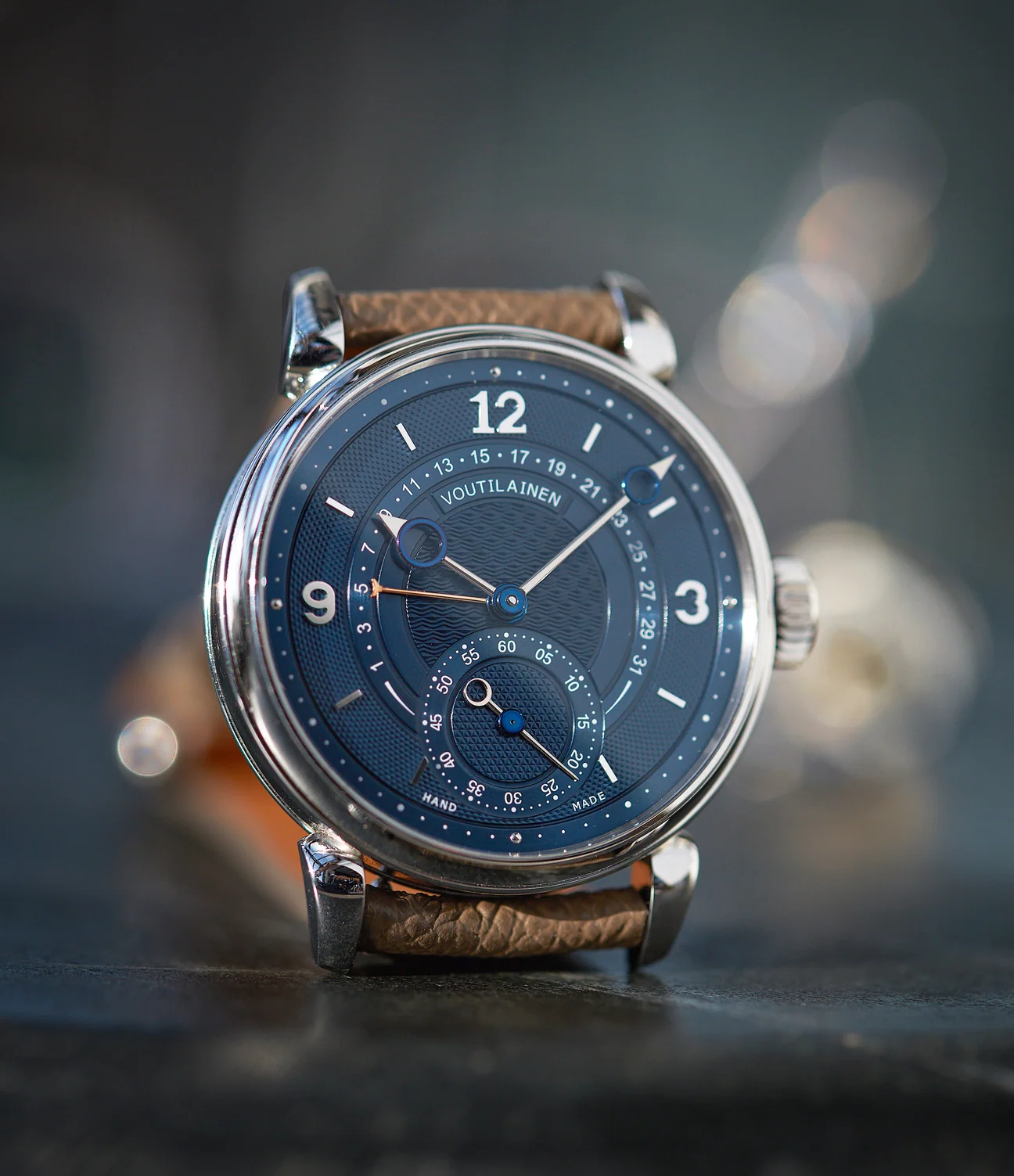
Voutilainen’s dials may combine different patterns across the central field, the hour ring and the small-seconds display. The effect is carefully controlled. Even when the decoration is elaborate, the dial remains legible and the hands retain their prominence.
A closer look reveals the amount of work involved. The patterns must be executed with consistency, while their arrangement must suit the proportions of the dial. The decorative technique is only one part of the decision. The composition matters just as much.
In 2014, Voutilainen acquired Comblémine SA, a dial manufacturer in Val-de-Travers. The acquisition brought an important specialist capability closer to the atelier. Comblémine works with techniques including guilloché, enamelling and galvanic treatments, and its expertise extends beyond Voutilainen’s own watches.
For the brand, this relationship allows greater control over a component that strongly influences the character of the finished timepiece.
Building a more integrated atelier
Voutilainen’s development has involved more than creating new watch references. Over time, the workshop has strengthened its involvement in the production of several important components.
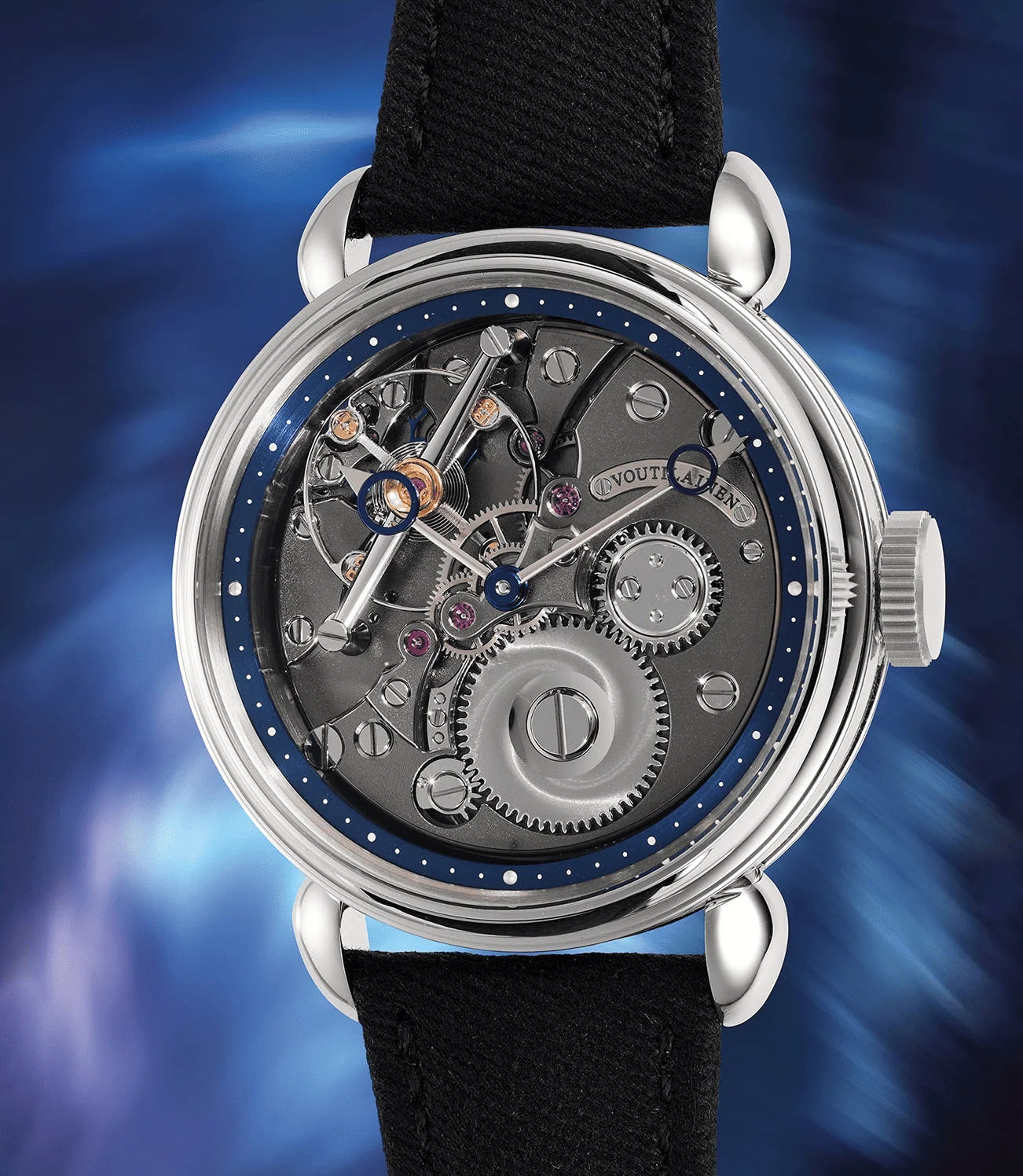
Comblémine brought dial-making into the wider operation. Voutilainen & Cattin, established in 2018, developed case-manufacturing capabilities. In 2021, the workshop moved to the historic Chapeau de Napoléon premises.
The aim is not necessarily to manufacture every component internally. Contemporary watchmaking relies on a network of specialised suppliers, including many highly skilled independent businesses. What matters is the ability to influence the quality, design and execution of the components that define the watch.
This closer involvement can be seen in the relationship between the movement, dial and case. The proportions are considered together. The decoration supports the design rather than competing with it. The mechanical work remains central to the identity of the watch.
For an independent atelier, this degree of control is significant. It allows the finished piece to reflect a consistent point of view.
Personalisation and the collector
Voutilainen’s watches are also known for the possibilities offered to collectors. Depending on the model and commission, choices may include case materials, dial colours, decorative patterns and other details.
Personalisation changes the relationship between the watch and its owner. The decision is not limited to selecting a reference from a catalogue. The collector may participate in shaping the appearance of the finished piece, within the technical and production possibilities of the atelier.
A dial colour, for example, can alter the entire impression of a watch. Guilloché patterns may appear more pronounced or more discreet depending on the finish. Case material affects not only the visual character but also the feel and weight on the wrist.
The process requires time and a close working relationship. Production is limited, and the level of hand-finishing means that the watches occupy a very different price category from mass-produced mechanical timepieces.
The value proposition is consequently specific. A Voutilainen is intended for someone who places considerable importance on mechanical construction, finishing and individual character. Those priorities may justify the investment for one collector, while another may prefer a different approach to watchmaking.
The 28 Inversé and a different way of reading a watch
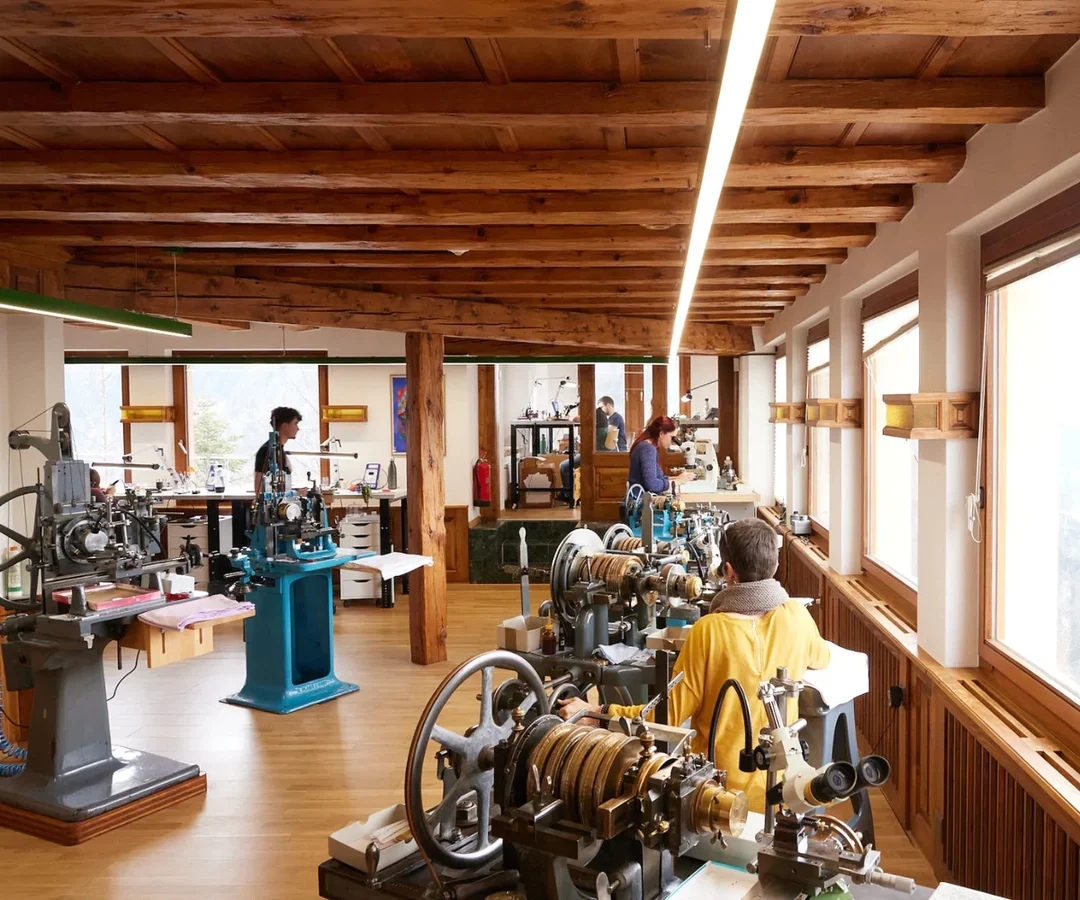
The Voutilainen 28 Inversé offers a particularly direct expression of the maker’s interest in movement architecture.
Its reversed construction brings mechanical elements normally seen through the caseback to the front of the watch. The movement becomes the principal visual surface, changing the usual relationship between dial and mechanism.
The tantalum version associated with Ryan Reynolds is reported to be one of ten pieces in the limited series. Tantalum is a dense metal with a subdued grey appearance, quite different from the familiar brightness of steel or the warmth of gold.
The Inversé is technically and visually unusual, but its appeal goes beyond novelty. It asks the wearer to reconsider what a watch face can be. Instead of reading time against a conventional dial, the eye encounters the movement itself, with its bridges, components and finishing.
Reynolds’ ownership has brought the watch to a wider audience. The celebrity connection is an interesting detail, but it is not the reason the piece deserves attention. The design is a continuation of Voutilainen’s interest in making the mechanics visible and giving them a central role in the watch’s identity.
Tradition, with room for experimentation
Voutilainen’s work is frequently associated with traditional watchmaking. The association is justified, although tradition in this context should not be confused with repetition.
The Vingt-8 ISO, for instance, presents time in an unconventional way. Its minute hand completes thirteen revolutions around the dial over twelve hours, with a rotating reference ring used to interpret the minutes. The watch retains Voutilainen’s familiar attention to proportions and finishing while introducing a different reading system.
The 28GML SOUYOU takes another direction. Created with Japanese urushi lacquer artist Tatsuo Kitamura, the watch combines mechanical watchmaking with a distinctive artistic discipline. In 2025, it received the Artistic Crafts Watch Prize at the Grand Prix d’Horlogerie de Genève.
The award recognises the artistic work involved, but the piece is also notable for the relationship between its crafts. The lacquer dial is not an isolated decorative element. It forms part of a watch whose mechanical and artistic qualities are intended to be experienced together.
Voutilainen’s development of the atelier has also continued through initiatives such as Brodbeck Guillochage in 2024, reflecting an ongoing interest in preserving and advancing specialised decorative techniques.
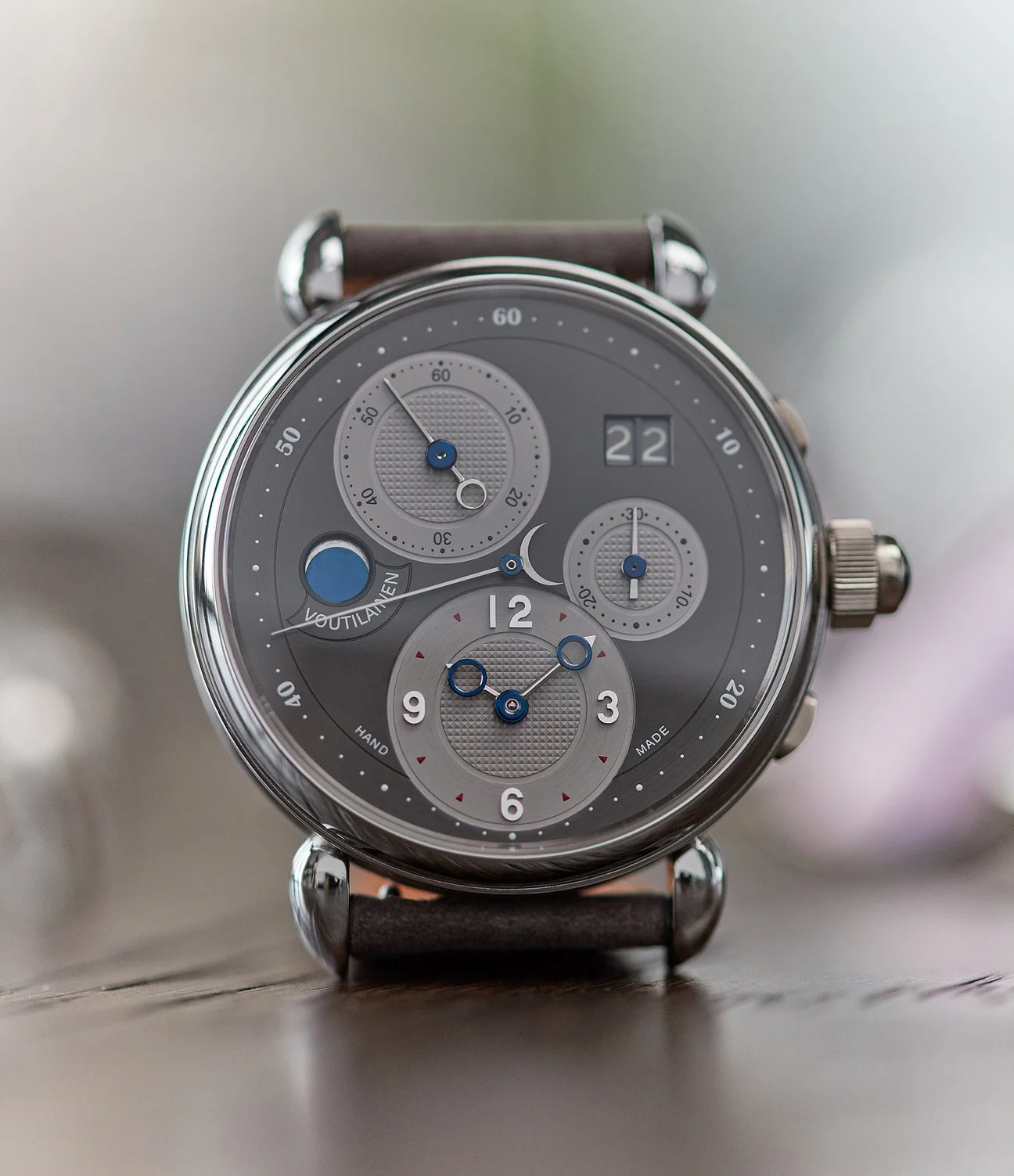
What distinguishes Voutilainen?
The appeal of Voutilainen’s watches cannot be reduced to a single feature. The escapement, hand-finishing, guilloché, case proportions and opportunities for personalisation all contribute. Their significance becomes clearer when considered together.
The movement is developed around a specific mechanical idea. The finishing gives that mechanism a visual presence. The dial introduces texture and depth without losing its function. The case frames the work with a classical sense of proportion.
This is a different way of communicating value from the approach taken by brands that rely primarily on recognition, production scale or conspicuous design. Voutilainen’s watches ask the collector to spend time with the object and to understand the work behind it.
That approach has limitations, too. The watches are expensive, production is restricted and their classical aesthetic will not appeal to every taste. Exceptional finishing does not automatically make a watch the right choice for every collector. The cost, design and personal priorities still matter.
Yet Voutilainen has established a distinctive position in contemporary independent watchmaking. His work combines technical development with a strong commitment to traditional handcraft, while leaving room for experimentation.
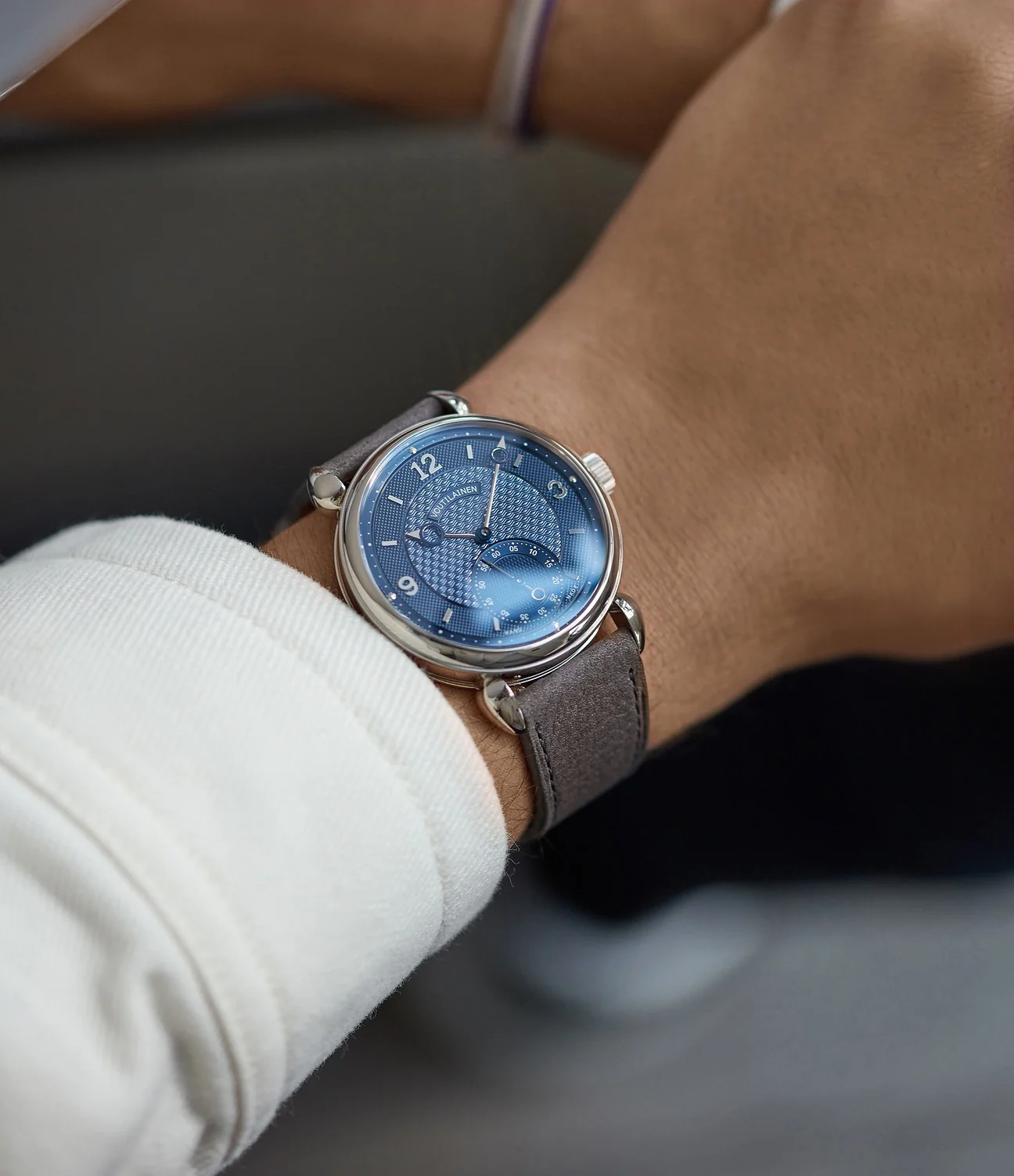
Looking beyond the name
A mechanical watch measures time through a system of components working together. Voutilainen’s work adds another dimension to that function: the decisions made by the watchmaker remain visible in the finished object.
A balance bridge, a bevel, a guilloché pattern or the shape of a hand may seem like a small detail. Taken together, these elements reveal the thinking behind the watch. They show how mechanics, aesthetics and craftsmanship can be treated as parts of the same process.
Kari Voutilainen’s watches are worth exploring not simply because they are rare or highly finished, but because they provide a clear view of the maker’s priorities. The work invites close observation. Its character emerges gradually, through the details.
That is the aspect of Voutilainen that interests Oceane Istanbul: the relationship between design, technical knowledge and human craftsmanship. The finished watch is an object of luxury, certainly, but its strongest qualities are found in the work that gives it character.
While not everything he has made will meet everyone’s tastes, there is no denying the artistry and mechanical thoughtfulness that goes into his work. Whether it is a discreet decimal repeater or a fantastically finished, multi-coloured time-only watch, his level of craftsmanship and attention to detail never falters.
Through discovering his work and the journey that he has gone on, we have found ourselves constantly surprised at his abilities and the philosophy that he has fervently stuck to over the last 20 years. Now, all we can do is wait and enjoy what the next 20 years of Voutilainen watchmaking will bring.
A watchmaker, a businessman, a designer, a brand, there are many words that can be used to describe the polymath that is Kari Voutilainen. His approach to watchmaking is simultaneously unique, yet tried and tested, opting for slow, gradual growth supported by a dedicated group of collectors, independent of third-party suppliers.
The plethora of creations that have his name attached to them rivals nearly any independent watchmaker alive today. An astounding achievement in its own right, it could be argued that what is more impressive is the brand he’s managed to build and the ecosystem that will support it, long after he hangs up his loupe.